


Thai
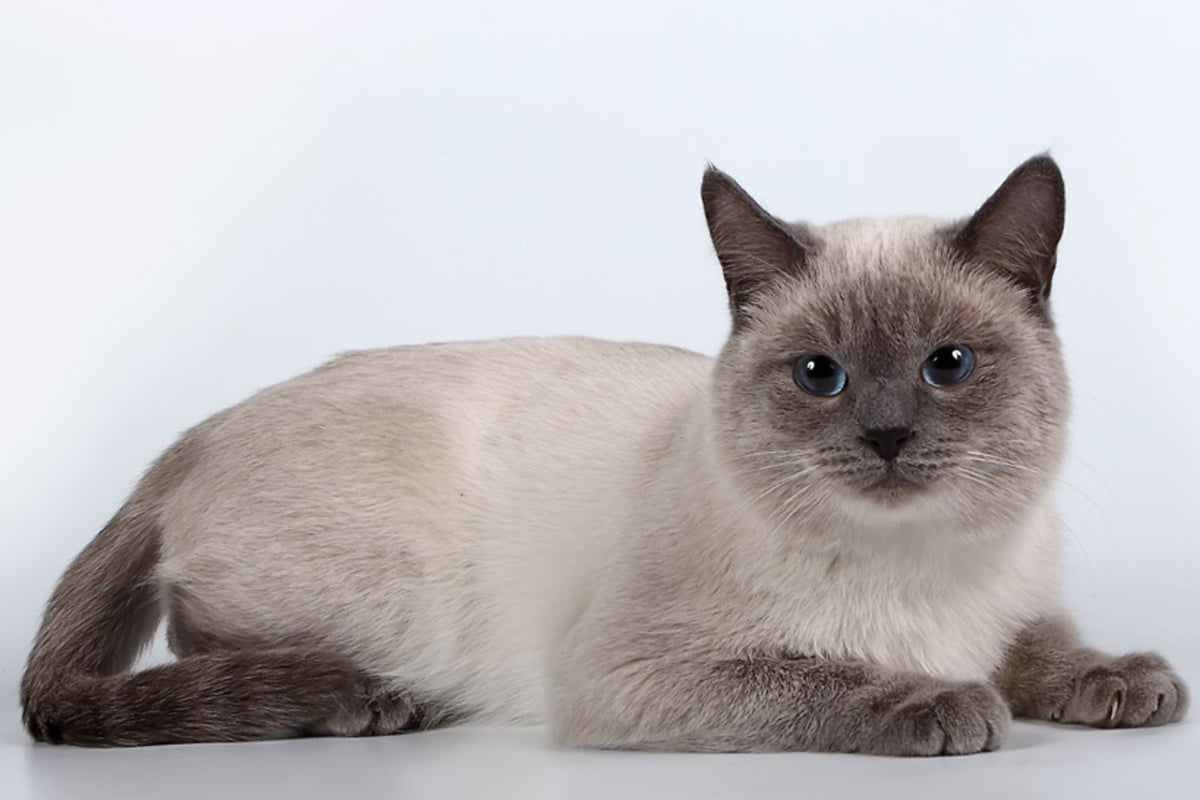
The Thai, also called Wichienmaat or Traditional Siamese, is the original form of the Siamese as it existed in Thailand before Western selection pushed its morphology to extremes. Recognized separately by the WCF in 2003 and by the LOOF, it differs from the modern Siamese in its rounded head (the so-called "apple-head"), a robust medium build and a slightly less intense temperament — still extremely affectionate and vocal, but without the permanent urgency of the show type. Its short, silky colorpoint coat, oval blue eyes and deep attachment to its owner make it a companion cat of rare presence.
- Weight
- 2 to 6kg
- Height
- 25 to 30cm
- Life expectancy
- 14years
- Monthly cost
- 60 to 100€
Personality profile
Energy 4/5
Independence 2/5
Trainability 4/5
Good with children 4/5
Talkativeness 4/5
Space needed 2/5
Attachment to home 5/5
Good with strangers 4/5
Good with cats 4/5
Good with dogs 3/5
Coat care 1/5
Exercise needs 3/5
Scores given on measured axes, data confidence: medium.
Living with a Thai
Description
The build is medium and well-balanced: neither extremely slender like the modern Siamese, nor stocky like the British Shorthair. The body is medium in length, well muscled, with an open chest and a solid frame. The head forms an equilateral triangle with rounded contours — the fundamental morphological difference from the modern Siamese, whose head is very triangular and angular. The ears are medium-sized, wide at the base and slightly rounded at the tip. The eyes, always an intense blue, are oval and slightly slanted. The tail is medium in length, wide at the base and tapering toward the tip. The coat is short, fine and close-lying, with the characteristic colorpoint pattern: a light body (ivory to cream) contrasting with darker, clearly defined points (muzzle, ears, legs, tail). Recognized point colors include seal, blue, chocolate and lilac. Males weigh 3 to 6 kg, females 2 to 5 kg. Life expectancy: 12 to 15 years.

Temperament
Like the Siamese, it shares a deep attachment to its owner, but on a slightly less intense register. It follows its owner from room to room, demands presence and interaction, and does not enjoy long empty days — but it does not live in the permanent urgency that some modern Siamese can display. Its vocalizing is notable: it comments, asks and expresses itself with a clear, persistent voice, while staying below the typical vocal power of the show Siamese. Its intelligence is sharp; it observes, memorizes routines and anticipates its owners' daily movements. With children, it shows real patience, provided interactions stay respectful. It generally cohabits well with other cats, but can show slight initial wariness toward dogs or unfamiliar animals — a gradual introduction is recommended.
Training
Intelligent and receptive to learning, it follows directly in the Siamese's footsteps. Its motivation through human interaction and food rewards makes it a serious candidate for clicker training. It can learn to give a paw, come when called by name, respond to simple commands or run small courses. Short sessions (5 to 10 minutes) practiced daily give the best results — it quickly tires of repetition. Learning also serves a critical anti-boredom function: deprived of mental stimulation, it develops compensatory behaviors (increased vocalizing, digging, destructive behavior). Positive reinforcement is the only effective approach; any physical restraint breaks trust and triggers a vocal reaction or a withdrawal of cooperation.

Feeding
This is an active cat with a relatively high metabolism for its size. Favor premium kibble high in animal protein (35-38% minimum) with a moderate fat level to maintain its muscle tone without excess weight. Taurine is a critical nutrient for heart health — make sure it's present in sufficient quantity in the formula. Two split meals a day are preferable to free feeding: it may ask for food out of a bid for attention rather than real hunger. For a moderately active 4 kg adult, plan on 200-240 kcal/day. Kittens need a calorie-dense diet up to 12 months to support their growth. After neutering, watch for weight gain and adjust rations accordingly. Adequate hydration matters given the kidney predispositions linked to amyloidosis: wet food (pâté or pouches) can be added as a supplement.
Affiliate links, no extra cost to you. Legal notice

Living conditions
It lives well in an apartment, even without outdoor access, provided the space is enriched and human presence is sufficient. Cat trees, interactive toys and daily play sessions are non-negotiable for its mental balance. Its tolerance for solitude slightly exceeds that of the modern Siamese, but beyond 6 to 8 hours of regular daily absence, anxious behaviors can appear — excessive vocalizing, over-grooming, loss of appetite. Adopting in pairs (a companion cat, a Siamese or an Oriental) is a relevant solution for households with long absences. Like the Siamese, it is sensitive to cold due to its short coat and low body mass; temperatures below 15-16 °C with no available heat source do not suit it well. Indoor cat recommended.

Grooming and coat care
Few breeds require as little grooming. The short, fine, close-lying coat doesn't mat and sheds little dead hair. A weekly brushing with a rubber grooming glove or a soft brush is enough to keep the coat glossy and limit hair on surfaces. During the light seasonal molts (spring, fall), two sessions a week for two to three weeks are enough. Bathing is rarely necessary. Ear care deserves regular attention: the wide-based ears can accumulate wax. Monthly cleaning with a suitable ear solution prevents ear infections. As with the Siamese, dental care is the most important point: weekly brushing (daily if tolerated) limits the gingivitis and tooth resorption lesions to which the breed is predisposed.

Health
The breed inherits several sensitivities from the Siamese genetic background, although a wider gene pool than the modern Siamese gives it relative robustness. Progressive retinal atrophy (PRA) is a documented predisposition: a hereditary disease that can cause progressive night-vision loss followed by partial or total blindness, sometimes before the age of 4. No standardized DNA test is commercially available for every form of feline PRA; regular ophthalmologic monitoring from age 2 is advised. Feline amyloidosis, shared with the Siamese, remains a serious threat: abnormal amyloid protein deposits build up in the liver, kidneys or pancreas, potentially leading to organ failure as early as young adulthood. No standardized commercial DNA test exists; annual blood panels (liver and kidney) from the start of adulthood, not only in seniors, are the main monitoring tool. Feline asthma is more common in Oriental breeds: any episode of dry coughing or wheezing should be reported promptly. Like the Siamese, it shows particular sensitivity to general anesthesia — always inform the veterinarian of the breed before any surgical procedure so the protocol can be adapted. Hypertrophic cardiomyopathy (HCM) is less documented than in the modern Siamese but should still be monitored by echocardiogram from 4-5 years of age.
Breed history
The Thai, whose Thai vernacular name is Wichienmaat (วิเชียรมาศ, "diamond moon"), is the original form of the Siamese as it existed in the palaces and temples of Thailand, documented as early as the 15th century in illuminated manuscripts called Tamra Maew (cat treatises). Imported to the West starting in the late 19th century, the Siamese was gradually bred toward an increasingly extreme morphological type — a very triangular head, a tubular body, giant ears — that cat shows rewarded over the decades. Starting in the 1950s-1960s, the gap between the traditional type and the show type grew so wide that breeders wanting to preserve the original morphology began working separately. The movement organized in the United States under the name "Old-Style Siamese," then "Traditional Siamese." In Europe, official recognition came with the WCF (World Cat Federation) in 2003, under the name Thai. The LOOF then recognized the breed, allowing it to compete in championship. Today, the breed occupies a niche between tradition and modernity: less common than the show Siamese at cat shows, it appeals to fans of Oriental breeds seeking an endearing temperament without the morphological or behavioral extremes of the contemporary type.
Getting ready for your Thai
Four essentials to line up before day one.
Affiliate links, no extra cost to you. Legal notice
FAQ: Thai
Sources
- Wikipedia FR — Siamese (cat) — Thai/traditional section · The Thai (Wichienmaat) refers to the traditional type of the Siamese, with a rounded head and robust body, distinct from the show type that emerged through selection around the 1950s-1970s. Feline amyloidosis documented (liver, kidneys, pancreas, age 1-5 years). Preservation movement for the traditional type since the 1980s.
- LOOF — Thai breed profile · Thai officially recognized by the LOOF, eligible for championship. Standard: rounded equilateral triangular head, blue oval eyes, medium muscled body, short colorpoint coat. Only Thai × Thai crosses permitted.
- Royal Canin FR — Thai profile · Males 3-6 kg, females 2-5 kg. Affectionate, lively temperament, intolerant of prolonged solitude. Progressive retinal atrophy (PRA) documented as a hereditary predisposition. Brushing 2-3 times a week.
- Royal Canin FR — Siamese profile (related breed) · Feline amyloidosis (kidney/liver protein deposits), cholangiohepatitis, gingivitis and FORL common. Protein 38%, taurine essential. Life expectancy 12-15 years, some reaching 20 years. Adoption in pairs recommended for long absences.
Breeds similar to a Thai

