CatMatch My selection FR

Which cat is talkative and expressive?

10 expressive cat breeds — Siamese, Oriental, Balinese, Burmese. For anyone who loves conversation and a talkative cat. A reasoned LOOF/FIFe selection.

  1. 1 Siamese
  2. 2 Oriental Shorthair
  3. 3 Thai
  4. 4 Balinese
  5. 5 Javanese
  6. 6 Snowshoe
  7. 7 Tonkinese
  8. 8 Burmese
  9. 9 European Burmese
  10. 10 Bombay

A talkative cat isn't a flaw — for some adopters, it's exactly the quality they're looking for. Siamese, Orientals, Balinese and their cousins have long been known for their vocal expressiveness: they meow to greet, ask, comment, protest, sometimes dozens of times a day and in a register that carries far. This trait comes largely from the breed's temperament, not from training — a Siamese will never fall silent. An unexpected bonus: these breeds are also among the most affectionate (affection 5/5 for the Siamese) and the easiest to train (5/5). They suit adopters who want real, communicative companionship, not a piece of furniture that happens to be a cat. Watch out for neighbors in an apartment building — these breeds are NOT suited to a thin-walled apartment.

10 recommended breeds

Every portrait opens the full profile: temperament, living conditions, health, budget and cited sources.

Siamese

1

Siamese

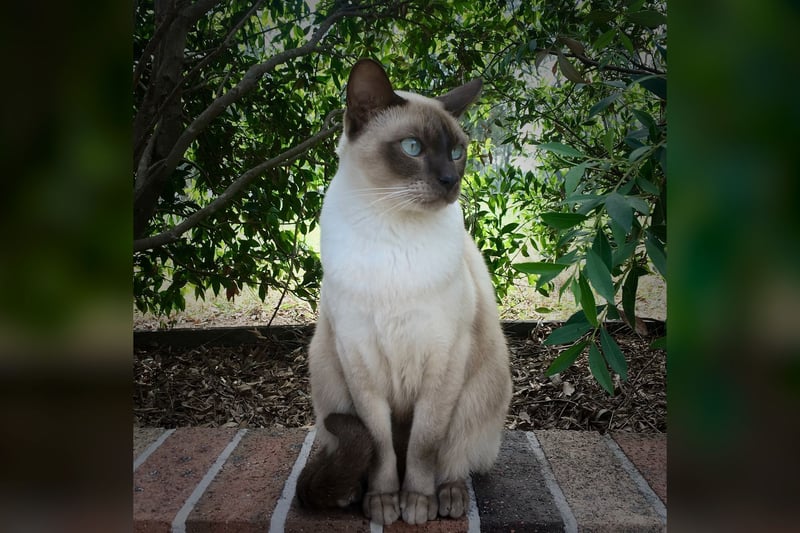
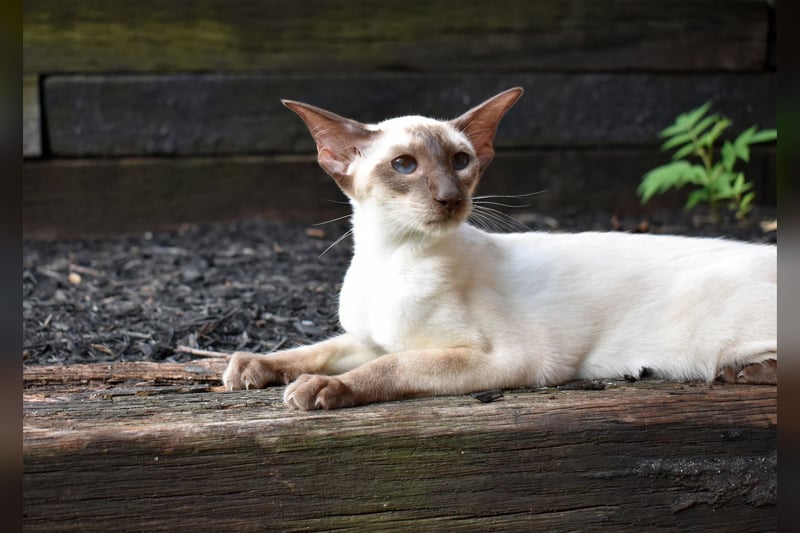
The Siamese is one of the oldest and most recognizable cat breeds in the world, native to Siam (present-day Thailand) where it was kept in Buddhist temples and royal palaces. Imported to England in 1884 as a diplomatic gift, it quickly spread across Europe and America. With its short, silky colorpoint coat, its blue almond-shaped eyes and its extremely lively character, the Siamese is often described as the most "dog-like" of cats: hyper-affectionate, hyperactive and endowed with a powerful vocalization that makes it impossible to ignore.

2.5 to 5 kg 15 years
See the profile
Oriental Shorthair

2

Oriental Shorthair

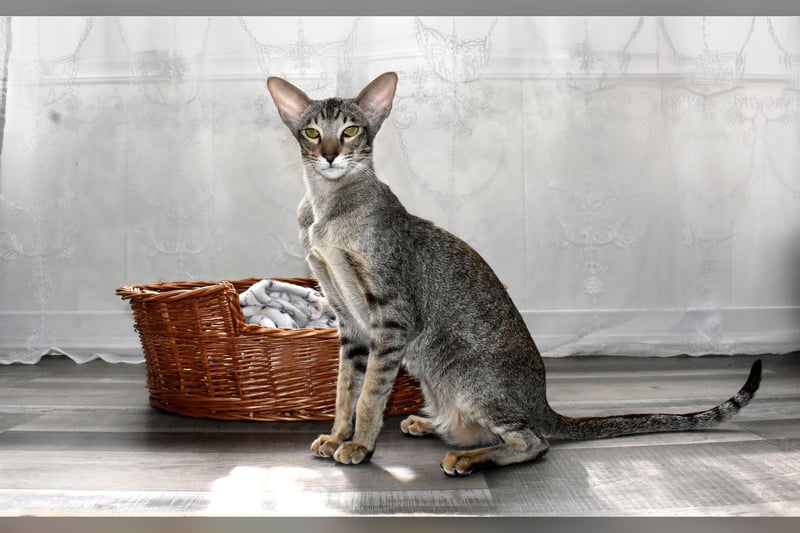
The Oriental Shorthair is the Siamese freed from colorpoint: the same slender, tubular build, the same hyperactive, talkative temperament, but a palette of more than 300 recognized colors and patterns — solid, tabby, smoke, bicolor — where the Siamese tolerates only its characteristic points. Its eyes are green (not blue), its voice is powerful, and its attachment to humans is absolute. Selectively bred in the United Kingdom in the 1950s–1960s from Siamese crosses, it was recognized in championship by the CFA in 1977 and by the LOOF under the name "Oriental". It is a cat for households that want the intensity of the Siamese without the constraint of colorpoint.

3 to 5 kg 15 years
See the profile
Thai

3

Thai

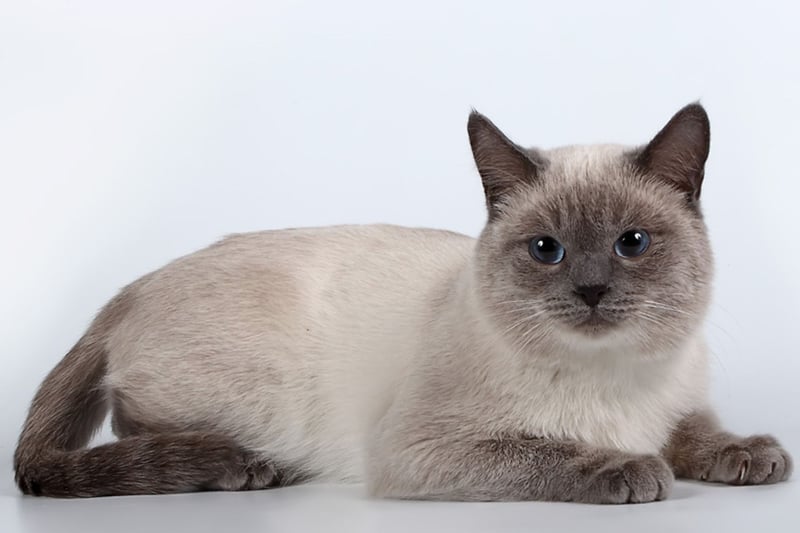
The Thai, also called Wichienmaat or Traditional Siamese, is the original form of the Siamese as it existed in Thailand before Western selection pushed its morphology to extremes. Recognized separately by the WCF in 2003 and by the LOOF, it differs from the modern Siamese in its rounded head (the so-called "apple-head"), a robust medium build and a slightly less intense temperament — still extremely affectionate and vocal, but without the permanent urgency of the show type. Its short, silky colorpoint coat, oval blue eyes and deep attachment to its owner make it a companion cat of rare presence.

2 to 6 kg 14 years
See the profile
Balinese

4

Balinese

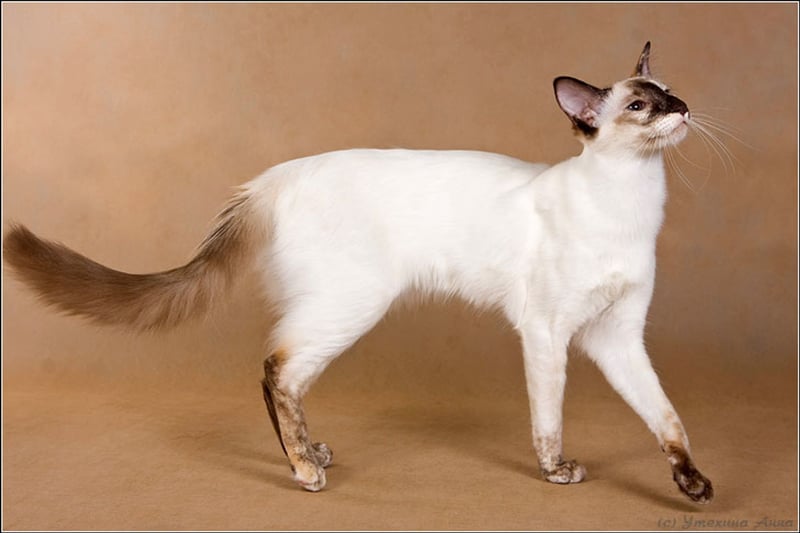
The Balinese is the semi-longhair version of the Siamese, born from a spontaneous mutation that appeared in American Siamese litters as early as the start of the 20th century. Long dismissed from breeding programs as a "flaw," it was intentionally selected by two breeders, Helen Smith and Sylvia Holland, who gave it its name in reference to the grace of Balinese dancers. Recognized by the CFA in 1970 and registered today with LOOF, it shares with the Siamese the same tubular oriental morphology and the same hypersocial, vocal temperament — except that its plumed tail and silky, undercoat-free coat give it extra visual elegance for barely more upkeep.

2.5 to 5 kg 16 years
See the profile
Javanese

5

Javanese

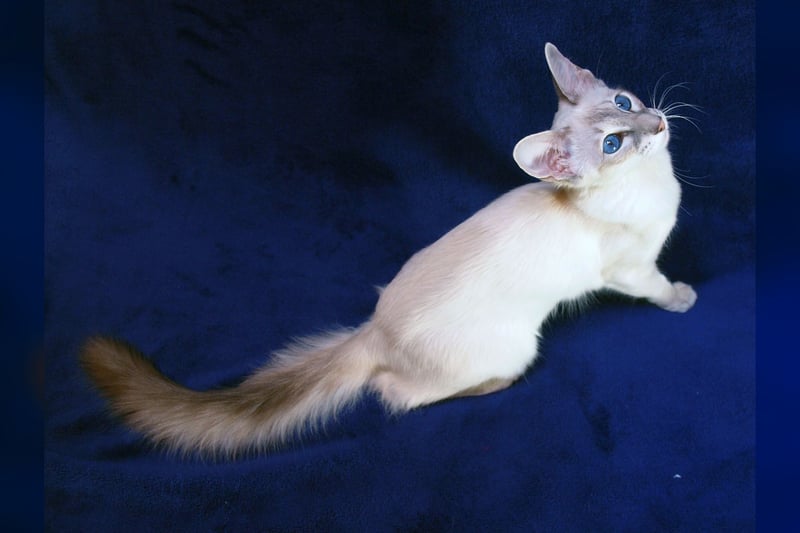
The Javanese is the semi-longhair version of the Oriental, developed in the United States in the 1970s. A slender oriental-type body, a fine, silky coat with no undercoat, and a resolutely vocal, deeply bonded temperament: this breed suits people who are available and looking for a very active feline presence.

3 to 5 kg 14 years
See the profile
Snowshoe

6

Snowshoe

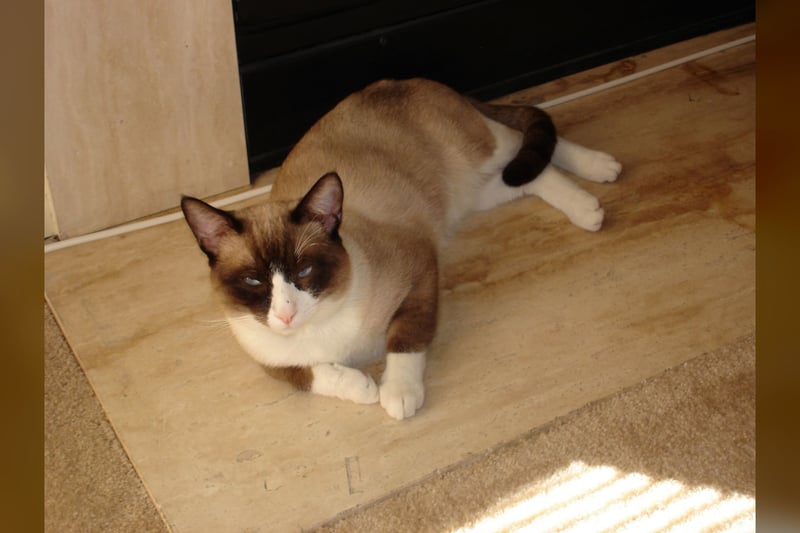
The Snowshoe is an American breed born in the 1960s in Philadelphia, from a cross between a Siamese and a bicolor American Shorthair. Its visual signature is immediately recognizable: a colorpoint coat inherited from the Siamese, but with white "snowshoe" paws and a facial mask marked by an inverted white V, all topped with invariably blue eyes. Of medium, muscular semi-foreign build, it is active, vocal and deeply social — but in a more tempered register than its Siamese ancestor, without the constant intensity or the exclusive need that characterize the latter. A rare breed in France (first litter born in 2006, very low LOOF numbers), it attracts colorpoint cat enthusiasts looking for a more balanced version of the Siamese.

3.5 to 5.5 kg 14 years
See the profile
Tonkinese

7

Tonkinese

The Tonkinese is the deliberate result of a cross between the Siamese and the Burmese, two breeds that have been naturally related for centuries in Southeast Asia. Stabilized in North America in the 1960s from the founding female Wong Mau, it is recognized by the CFA and the LOOF. Its "mink" coat — a pattern intermediate between the Siamese colorpoint and the Burmese sepia — and its aqua-turquoise eyes make it an immediately recognizable breed. Temperamentally, it sits right in the middle between its two parent breeds: as affectionate and social as the Burmese, as playful and intelligent as the Siamese, without either the extreme vocal intensity of the one or the possessive exclusivity of the other.

3.5 to 5.5 kg 14 years
See the profile
Burmese

8

Burmese

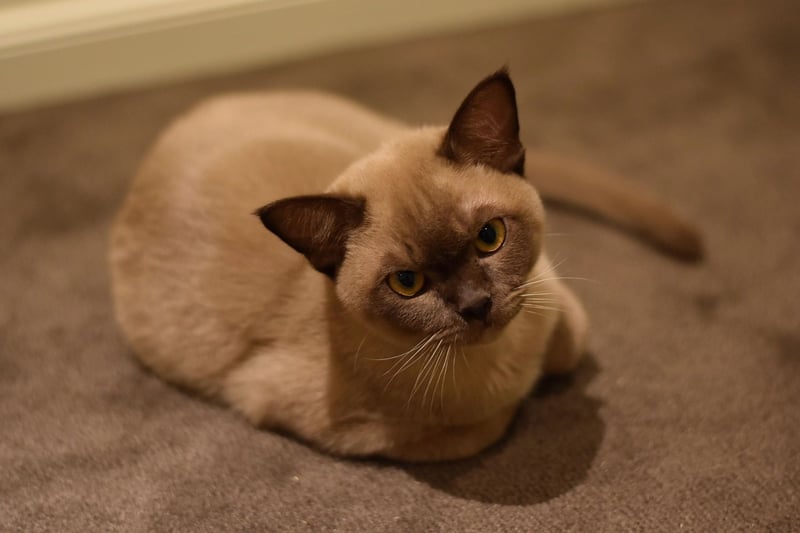
The Burmese is a shorthaired breed native to Southeast Asia, founded on a single female cat — Wong Mau — imported to the United States in 1930 by Dr. Joseph Thompson. Note: the Burmese has no connection to the Birman (Sacred Cat of Burma). These are two radically different breeds: the Burmese has a short, satiny brown coat and amber eyes; the Birman has a long colorpoint coat and white gloves. The Burmese today exists in two separately recognized types — American (very round cobby) and European (more moderate semi-foreign) — and in many colors beyond the classic sable brown.

3.5 to 6 kg 14 years
See the profile
European Burmese

9

European Burmese

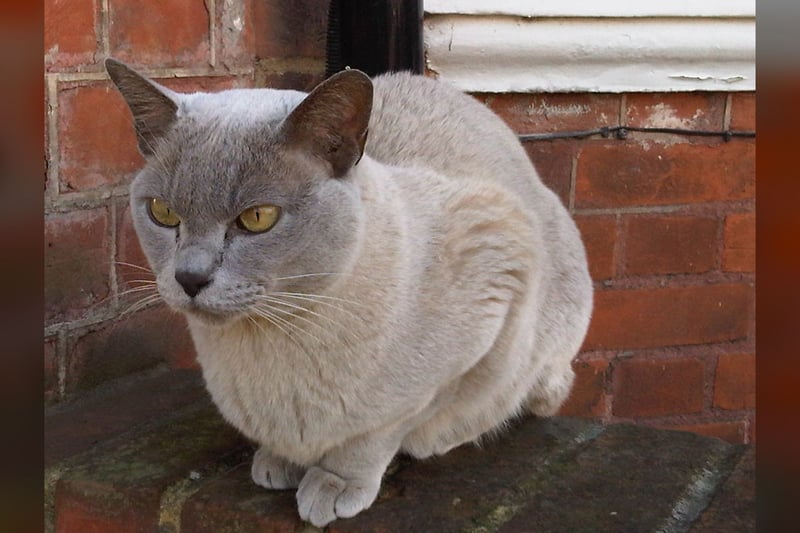
The European Burmese is a cat with a muscular semi-foreign body, descended from British and German lines developed from the 1950s onward. Its build is less extreme than the American Burmese's: a moderate V-shaped head, a muzzle that is not flattened, and amber almond eyes. Its silky sable-brown coat can also come in blue, chocolate or lilac.

3.5 to 6.5 kg 15 years
See the profile
Bombay

10

Bombay

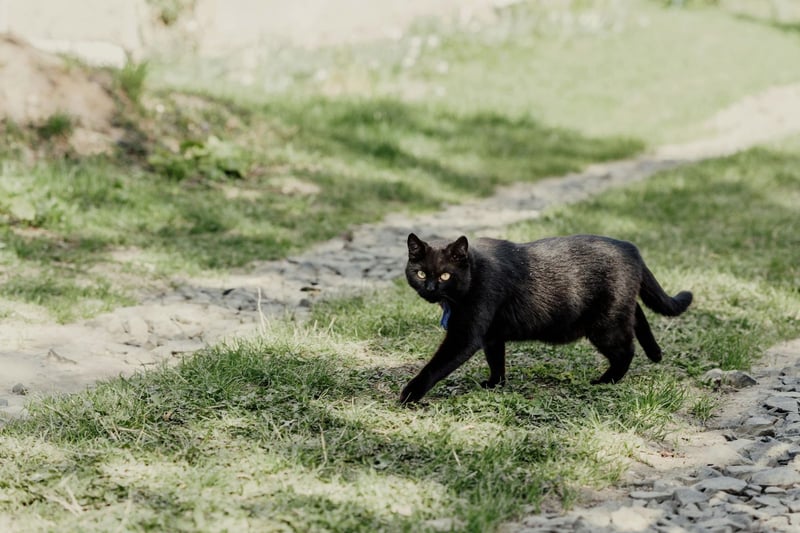
The Bombay is a shorthaired cat of American origin, born from a cross between a sable Burmese and a black American Shorthair, conceived in the 1950s by breeder Nikki Horner to recreate the look of a black panther in domestic form. Its coat is uniformly black, with absolutely no hint of red or brown, so satiny it appears lacquered. The eyes, a vivid copper to intense gold, create a spectacular contrast with the coat. An uncommon breed in France, it is better established in the United States.

2.7 to 4.5 kg 14 years
See the profile

Practical advice

  • Always check your home's soundproofing before adoption — neighbors can file noise complaints over a Siamese.
  • Aim for a vocal level of 4-5/5 combined with affection ≥ 4/5 — that pairing is what makes the communicative 'dog-like cat' people are after. The Tonkinese and the Bombay, at 3/5, are the moderate versions in this selection.
  • Adopt a pair of the same breed (Siamese × Siamese): they talk to each other and this eases the demands placed on you.
  • Learn to 'answer' the cat (interactive vocal exchange): these breeds thrive on simulated conversation.
  • Schedule 2-3 active play sessions a day: an understimulated talkative cat becomes even more vocal.

Frequently asked questions

Why do Siamese cats meow so much?
It's a breed trait, not a disorder. The Siamese is an ancient breed from Siam (present-day Thailand), long described as particularly expressive; modern breeding has preserved this trait rather than breeding it out. Its vocal repertoire is broader and more modulated than that of most cats — it comments, demands, protests. This is something to work with, not correct.
Will my Siamese meow all night?
A real risk if he's alone and understimulated. Solutions: 1) Adopt a pair (two Siamese wear each other out at night), 2) Schedule a big play session 1-2 hours before bedtime (laser, wand toy), 3) An automatic kibble dispenser for a nighttime snack. Otherwise, plan on earplugs or a closed bedroom door.
Is the Tonkinese as talkative as the Siamese?
Moderately. Vocal level 3-4/5 (vs. 5/5 for the Siamese), expressive but less intense. It's the ideal compromise for anyone who enjoys communication without living through a nonstop opera. The Tonkinese descends from the Siamese and the Burmese — it inherits the toned-down vocal level of its Burmese parent.
Should I get a male or a female for vocal level?
No significant difference among talkative breeds — the breed determines it, not the sex. Both sexes talk just as much. Neutering does not reduce vocalization in a Siamese (it reduces urine marking and heat calls, two different behaviors).
Will my talkative cat suffer if left alone during the day?
Yes, for most of the breeds recommended here. Siamese, Oriental and Balinese are so-called 'velcro' breeds (independence 1/5) — prolonged solitude means separation anxiety. Solutions: remote work if possible, a compatible second cat, a midday pet-sitter. The Tonkinese and the Bombay (independence 2/5) tolerate a day alone somewhat better, without being self-sufficient cats either.
How much does a talkative cat cost?
70-110 € a month for the recommended breeds: premium food (25-40 €), litter (10-15 €), routine vet care (20-35 €), replacement toys (15-20 €). Adopting from a LOOF-registered breeder: expect 800-1,500 € for a Siamese, a bit more for an Oriental, a bit less for a Tonkinese — the ranges vary widely by breeder and bloodline.
Sources