


Snowshoe
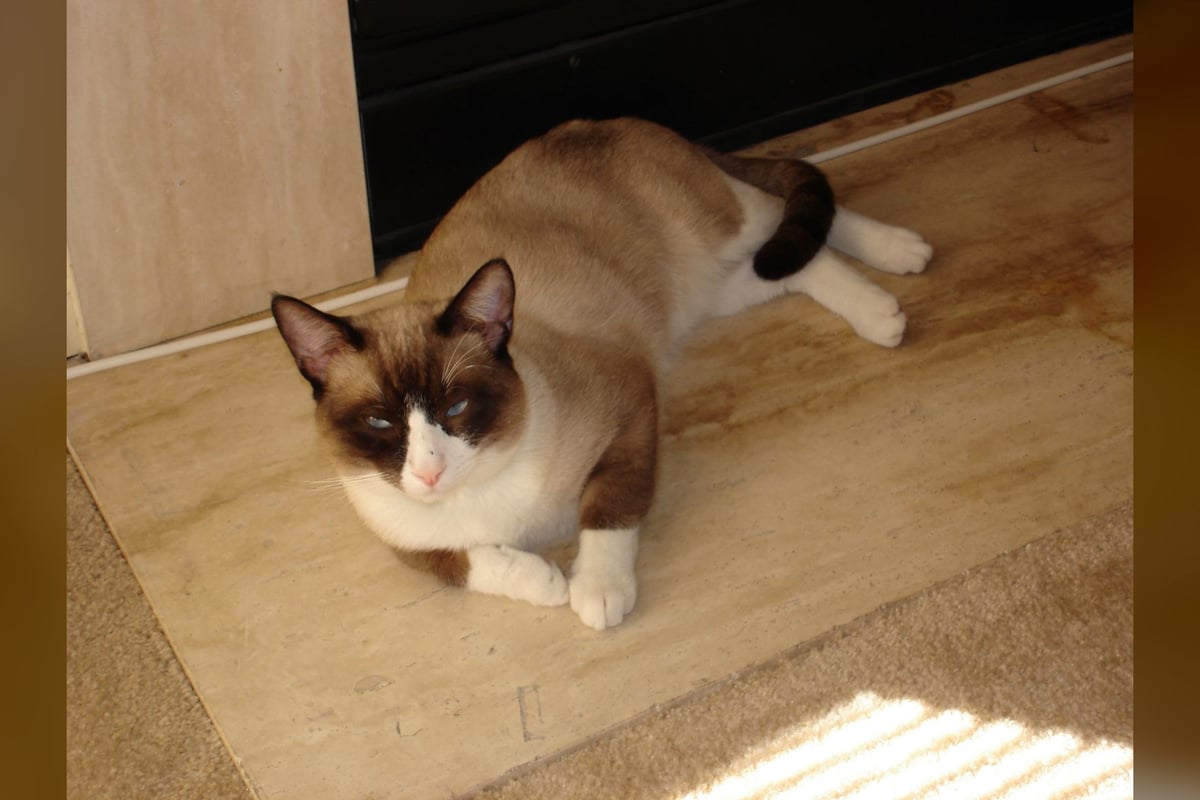
The Snowshoe is an American breed born in the 1960s in Philadelphia, from a cross between a Siamese and a bicolor American Shorthair. Its visual signature is immediately recognizable: a colorpoint coat inherited from the Siamese, but with white "snowshoe" paws and a facial mask marked by an inverted white V, all topped with invariably blue eyes. Of medium, muscular semi-foreign build, it is active, vocal and deeply social — but in a more tempered register than its Siamese ancestor, without the constant intensity or the exclusive need that characterize the latter. A rare breed in France (first litter born in 2006, very low LOOF numbers), it attracts colorpoint cat enthusiasts looking for a more balanced version of the Siamese.
- Weight
- 3.5 to 5.5kg
- Height
- 23 to 30cm
- Life expectancy
- 14years
- Monthly cost
- 60 to 110€
Personality profile
Energy 4/5
Independence 2/5
Trainability 4/5
Good with children 4/5
Talkativeness 4/5
Space needed 2/5
Attachment to home 4/5
Good with strangers 4/5
Good with cats 4/5
Good with dogs 4/5
Coat care 1/5
Exercise needs 3/5
Scores given on measured axes, data confidence: medium.
Living with a Snowshoe
Description
The silhouette is semi-foreign and harmonious, halfway between the Siamese's slenderness and the American Shorthair's sturdiness. The body is medium-length, well muscled, with an open chest and solid bone structure without excess mass. The head forms a triangle with slightly rounded contours, with a straight, medium-length nose and medium-sized ears wide at the base. The eyes, oval and intensely blue, are its second immutable feature. The coat is short, dense and smooth, without significant undercoat, which considerably simplifies its maintenance. The colorpoint pattern is the base: a light body (cream to ivory) contrasting with darker extremities (muzzle, ears, legs, tail). This pattern is modified by two white markings characteristic of and required by the standard: the symmetrical white paws (which gave the breed its name) and the facial mask marked by an inverted white V covering the chin and rising toward the cheeks. This combination is so precisely coded genetically that it remains difficult to reproduce consistently — which partly explains the breed's rarity. Recognized point colors include seal, blue, chocolate, lilac, red, cream and their variants. Males: 4 to 5.5 kg; females: 3.5 to 4.5 kg. Life expectancy: 12 to 15 years.

Temperament
From the Siamese it inherits a deep attachment to humans and marked sociability, but in a noticeably more tempered register. It follows its owner from room to room, enjoys presence and interaction, and copes poorly with long empty days — without, however, living in the constant urgency some Siamese cats can display. Its vocalization is real: it comments, demands and converses in a clear, insistent voice, clearly below the level of the show Siamese but still very much present. Its intelligence is hands-on and operational — it can learn to open doors, fetch toys and anticipate daily routines. A notable quirk: it likes water, sometimes to the point of playing with faucets or water bowls. With children, it shows real patience. It cohabits without difficulty with other cats and with properly introduced dogs. Its relative tolerance of strangers makes it a pleasant host, more open than the Siamese toward unfamiliar people.
Training
Intelligent, curious and strongly motivated by human interaction, it is highly receptive to training. Its hands-on intelligence sets it apart: it can learn to open door handles, operate interactive kibble dispensers and fetch toys. Clicker training gives excellent results, with short sessions (5 to 10 minutes) practiced daily to maintain attention. Variety in exercises matters: it quickly tires of repetition. Positive reinforcement is the only effective approach — any physical restraint breaks trust and triggers a vocal reaction or a withdrawal of cooperation. Training also fills a key anti-boredom role: deprived of intellectual stimulation, it develops compensatory behaviors.

Feeding
It is an active cat with a relatively high metabolism. Favor premium kibble high in animal protein (35-38% minimum) and a moderate fat level to maintain its musculature without excess weight. Taurine is a critical nutrient for heart health — check that it appears in good quantity in the composition. Given the predisposition to urate stones, adequate hydration is essential: adding wet food (pâté or pouches) alongside kibble supports fluid intake and dilutes the urine. Avoid foods very high in purines. Two split meals a day are preferable to free feeding for regulating appetite and maintaining a healthy weight. After neutering, watch for weight gain and adjust rations accordingly.
Affiliate links, no extra cost to you. Legal notice

Living conditions
It lives well in an apartment, even without outdoor access, provided the space is enriched and human presence is sufficient. Cat trees, interactive toys and daily play sessions are necessary for its balance — its active nature calls for regular stimulation. Its tolerance for solitude is slightly higher than the Siamese's, but daily absences regularly exceeding 6 to 8 hours can trigger anxious behaviors: increased vocalization, over-grooming, loss of appetite. Adopting in a pair is a relevant solution for frequently absent households. Like the Siamese, it is sensitive to cold because of its short coat and low body mass: temperatures below 15 °C with no available heat source suit it poorly. Its taste for water deserves to be channeled with water fountains or aquatic toys — a quirk worth anticipating. Indoor living is recommended.

Grooming and coat care
Few breeds require as little maintenance. The short, dense coat, lacking significant undercoat, does not mat and holds little dead hair. A weekly pass with a rubber grooming glove or a soft brush is enough to maintain the coat's shine and limit hair on surfaces. During light seasonal molts (spring, fall), two passes a week over two to three weeks are enough. Bathing is rarely necessary — and while its taste for water makes the process easier, it remains unnecessary in routine care. Ear care deserves monthly attention. As with the Siamese, dental care is the most critical point: weekly brushing (daily if accepted) limits the gingivitis and dental resorptive lesions to which Siamese-descended breeds are predisposed.

Health
No major breed-specific genetic disease is documented in the breed to date, but it shares several predispositions with its Siamese ancestors. The best-documented predisposition is urate urolithiasis: bladder stones (urate calculi) form in the bladder and can cause signs of urinary obstruction (stranguria, hematuria). A suitable diet, adequate hydration and regular urine monitoring allow effective surveillance. Feline amyloidosis, inherited from the Siamese genetic background, remains a serious threat: abnormal amyloid protein deposits can accumulate in the liver or kidneys and lead to organ failure as early as young adulthood or later in life. Annual blood panels (liver and kidney) from entry into adulthood are the main surveillance measure, in the absence of a standardized commercial DNA test for this condition. Feline asthma is more common in oriental lines: any episode of repeated dry coughing should be reported promptly. Like the Siamese, it shows a particular sensitivity to general anesthesia — always inform the veterinarian of the breed before any surgical procedure to adapt the protocol.
Breed history
The Snowshoe owes its existence to Dorothy Hinds-Daugherty, a Siamese breeder in Philadelphia (Pennsylvania), who in the 1960s noticed kittens in her litters with unusual white paws — a mutation reminiscent of Victorian photographs of white-pawed Siamese cats. Intrigued by this aesthetic combination, she set out to fix the trait by crossing moderate-type Siamese with a bicolor American Shorthair. The standardization work was carried on in the 1970s by Vikki Olander, who wrote the first official standards and obtained the first provisional recognitions from the ACFA and the CFF. The road to full recognition was long: the breed reached champion status at the ACFA in 1990, then at TICA in 1993, owing to the difficulty of consistently reproducing the white markings required by the standard. The LOOF and FIFe later recognized the breed, which nevertheless remains among the rarest in the world: in 2024 it accounted for only 0.04% of FIFe registrations (35 cats), ranking 44th out of 54 breeds. In France, the first litter was born in 2006.
Getting ready for your Snowshoe
Four essentials to line up before day one.
Affiliate links, no extra cost to you. Legal notice
FAQ: Snowshoe
Sources
- Wikipedia FR — Snowshoe (cat) · Breed created in the 1960s by Dorothy Hinds-Daugherty (Philadelphia). Cross of Siamese × bicolor American Shorthair. First French litter in 2006. LOOF, ACFA, TICA, FIFe recognition. Colorpoint coat with white paws and a white V facial mask. Blue eyes.
- Wikipedia EN — Snowshoe cat · Champion status ACFA 1990, TICA 1993. 0.04% of FIFe registrations in 2024 (35 cats, rank 44/54). Predisposition to urate urolithiasis (bladder stones). Medium semi-foreign body without undercoat.
- LOOF — Snowshoe Breed Profile · Snowshoe recognized by the LOOF, eligible for championships. 2021 standard. Accepted colors: seal, blue, chocolate, lilac point and bicolor/mitted variants. Only Snowshoe × Snowshoe crosses allowed.
- Royal Canin FR — related breeds (Siamese) · Predispositions shared with the Siamese: feline amyloidosis, anesthesia sensitivity, chronic gingivitis. Dental brushing from kittenhood recommended.

