CatMatch My selection FR

Which cat suits a first-time adopter?

10 easy cat breeds for a first-time adopter: stable temperament, beginner-friendly, well-tracked health. A reasoned LOOF/FIFe selection.

  1. 1 Ragdoll
  2. 2 Birman
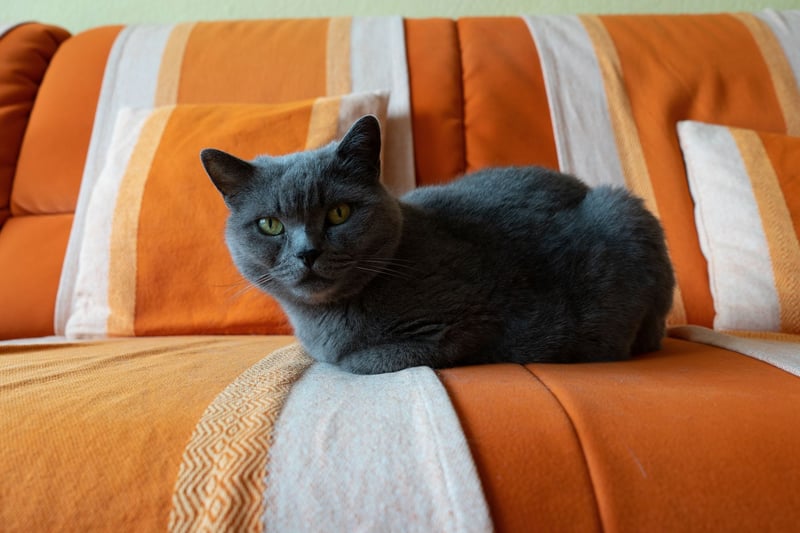
  3. 3 British Shorthair
  4. 4 RagaMuffin
  5. 5 Chartreux
  6. 6 European Burmese
  7. 7 Burmese
  8. 8 Tonkinese
  9. 9 British Longhair
  10. 10 European Shorthair

A first cat needs to be forgiving: a stable temperament that tolerates a novice's mistakes (a poorly placed litter box, overly rough play, trial-and-error feeding). Three traits make the difference — good learning ability (the cat quickly picks up good habits), a temperament that moves toward humans rather than away from them, and decent tolerance of its own kind if you're considering a second cat later. Avoid highly specialized breeds for a first adoption: Sphynx (regular baths, cold tolerance 1/5, heated indoor space mandatory), Siamese (vocality 5/5, hard for a beginner to manage), Bengal (energy 5/5, frustrating without experience). The breeds recommended below combine a stable temperament, health well tracked through LOOF breeding, and ease of training.

10 recommended breeds

Every portrait opens the full profile: temperament, living conditions, health, budget and cited sources.

Ragdoll

1

Ragdoll

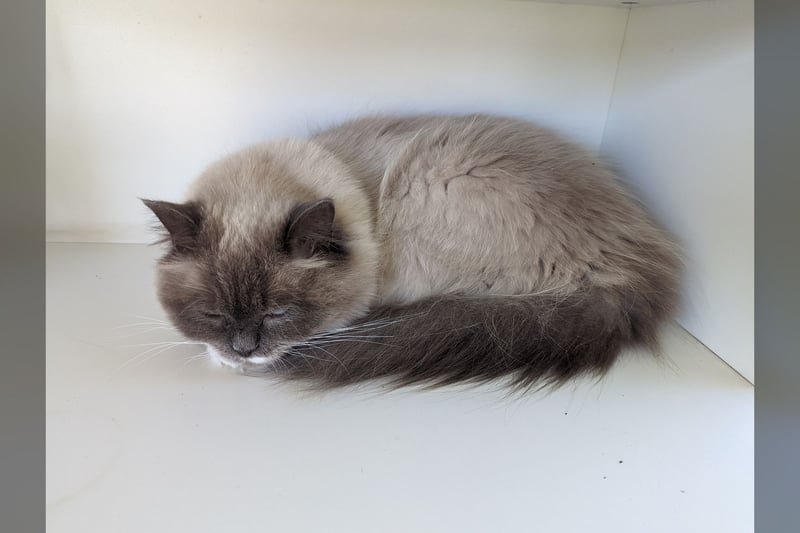
The Ragdoll is a large semi-longhaired colorpoint cat, developed in the 1960s in California by breeder Ann Baker. Its name — literally "rag doll" — comes from its behavioral quirk: it tends to go completely limp in its owners' arms, becoming as floppy as a plush toy. A popular breed in France with a regular place in the LOOF top 10, it has become one of the default choices for households looking for a calm, gentle, demonstrative cat.

4 to 9 kg 14 years
See the profile
Birman

2

Birman

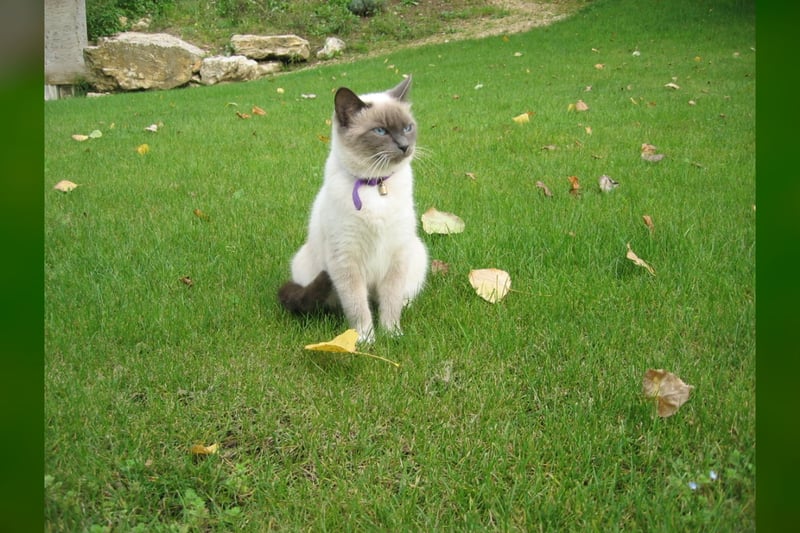
The Birman, also known as the Sacred Cat of Burma, is a semi-longhaired colorpoint cat recognizable by its four pure white gloves and its deep sapphire eyes. A French breed officially recognized as early as 1925, it holds a steady place near the top of the LOOF's most-registered breeds in France.

3 to 7 kg 14 years
See the profile
British Shorthair

3

British Shorthair

The British Shorthair is one of the oldest cat breeds in Europe, descended from cats brought to Great Britain by the Roman legions. A top-3 breed in France at the LOOF, it is recognizable by its perfectly round head, chubby cheeks and short, dense coat. Nicknamed the "British gentleman" of the cat world, it combines calm, dignity and measured affection.

4 to 8 kg 14 years
See the profile
RagaMuffin

4

RagaMuffin

The RagaMuffin is a large semi-longhaired cat that emerged in the early 1990s in the United States, born of a deliberate split by breeders who broke away from the Ragdoll circle. Recognized in championship status by the CFA in 2011, it stands apart from its ancestor with an unrestricted color palette — every coat is admitted except colorpoints, reserved for breeding programs — and a slightly larger build (males up to 9 kg). Its central character trait is a complete muscular go-limp in the arms, extreme docility and a strong emotional dependence on its people. Still a little-known breed in France compared with the Ragdoll, it is steadily climbing the rankings of interest for households looking for a large cuddly cat.

4 to 9 kg 14 years
See the profile
Chartreux

5

Chartreux

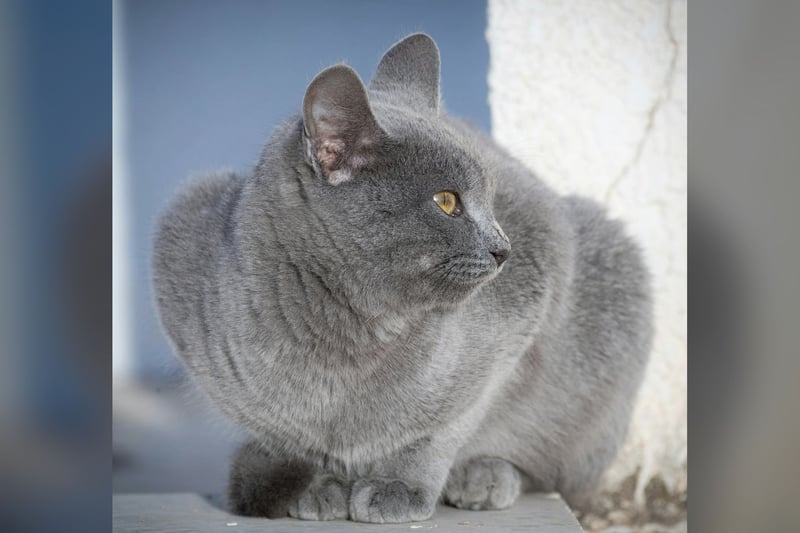
The Chartreux is one of the few cat breeds native to France, developed in the 1930s and officially recognized in 1939. Recognizable by its solid blue coat — ranging from lavender-gray to deep slate — and its intense gold to copper eyes, it ranks among the top 10 most registered breeds at the LOOF, with around 2,000 pedigrees a year. Its legendary discretion, its watchful character and its expression suggesting a permanent "smile" have made it one of the emblematic representatives of French cat fancying.

4 to 7 kg 14 years
See the profile
European Burmese

6

European Burmese

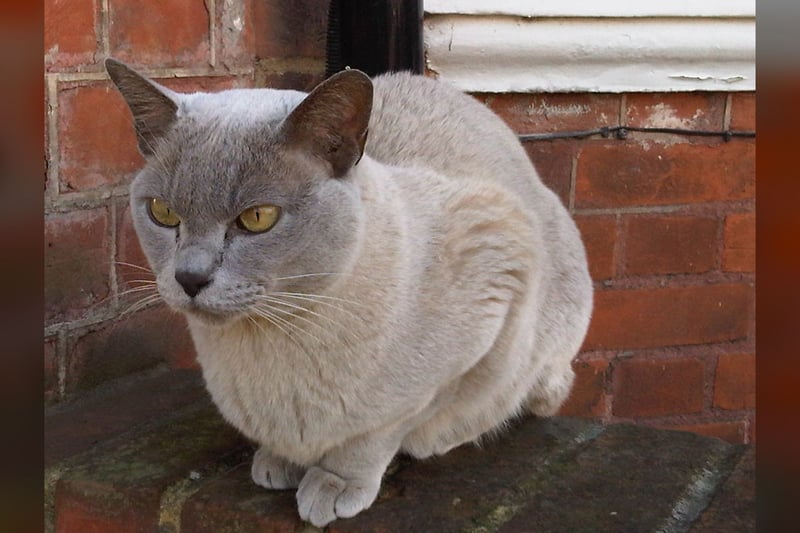
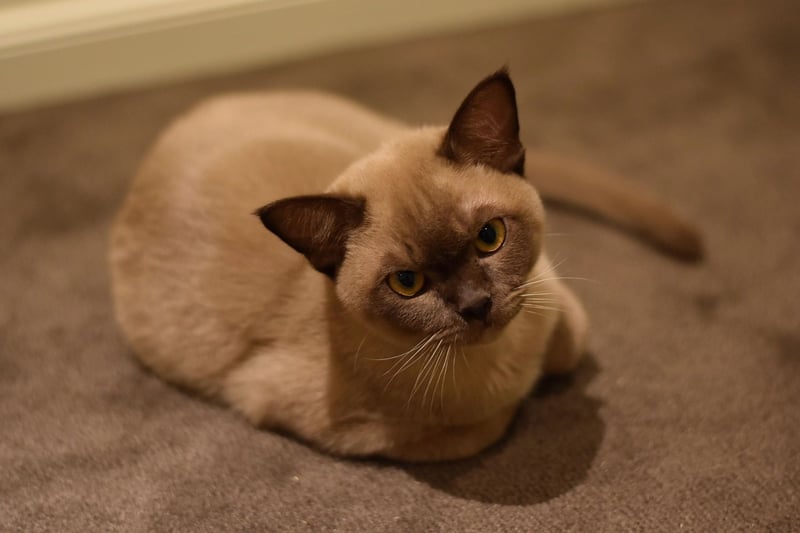
The European Burmese is a cat with a muscular semi-foreign body, descended from British and German lines developed from the 1950s onward. Its build is less extreme than the American Burmese's: a moderate V-shaped head, a muzzle that is not flattened, and amber almond eyes. Its silky sable-brown coat can also come in blue, chocolate or lilac.

3.5 to 6.5 kg 15 years
See the profile
Burmese

7

Burmese

The Burmese is a shorthaired breed native to Southeast Asia, founded on a single female cat — Wong Mau — imported to the United States in 1930 by Dr. Joseph Thompson. Note: the Burmese has no connection to the Birman (Sacred Cat of Burma). These are two radically different breeds: the Burmese has a short, satiny brown coat and amber eyes; the Birman has a long colorpoint coat and white gloves. The Burmese today exists in two separately recognized types — American (very round cobby) and European (more moderate semi-foreign) — and in many colors beyond the classic sable brown.

3.5 to 6 kg 14 years
See the profile
Tonkinese

8

Tonkinese

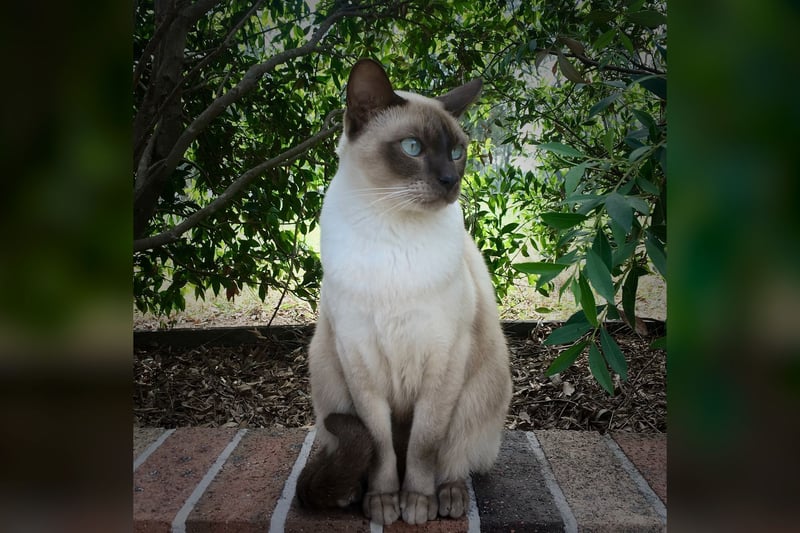
The Tonkinese is the deliberate result of a cross between the Siamese and the Burmese, two breeds that have been naturally related for centuries in Southeast Asia. Stabilized in North America in the 1960s from the founding female Wong Mau, it is recognized by the CFA and the LOOF. Its "mink" coat — a pattern intermediate between the Siamese colorpoint and the Burmese sepia — and its aqua-turquoise eyes make it an immediately recognizable breed. Temperamentally, it sits right in the middle between its two parent breeds: as affectionate and social as the Burmese, as playful and intelligent as the Siamese, without either the extreme vocal intensity of the one or the possessive exclusivity of the other.

3.5 to 5.5 kg 14 years
See the profile
British Longhair

9

British Longhair

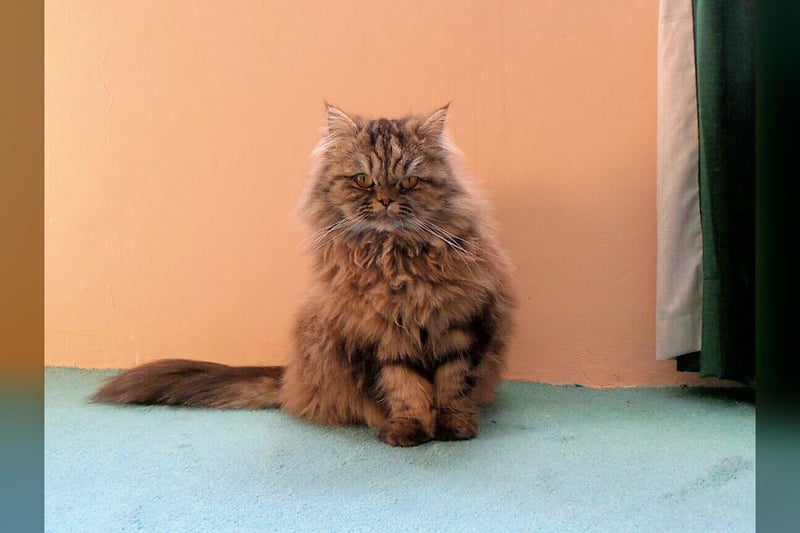
The British Longhair is the semi-longhaired variant of the British Shorthair, born from the reappearance of the recessive long-hair gene introduced through crosses with the Persian after the World Wars. Recognized separately by the LOOF in 2000, then by TICA and the WCF in 2009, it shares the same cobby build and the same placid temperament as its shorthaired cousin, with the bonus of a dense, silky coat that gives it a quietly elegant bearing.

3 to 8 kg 13 years
See the profile
European Shorthair

10

European Shorthair

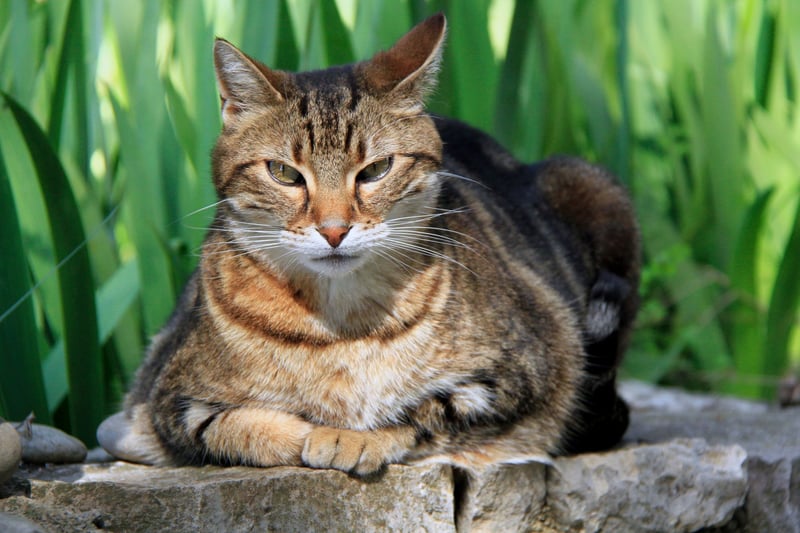
The European — officially "European Shorthair" in FIFe's registries — is the pedigree version of the domestic European cat: a precise morphological standard, a traceable pedigree and official recognition by the LOOF set this breed apart from an ordinary house cat with no pedigree, even though the two can look alike. A natural breed born of centuries of spontaneous selection across the continent, it has been recognized by the FIFe since 1983 and is registered with the LOOF under the name "European Shorthair." Medium to large in size, muscular and well balanced, it combines a genetic sturdiness unmatched among recognized breeds with an independent yet genuinely affectionate temperament.

3.5 to 7 kg 15 years
See the profile

Practical advice

  • Adopt from a LOOF breeder with a written sales contract, pedigree, initial vaccinations and microchipping — real legal protection in case of a health problem.
  • Prepare the equipment before arrival: a cat tree at least 1.2 m tall, 2 stainless steel bowls, clumping litter, a soft carrier, feather-wand toys.
  • Schedule the first vet visit within the week following adoption: health checkup, vaccination schedule, breed-appropriate nutrition advice.
  • Take out pet health insurance as early as 2-3 months of age: costs 8-15 €/month, covers 60-80% of costs in case of surgery or chronic illness.
  • Don't adopt two kittens at the same time as a first pet — managing a single animal lets you learn the fundamentals without burning out.

Frequently asked questions

Should you start with a pedigreed cat or a European Shorthair?
Both have their advantages. A non-pedigreed cat adopted from a shelter is very sturdy, inexpensive (50-200 €, microchipping and neutering usually included) and often has a stable temperament — not to be confused with the European Shorthair, a breed recognized by the LOOF that costs the price of a pedigreed cat. A pedigreed breed (Ragdoll, British Shorthair) costs 800-1500 € but offers far better predictability of temperament and health tracking from the breeder. For a first-time adopter, a shelter cat is often the best compromise.
Should you adopt a kitten or an adult cat?
A kitten (3-6 months) if you want to be involved in its socialization and set your own habits — more work but a stronger bond. An adult (2+ years) if you want to skip the intense kitten phase — litter training already acquired, predictable temperament. For a beginner who works remotely, a kitten is an excellent learning experience.
How much does a cat really cost in its first year?
Between 650 € and 2 500 € depending on the route chosen. Adoption (LOOF breeder 800-1500 € or shelter 100-250 €), initial equipment (200-400 €), vaccinations and microchipping (150-200 €), neutering (100-200 €), insurance (100-180 €/year). The low end of the range corresponds to a shelter cat already microchipped and neutered, the high end to a pedigreed breeder kitten. From the 2nd year onward, routine budget of 60-100 €/month.
Is the Ragdoll really 'the perfect cat' for a beginner?
Almost. A 'velcro cat' temperament, tolerates handling, low vocality (2/5), intelligent. The one real downside: its sensitivity to solitude (independence 1/5) — rule it out if you work more than 8 hours a day away from home. Its semi-long coat needs weekly brushing of 5-10 min, no more.
What mistakes should a first-time adopter avoid?
Five classic mistakes: 1) Adopting from a pet store (untracked bloodlines, frequent health problems), 2) Not neutering (urine marking in males, roaming in females), 3) Giving cow's milk (digestive intolerance), 4) Physical punishment (breaks trust), 5) Ignoring the first behavioral year (habits set for life).
Where should a first-time adopter go in France?
Three reliable routes: 1) Breeders registered with the LOOF (directory at loof.asso.fr) for pedigreed breeds, 2) Shelters (SPA, 30 Millions d'Amis) for non-pedigreed cats and adults, 3) Feline welfare associations, which often place cats already tested for FIV/FeLV. Avoid unregulated private listings: with no pedigree, no microchipping and no litter traceability, you have no recourse in case of a health problem.
Sources