CatMatch My selection FR

Which cat suits an elderly person or senior?

8 calm, independent, low-vocal cat breeds suited to a quiet senior lifestyle. A reasoned LOOF/FIFe selection.

  1. 1 Chartreux
  2. 2 British Shorthair
  3. 3 Russian Blue
  4. 4 European Shorthair
  5. 5 British Longhair
  6. 6 Scottish Straight
  7. 7 American Shorthair
  8. 8 Nebelung

A cat for a senior meets three specific requirements rarely spelled out: it must be self-sufficient (no nighttime wake-ups to play), low-vocal (senior neighborhoods tolerate repeated meowing poorly), and physically suited to limited care (daily grooming can become a burden after age 70-75). The breeds that check all three boxes are rare but identifiable: Chartreux, British Shorthair, Russian Blue, European Shorthair — all selected over centuries for close cohabitation without excessive demands. Conversely, the Siamese and the Sphynx, despite their affectionate reputation, are not recommended for a first senior adoption — the Siamese for its vocal intensity, the Sphynx for its need for monthly baths and strict heating (sensitive to cold).

8 recommended breeds

Every portrait opens the full profile: temperament, living conditions, health, budget and cited sources.

Chartreux

1

Chartreux

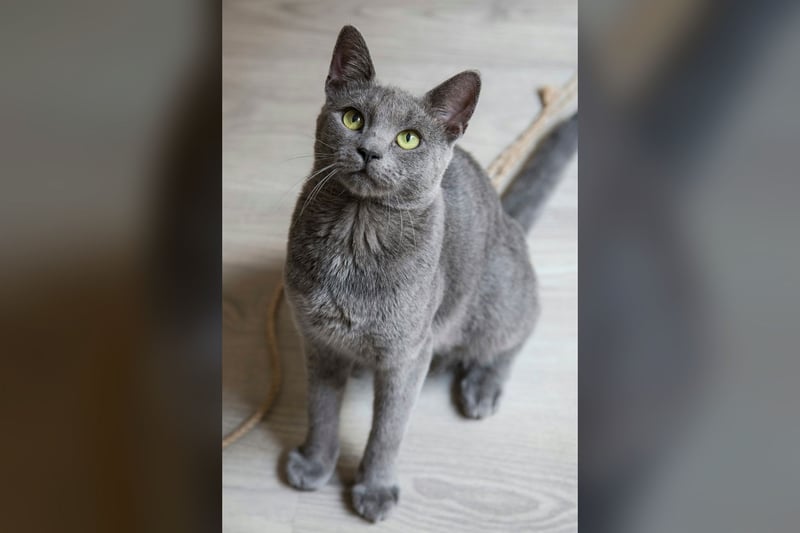
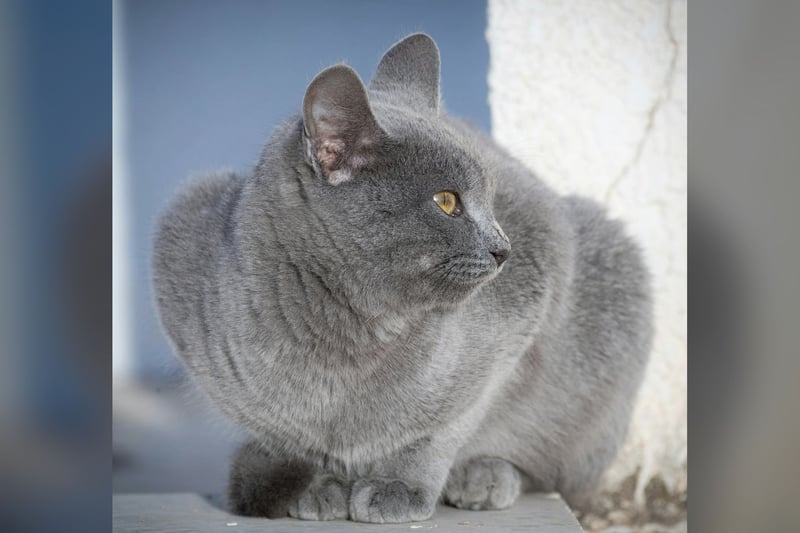
The Chartreux is one of the few cat breeds native to France, developed in the 1930s and officially recognized in 1939. Recognizable by its solid blue coat — ranging from lavender-gray to deep slate — and its intense gold to copper eyes, it ranks among the top 10 most registered breeds at the LOOF, with around 2,000 pedigrees a year. Its legendary discretion, its watchful character and its expression suggesting a permanent "smile" have made it one of the emblematic representatives of French cat fancying.

4 to 7 kg 14 years
See the profile
British Shorthair

2

British Shorthair

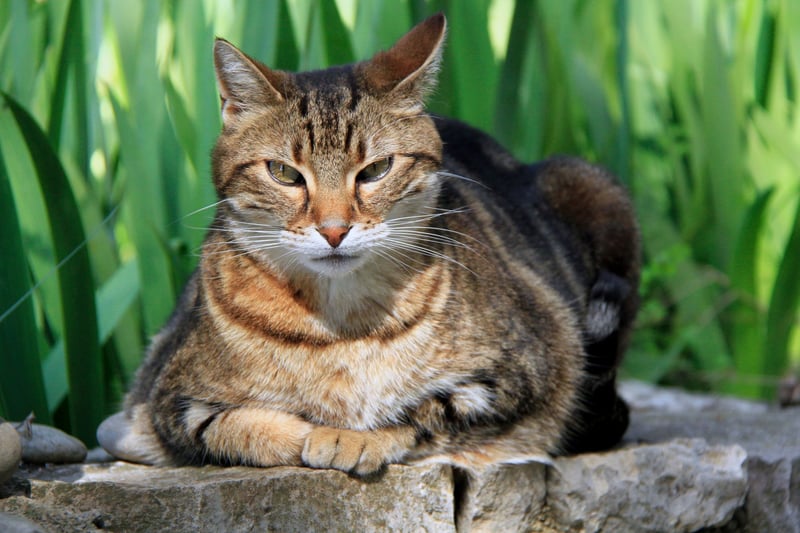
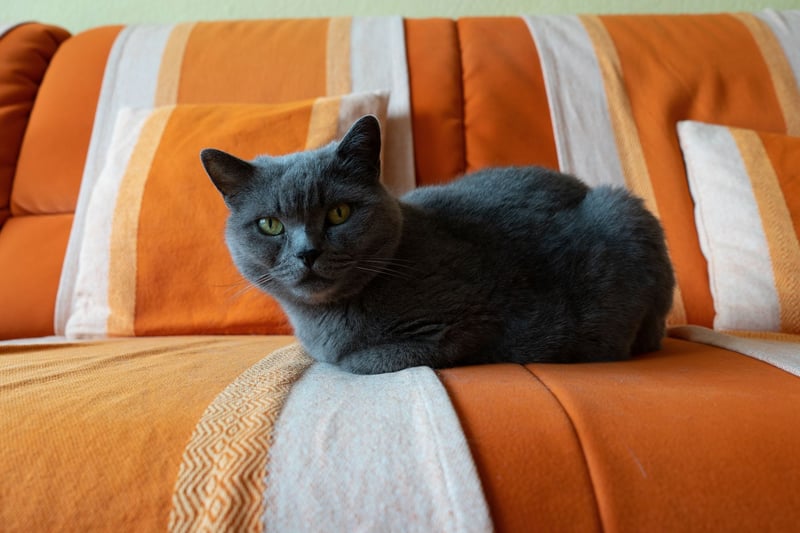
The British Shorthair is one of the oldest cat breeds in Europe, descended from cats brought to Great Britain by the Roman legions. A top-3 breed in France at the LOOF, it is recognizable by its perfectly round head, chubby cheeks and short, dense coat. Nicknamed the "British gentleman" of the cat world, it combines calm, dignity and measured affection.

4 to 8 kg 14 years
See the profile
Russian Blue

3

Russian Blue

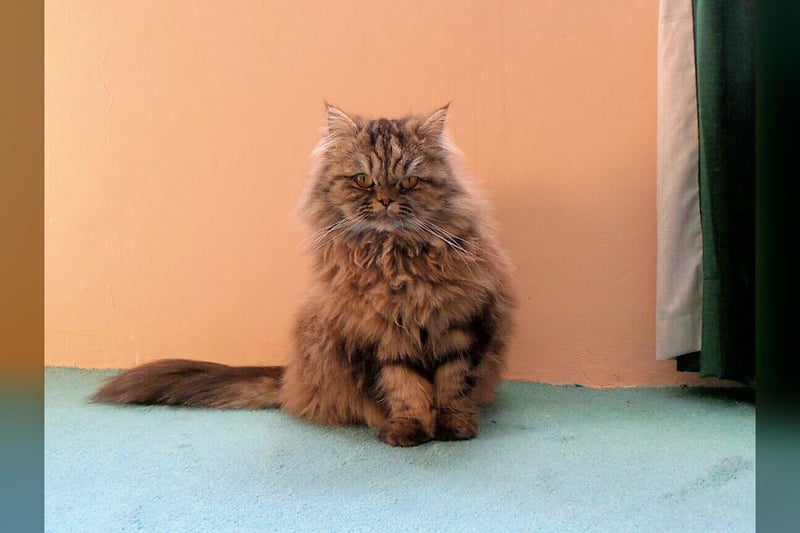
The Russian Blue is the historic and longest-recognized color variant of the Russian breed, native to the port of Arkhangelsk in northwestern Russia. First shown at the Crystal Palace in London in 1872 under the name "Archangel Blue," it is recognized today by every major cat federation worldwide — FIFe, TICA, CFA, GCCF and LOOF. Its silvery-blue coat with a pearly sheen, its intense green eyes and its short plush double coat are the immediately recognizable markers of a breed with a discreet, devoted, observant temperament.

3.5 to 7 kg 15 years
See the profile
European Shorthair

4

European Shorthair

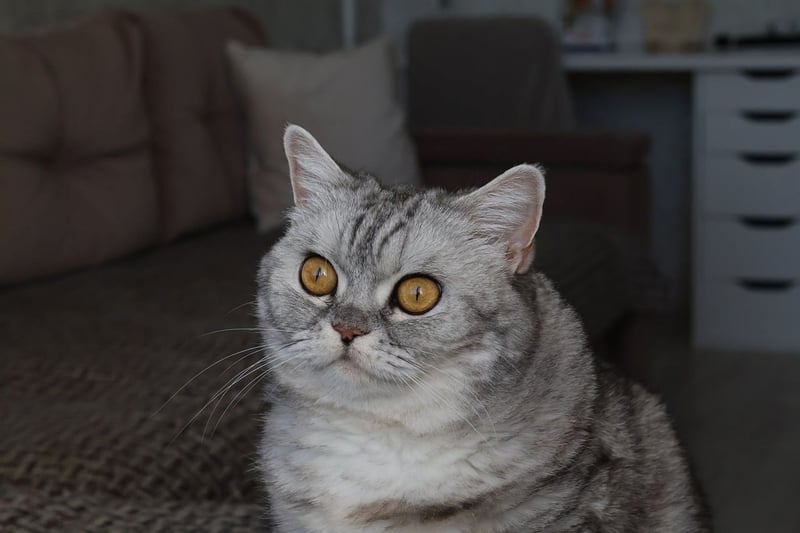
The European — officially "European Shorthair" in FIFe's registries — is the pedigree version of the domestic European cat: a precise morphological standard, a traceable pedigree and official recognition by the LOOF set this breed apart from an ordinary house cat with no pedigree, even though the two can look alike. A natural breed born of centuries of spontaneous selection across the continent, it has been recognized by the FIFe since 1983 and is registered with the LOOF under the name "European Shorthair." Medium to large in size, muscular and well balanced, it combines a genetic sturdiness unmatched among recognized breeds with an independent yet genuinely affectionate temperament.

3.5 to 7 kg 15 years
See the profile
British Longhair

5

British Longhair

The British Longhair is the semi-longhaired variant of the British Shorthair, born from the reappearance of the recessive long-hair gene introduced through crosses with the Persian after the World Wars. Recognized separately by the LOOF in 2000, then by TICA and the WCF in 2009, it shares the same cobby build and the same placid temperament as its shorthaired cousin, with the bonus of a dense, silky coat that gives it a quietly elegant bearing.

3 to 8 kg 13 years
See the profile
Scottish Straight

6

Scottish Straight

The Scottish Straight is the Scottish Fold with straight ears: the same rounded cobby build, the same placid, discreet temperament, but without the characteristic ear fold. Recognized by TICA as a breed in its own right, it plays a central role in ethical Fold × Straight breeding programs that avoid the Fd/Fd homozygotes responsible for severe feline osteochondrodysplasia. Its longhaired version is called the Highland Straight.

3 to 6 kg 14 years
See the profile
American Shorthair

7

American Shorthair

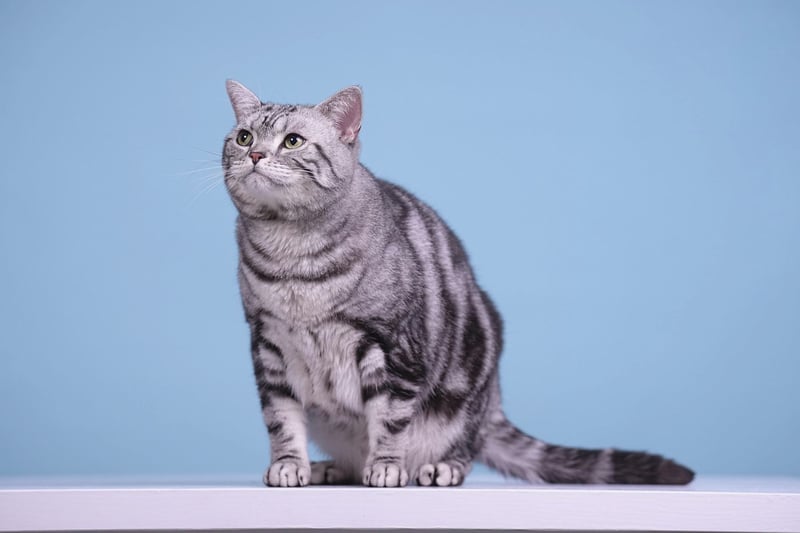
The American Shorthair is the pedigree version of the American colonial farm cat, a direct descendant of the cats carried aboard early settlers' ships to protect provisions from rodents. A muscular semi-cobby body, more than 80 recognized colors and patterns — including the classic silver tabby that has become the breed's emblem —, and a balanced, no-extremes temperament. One of the CFA's five founding breeds in 1906, it is uncommon in France but ranks in the top 10 in the United States.

3.5 to 7 kg 17 years
See the profile
Nebelung

8

Nebelung

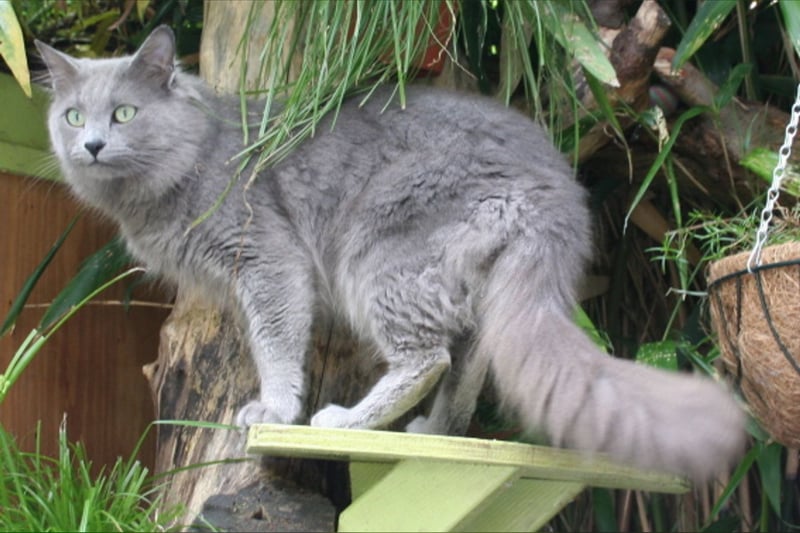
The Nebelung — German for "creature of the mist" — is the semi-longhair variant of the Russian Blue, produced by the expression of a recessive semi-long gene. Developed in the United States in the 1980s, it has been recognized in championship by TICA since 1997 and registered with the LOOF, where its numbers remain small. Its soft, semi-long silver-blue coat with pearly highlights, its intense green eyes and its quiet, contemplative temperament make it a discreet cat of deep loyalty toward its own people.

3.5 to 6.5 kg 15 years
See the profile

Practical advice

  • Adopt an adult cat aged 2-4 rather than a kitten: stabilized temperament, litter training already acquired, less tiring hyperactivity.
  • Favor the most independent breeds in this selection (4/5): Chartreux, British Shorthair, British Longhair, European Shorthair, American Shorthair — they occupy themselves when you're tired.
  • Plan ahead for a raised litter box or one with low sides if bending down daily is difficult for you.
  • Set aside a monthly vet budget rather than absorbing costs one at a time — better prevention, predictable spending.
  • Consider an in-home pet-sitting service in case of hospitalization: the breeds recommended here cope well with 2-3 days alone with a daily visit.

Frequently asked questions

Is there a maximum age for adopting a cat as a senior?
There's no legal limit, but common sense suggests considering the cat's lifespan (12-15 years on average) and what would happen to it if you could no longer keep it. Adopting an adult cat aged 5-7 better aligns life expectancies for an adopter aged 70+. Many shelters offer senior cats for adoption with a guaranteed take-back policy.
Is the Chartreux really suited to elderly owners?
Yes — it's the breed most often recommended by senior associations. Calm and quiet temperament (vocal 2/5), independent, sturdy, low grooming needs (weekly brushing is enough), life expectancy of 13-15 years. Bonus: it's a French breed recognized by the LOOF.
Do you need a pedigreed cat, or is a European Shorthair enough?
A cat without a pedigree — the 'house cat,' commonly called a moggy — is perfect for this profile: sturdy, independent, adoptable from a shelter for the price of microchipping and neutering. Be careful not to confuse it with the European Shorthair, which is a breed recognized by the LOOF with its own standard and its own price. Pedigreed breeds (Chartreux, British Shorthair) offer predictable temperament and tracked bloodlines, but cost several hundred euros to adopt.
What if I have to move into a nursing home or long-term care?
Plan for this from the moment of adoption: identify a relative who could take over the cat, or contact an animal welfare organization (SPA, 30 Millions d'Amis) to learn about their take-back and rehoming conditions. Some nursing homes accept pets, others don't, and the rule varies from one facility to another — this question needs answering before the adoption, not at the moment of admission.
Will a cat worsen my joint pain?
Not mechanically, and having a pet is generally associated with better morale in elderly people. The breeds recommended here are calm and don't demand sustained physical play. Two concrete points of attention: carrying litter bags (8-12 kg), which you can have delivered or buy in small formats, and fall risk — a cat rubbing against your legs or sleeping in a hallway is an obstacle, especially at night. Night lighting and food bowls kept out of walkways handle most of it.
How much does it cost to keep a senior cat?
50-80 € a month in routine costs: premium senior food (25-35 €), litter (10-15 €), routine vet provisions (15-30 €). From age 8-10, plan for an extra 20-30 €/month for annualized geriatric checkups and any joint treatments.
Sources