CatMatch My selection FR

Which cat has a long or semi-long coat?

10 cat breeds with a spectacular coat: Persian, Norwegian Forest Cat, Maine Coon, Siberian. For those who love the look and the brushing. A LOOF/FIFe selection.

  1. 1 Persian
  2. 2 Himalayan
  3. 3 Maine Coon
  4. 4 Norwegian Forest Cat
  5. 5 Siberian
  6. 6 Birman
  7. 7 Ragdoll
  8. 8 British Longhair
  9. 9 Selkirk Rex
  10. 10 Nebelung

A long- or semi-long-haired cat comes with a daily commitment — the #1 criterion often underestimated by adopters drawn in by the looks. Count on 10-15 minutes of brushing a day for a Persian (very long coat backed by a dense undercoat, the combination most prone to mats), 5-7 minutes for a Maine Coon or a Siberian (semi-long coat, ample undercoat but a less felting texture), 5 minutes for a Birman (semi-long coat with no dense undercoat). Without this commitment, the coat turns into matted patches that require a veterinary shave (50-100 €, traumatic for the cat). Beyond grooming, longhaired breeds are often marked by a calmer temperament (less energy devoted to hunting, more to napping) — hence their 'luxury couch cat' image.

10 recommended breeds

Every portrait opens the full profile: temperament, living conditions, health, budget and cited sources.

Persian

1

Persian

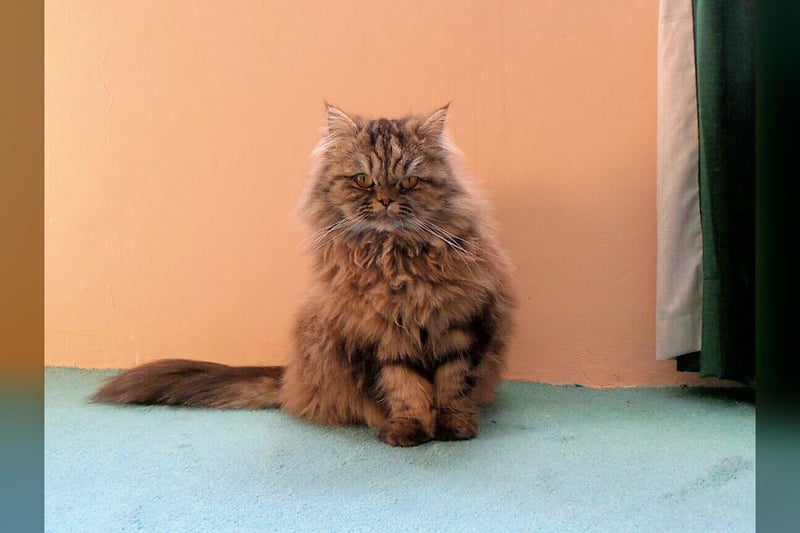
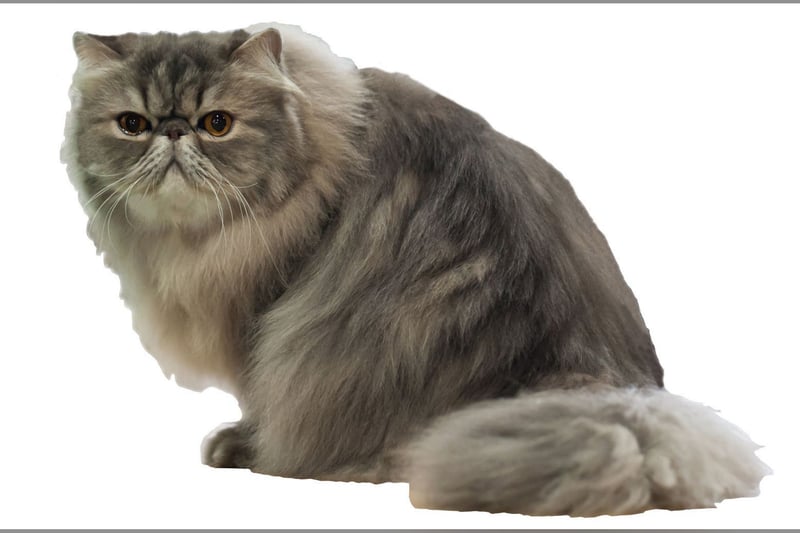
The Persian is one of the oldest and most recognizable cat breeds in the world, with its long, dense coat, its expressive flat face and its remarkably serene character. An emblematic longhaired breed, it is particularly well suited to apartment life and suits families looking for a calm, affectionate companion — provided they accept daily coat maintenance and heightened health vigilance linked to its brachycephalic build.

3 to 5.5 kg 14 years
See the profile
Himalayan

2

Himalayan

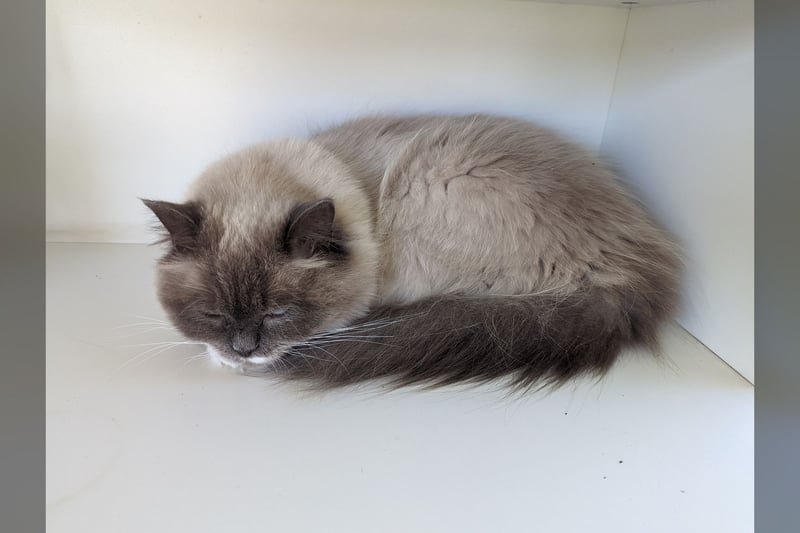
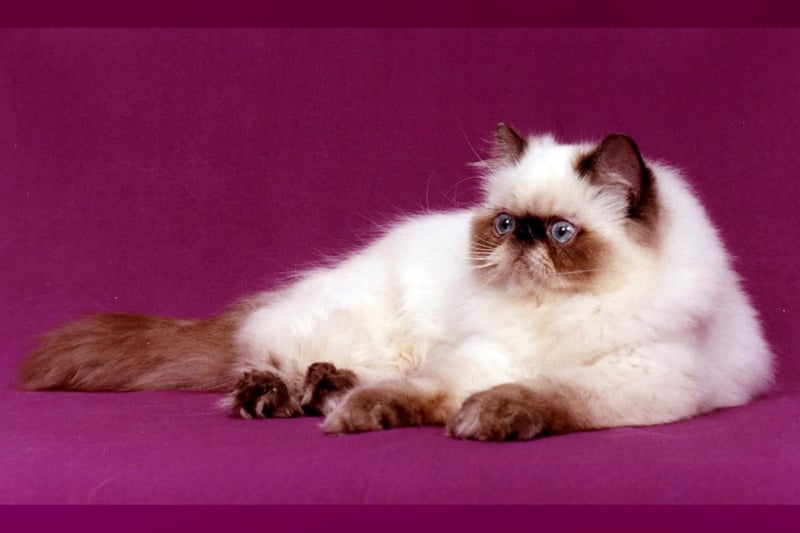
The Himalayan is a colorpoint Persian: the same brachycephalic cobby build, the same extra-long cottony coat, the same calm, placid temperament — plus the colorpoint pattern inherited from the Siamese (light body, dark mask, ears, legs and tail) and mandatory blue eyes. An apartment breed par excellence, it requires rigorous daily coat care and the same health vigilance as the Persian: an essential PKD1 DNA test, HCM and brachycephaly monitoring.

3 to 5.5 kg 13 years
See the profile
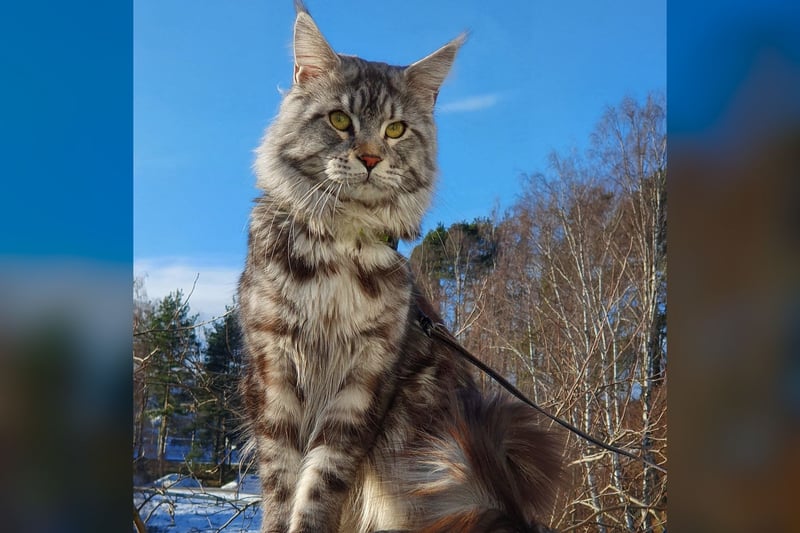
Maine Coon

3

Maine Coon

The Maine Coon is the largest semi-longhaired domestic cat, native to the state of Maine (USA), weighing 5 to 10 kg depending on sex. The number one breed in France at the LOOF since 2012, with more than 26 000 registrations a year, it is nicknamed the "gentle giant" for its calm, sociable temperament despite its imposing frame.

5 to 10 kg 13 years
See the profile
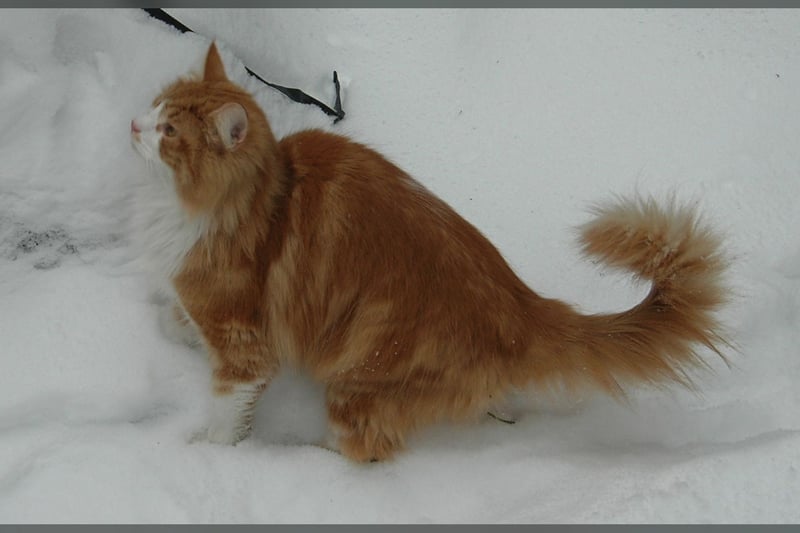
Norwegian Forest Cat

4

Norwegian Forest Cat

The Norwegian Forest Cat, or "Skogkatt" in its native language, is the official national breed of Norway: a large, semi-wild cat adapted to harsh Nordic climates, with a waterproof double coat and an athletic build. Recognized by the LOOF in the 1970s, it ranks among the top 10 most-registered breeds in France, with around 3 500 annual registrations, trailing the Maine Coon among large semi-longhaired cats.

3.5 to 9 kg 15 years
See the profile
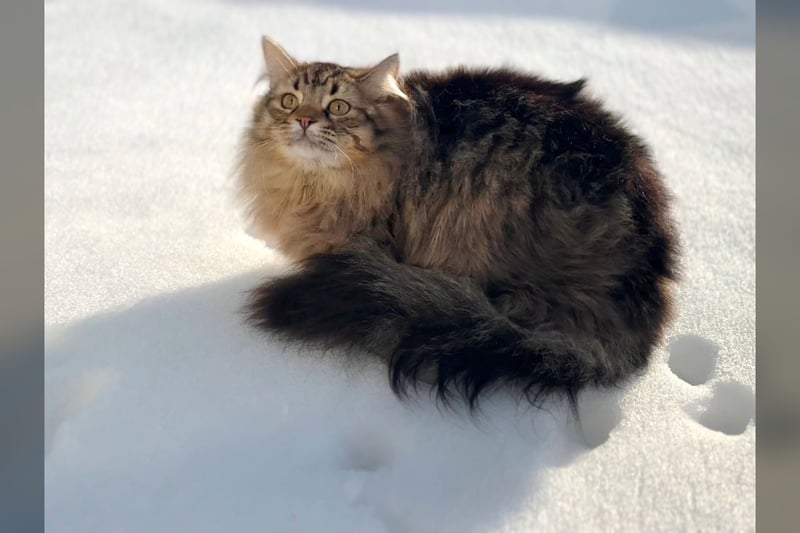
Siberian

5

Siberian

The Siberian is a Russian natural breed whose documented history dates back to the year 1000, shaped by millennia of extreme Siberian winters. It stands out for its semi-water-resistant triple coat, its powerful semi-cobby build and, above all, a rare immunological trait: about half of individuals produce Fel d 1 levels — the main feline allergen protein — statistically below average, making it the breed best documented for tolerance among allergy sufferers. Ranked near the top of LOOF registrations in France, recognized by the CFA since 2000 and by FIFe, it remains a large cat (4–9 kg depending on sex) with slow maturity (3–5 years) and a long lifespan.

4 to 9 kg 15 years
See the profile
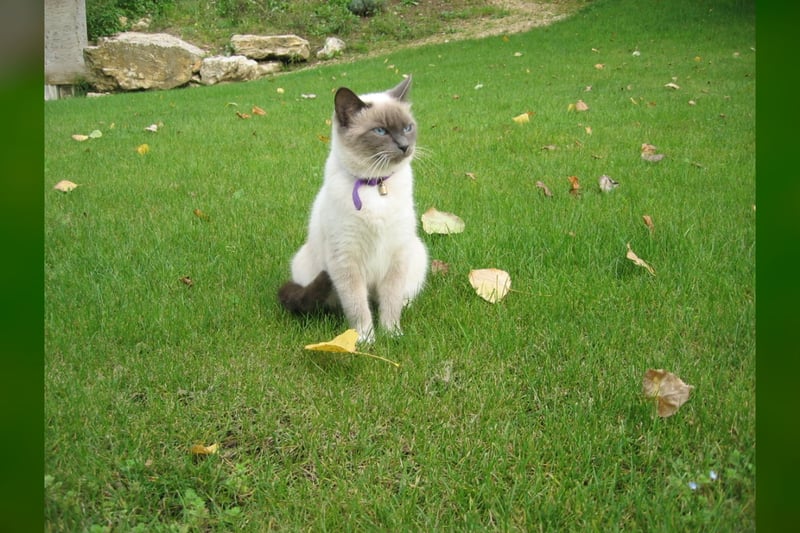
Birman

6

Birman

The Birman, also known as the Sacred Cat of Burma, is a semi-longhaired colorpoint cat recognizable by its four pure white gloves and its deep sapphire eyes. A French breed officially recognized as early as 1925, it holds a steady place near the top of the LOOF's most-registered breeds in France.

3 to 7 kg 14 years
See the profile
Ragdoll

7

Ragdoll

The Ragdoll is a large semi-longhaired colorpoint cat, developed in the 1960s in California by breeder Ann Baker. Its name — literally "rag doll" — comes from its behavioral quirk: it tends to go completely limp in its owners' arms, becoming as floppy as a plush toy. A popular breed in France with a regular place in the LOOF top 10, it has become one of the default choices for households looking for a calm, gentle, demonstrative cat.

4 to 9 kg 14 years
See the profile
British Longhair

8

British Longhair

The British Longhair is the semi-longhaired variant of the British Shorthair, born from the reappearance of the recessive long-hair gene introduced through crosses with the Persian after the World Wars. Recognized separately by the LOOF in 2000, then by TICA and the WCF in 2009, it shares the same cobby build and the same placid temperament as its shorthaired cousin, with the bonus of a dense, silky coat that gives it a quietly elegant bearing.

3 to 8 kg 13 years
See the profile
Selkirk Rex

9

Selkirk Rex

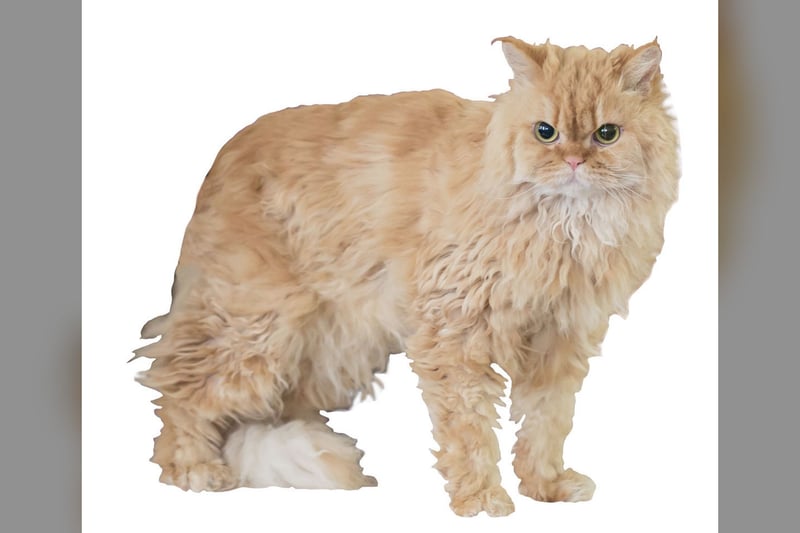
The Selkirk Rex was born in 1987 in Montana from a spontaneous, autosomal dominant mutation, the only one in the rex world to produce a cat with a cobby, massive build. Its dense, spiral-curled coat — available in shorthair and longhair versions — is not the result of crossing rex breeds: the Selkirk's curls form distinct ringlets across all three layers of the coat, unlike the flat waves of the Cornish or Devon Rex. A calm, patient, sociable breed, it suits families as well as multi-pet households, provided you plan for regular curl maintenance and rigorous genetic screening linked to its Persian and British Shorthair ancestry.

4 to 7 kg 14 years
See the profile
Nebelung

10

Nebelung

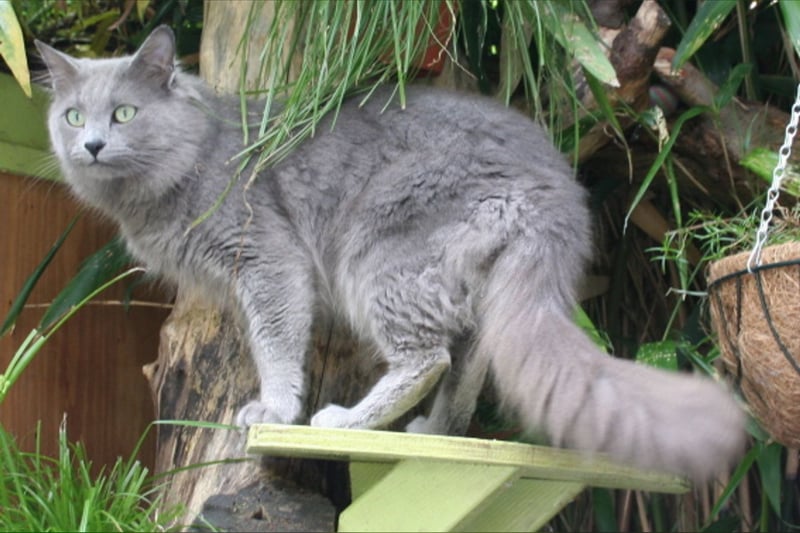
The Nebelung — German for "creature of the mist" — is the semi-longhair variant of the Russian Blue, produced by the expression of a recessive semi-long gene. Developed in the United States in the 1980s, it has been recognized in championship by TICA since 1997 and registered with the LOOF, where its numbers remain small. Its soft, semi-long silver-blue coat with pearly highlights, its intense green eyes and its quiet, contemplative temperament make it a discreet cat of deep loyalty toward its own people.

3.5 to 6.5 kg 15 years
See the profile

Practical advice

  • Honestly assess your time commitment: 10-15 min/day of brushing is non-negotiable for an adult Persian.
  • Invest in dedicated tools: a wide-toothed metal comb + an undercoat deshedding brush, FURminator-type (60-80 € upfront).
  • Get the kitten used to brushing from 8-10 weeks with short, positive sessions — an adult Persian that refuses brushing is unmanageable.
  • Schedule 2-3 professional grooming sessions a year for breeds with a very dense coat (Persian, Himalayan): 50-80 €/session.
  • Plan for a specific premium 'longhair' diet: high protein + omega-3/6 fatty acids for coat quality.

Frequently asked questions

How much brushing time per week for a longhaired cat?
It varies by breed: Persian 70-105 min/week (10-15 min/day), Maine Coon 35-50 min (5-7 min/day), Siberian also 35-50 min (equally ample undercoat), Ragdoll 30-40 min (5 min/day). Multiply by 1.5 to 2 during shedding season (spring and fall).
Is the Maine Coon really less demanding than a Persian?
Yes, clearly. The Maine Coon's semi-long coat is less prone to matting than the Persian's, which is longer and has a more felting texture. Count on 5-7 min/day versus 10-15 min/day for the Persian. Maine Coon bonus: sturdy temperament, good with children and other pets, impressive size.
Should a longhaired cat be professionally groomed?
Recommended 2-3 times a year for the Persian and Himalayan (50-80 €/session) — a professional groomer does a deep-clean job that's hard to replicate at home. Optional for the Maine Coon, Siberian, and Birman if you brush thoroughly every day.
Will my longhaired cat be too hot in summer?
If living in a hot climate (> 28 °C) without air conditioning, yes. Solutions: step up brushing in May-June to remove the winter undercoat, provide several cool spots (tile floors, a fan), consider a 'hygienic' trim (summer only, under the belly and between the legs) — not a full shave, which is traumatic.
Is the Persian really fragile?
No more than other pedigreed breeds, but it needs specific health attention. Brachycephaly (short muzzle) = possible breathing problems, chronic tearing that needs daily cleaning, crowded teeth that favor tartar. Choose a LOOF breeder tested for PKD1 (hereditary kidney disease).
How much does a longhaired cat cost?
75-135 €/month depending on the breed: premium longhair food (25-40 €), litter (10-15 €), routine vet provisions (20-40 €), brushes and grooming supplies (10-20 €), annualized professional grooming (10-20 €). Adoption from a LOOF breeder: expect 1200-2500 € for a Persian or Himalayan, 1000-1800 € for a Maine Coon, 800-1500 € for a Norwegian Forest Cat or Siberian.
Sources