CatMatch My selection FR

Which cat is extremely affectionate and clingy?

10 affectionate cat breeds that follow you everywhere: Ragdoll, Sphynx, Birman, Burmese. For those who want a 'dog-like cat'. A LOOF/FIFe selection.

  1. 1 Birman
  2. 2 Ragdoll
  3. 3 Sphynx
  4. 4 RagaMuffin
  5. 5 Burmese
  6. 6 Tiffanie
  7. 7 Donskoy
  8. 8 Tonkinese
  9. 9 European Burmese
  10. 10 Burmilla

The 'velcro cat' isn't a figure of speech — it's a precise temperament profile: affection 5/5, independence 1-2/5, and that habit of following its human from room to room. Ragdolls were selected around this trait in the 1960s, to the point where they 'flop' (go limp like a ragdoll) when picked up. Sphynxes, despite their unusual looks, are also intense velcro cats. The Birman, the Burmese, the RagaMuffin and the Tonkinese round out the list of breeds that thrive on near-constant proximity. Caution: they suffer badly from prolonged solitude. If you work away from home more than 8 hours a day, plan for a second cat or a pet-sitter.

10 recommended breeds

Every portrait opens the full profile: temperament, living conditions, health, budget and cited sources.

Birman

1

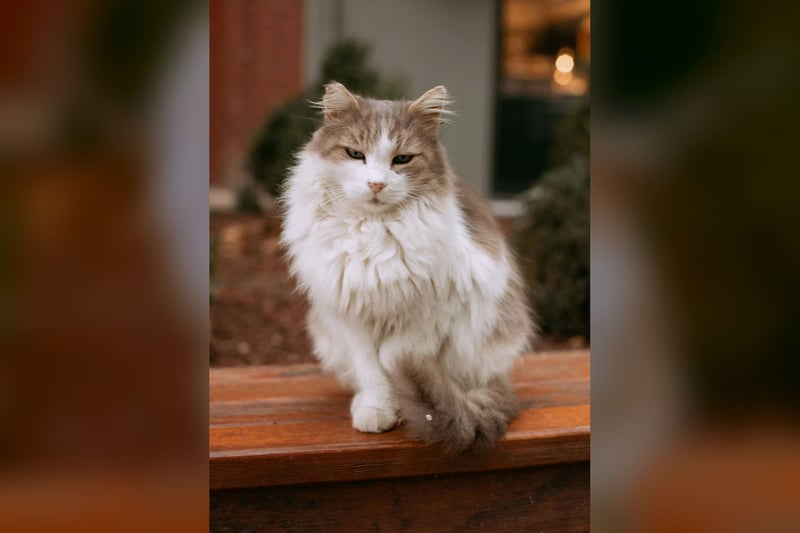
Birman

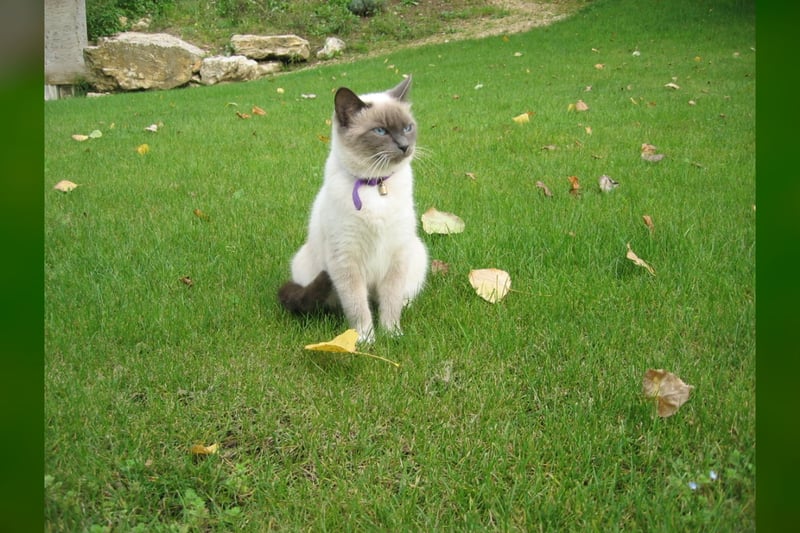
The Birman, also known as the Sacred Cat of Burma, is a semi-longhaired colorpoint cat recognizable by its four pure white gloves and its deep sapphire eyes. A French breed officially recognized as early as 1925, it holds a steady place near the top of the LOOF's most-registered breeds in France.

3 to 7 kg 14 years
See the profile
Ragdoll

2

Ragdoll

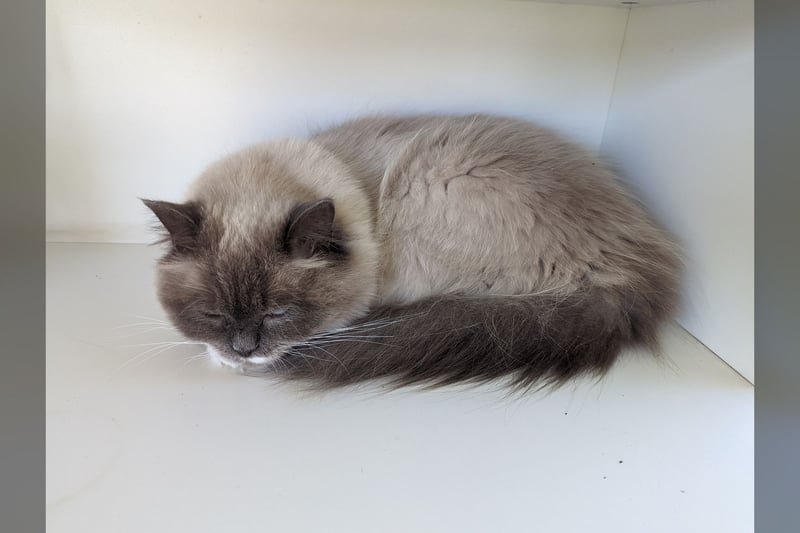
The Ragdoll is a large semi-longhaired colorpoint cat, developed in the 1960s in California by breeder Ann Baker. Its name — literally "rag doll" — comes from its behavioral quirk: it tends to go completely limp in its owners' arms, becoming as floppy as a plush toy. A popular breed in France with a regular place in the LOOF top 10, it has become one of the default choices for households looking for a calm, gentle, demonstrative cat.

4 to 9 kg 14 years
See the profile
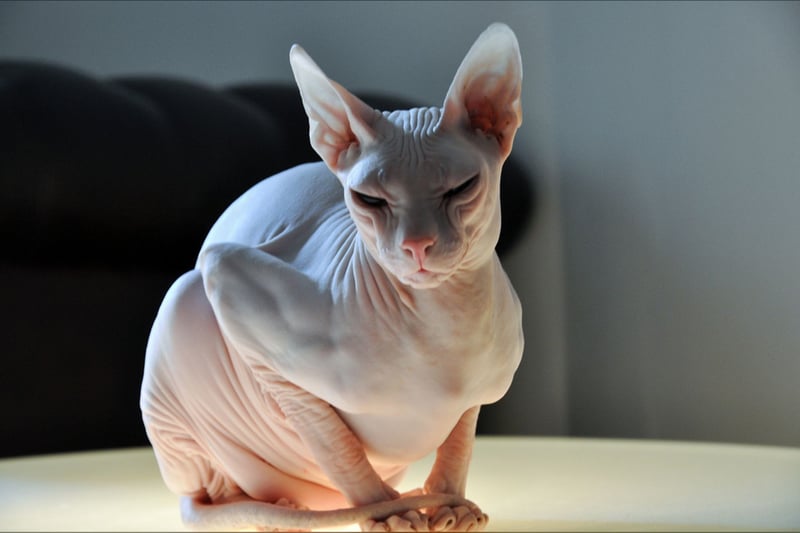
Sphynx

3

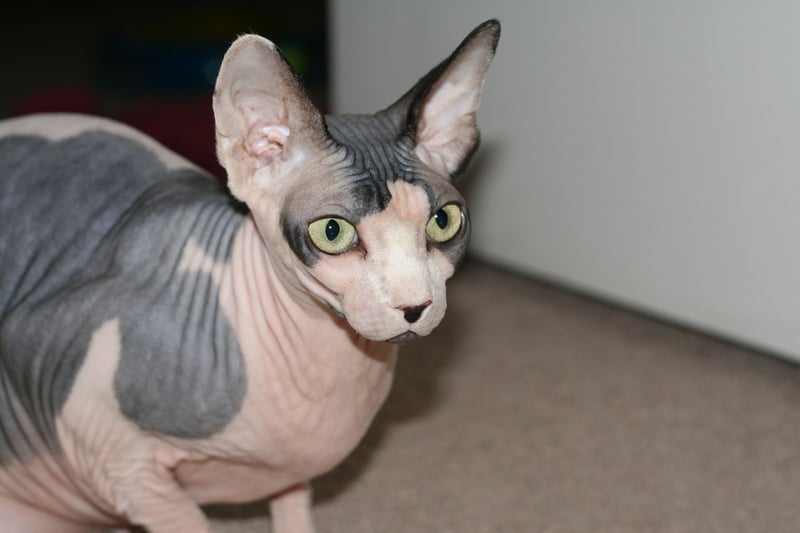
Sphynx

The Sphynx is the best-known hairless cat breed in the world, born from a spontaneous genetic mutation in Toronto in 1966. Permanently glued to its owners, unable to bear solitude, it is the opposite of the independent cat: a true affectionate hot-water bottle that slides under the covers and climbs onto shoulders. Its bare skin requires regular care and its life is spent exclusively indoors in a heated home.

3.5 to 6 kg 13 years
See the profile
RagaMuffin

4

RagaMuffin

The RagaMuffin is a large semi-longhaired cat that emerged in the early 1990s in the United States, born of a deliberate split by breeders who broke away from the Ragdoll circle. Recognized in championship status by the CFA in 2011, it stands apart from its ancestor with an unrestricted color palette — every coat is admitted except colorpoints, reserved for breeding programs — and a slightly larger build (males up to 9 kg). Its central character trait is a complete muscular go-limp in the arms, extreme docility and a strong emotional dependence on its people. Still a little-known breed in France compared with the Ragdoll, it is steadily climbing the rankings of interest for households looking for a large cuddly cat.

4 to 9 kg 14 years
See the profile
Burmese

5

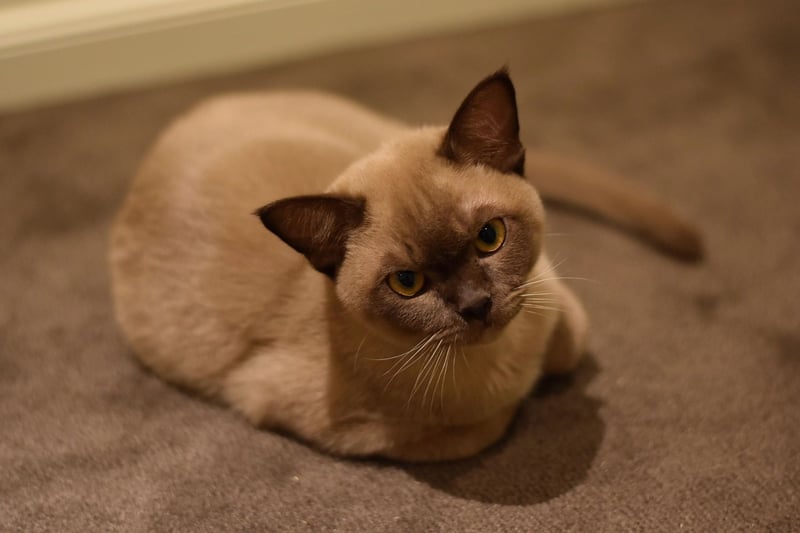
Burmese

The Burmese is a shorthaired breed native to Southeast Asia, founded on a single female cat — Wong Mau — imported to the United States in 1930 by Dr. Joseph Thompson. Note: the Burmese has no connection to the Birman (Sacred Cat of Burma). These are two radically different breeds: the Burmese has a short, satiny brown coat and amber eyes; the Birman has a long colorpoint coat and white gloves. The Burmese today exists in two separately recognized types — American (very round cobby) and European (more moderate semi-foreign) — and in many colors beyond the classic sable brown.

3.5 to 6 kg 14 years
See the profile
Tiffanie

6

Tiffanie

The Tiffanie is the semi-longhair variant of the British Asian Group — in simple terms, a longhaired Burmilla. Born from the same breeding programs as its shorthaired cousins, it shares their muscular semi-foreign body, their large green eyes rimmed with a natural black outline, and their range of silver or golden colors, but is set apart by a silky semi-long coat, a pronounced ruff and a bushy tail. An extremely rare breed in France, it is more established in the United Kingdom, where the GCCF recognizes it within the Asian Group. Not to be confused with the American Chantilly-Tiffany, a distinct breed with no genetic relationship.

3 to 6 kg 15 years
See the profile
Donskoy

7

Donskoy

The Donskoy is a hairless Russian cat born from a dominant genetic mutation discovered in 1987 in Rostov-on-Don — a gene distinct from the Canadian Sphynx's, which makes it a breed in its own right rather than a derivative. Its wrinkled skin, large flared ears and almond eyes give it the look of an ancient creature, while its temperament is that of an ultra-affectionate, tactile cat, unable to cope with solitude. The direct ancestor of the Peterbald, it comes in four coat variants ranging from fully hairless to a curly brush coat, and requires rigorous weekly skin care.

3.5 to 5.5 kg 13 years
See the profile
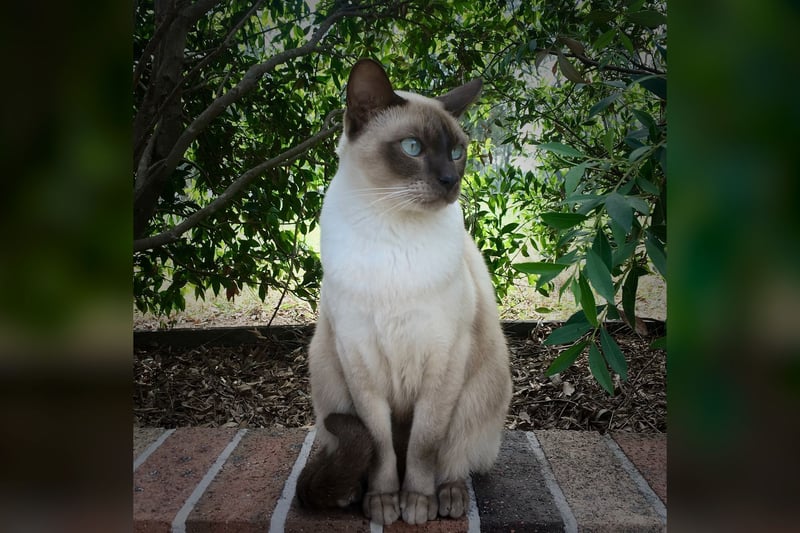
Tonkinese

8

Tonkinese

The Tonkinese is the deliberate result of a cross between the Siamese and the Burmese, two breeds that have been naturally related for centuries in Southeast Asia. Stabilized in North America in the 1960s from the founding female Wong Mau, it is recognized by the CFA and the LOOF. Its "mink" coat — a pattern intermediate between the Siamese colorpoint and the Burmese sepia — and its aqua-turquoise eyes make it an immediately recognizable breed. Temperamentally, it sits right in the middle between its two parent breeds: as affectionate and social as the Burmese, as playful and intelligent as the Siamese, without either the extreme vocal intensity of the one or the possessive exclusivity of the other.

3.5 to 5.5 kg 14 years
See the profile
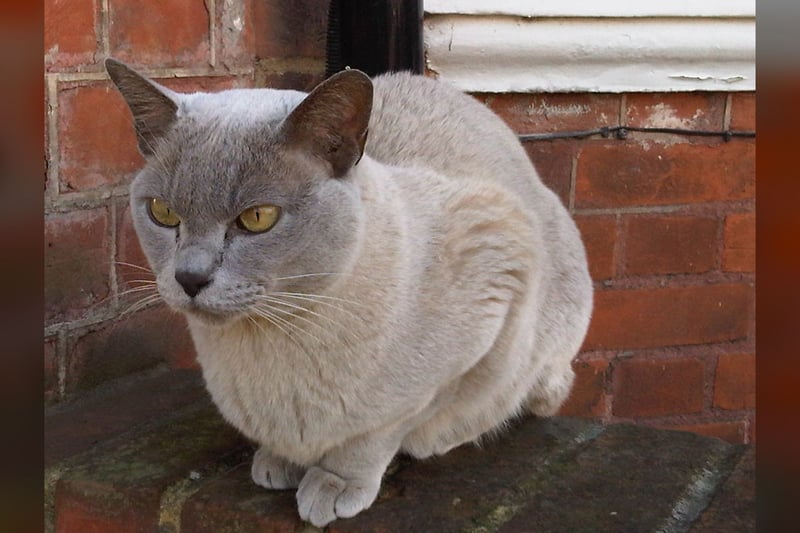
European Burmese

9

European Burmese

The European Burmese is a cat with a muscular semi-foreign body, descended from British and German lines developed from the 1950s onward. Its build is less extreme than the American Burmese's: a moderate V-shaped head, a muzzle that is not flattened, and amber almond eyes. Its silky sable-brown coat can also come in blue, chocolate or lilac.

3.5 to 6.5 kg 15 years
See the profile
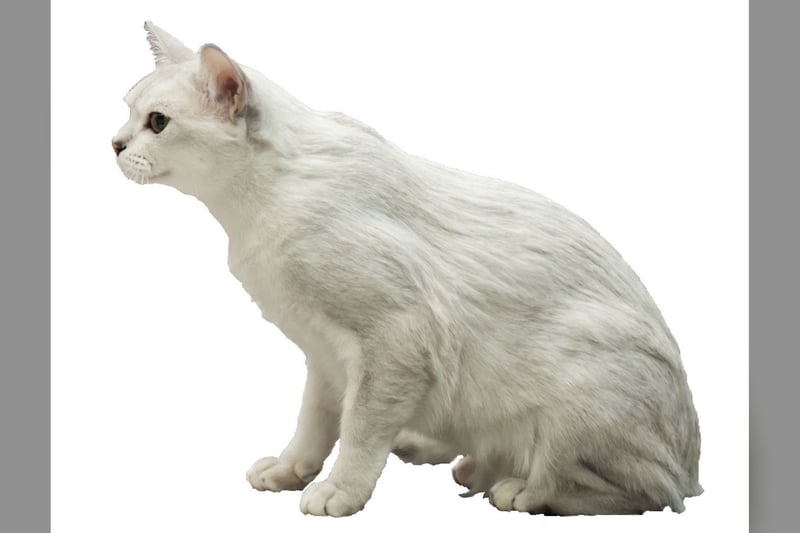
Burmilla

10

Burmilla

The Burmilla was born in 1981 in England from an accidental cross between a lilac Burmese and a Chinchilla Persian. Its silver or golden coat with shaded tips, its large green eyes rimmed with a natural black outline, and its muscular semi-foreign body make it an immediately recognizable breed. Moderately common in France — more widespread in the United Kingdom — it is registered with the LOOF under the Asian and Burmilla category.

3 to 6 kg 15 years
See the profile

Practical advice

  • Aim for the pairing of affection 5/5 and independence ≤ 2/5: Ragdoll, Sphynx, Birman, Burmese.
  • Adopt in pairs from the start: a compatible second cat compensates for your work absences.
  • Get the kitten used to short, deliberate periods of solitude (30 min, gradually extended) to prevent separation anxiety in adulthood.
  • Set up presence spots near you: a bed on the desk, a perch near the couch, a litter area near the bathroom.
  • Schedule 30-45 min of active play daily: a well-stimulated velcro cat is less anxious when you leave.

Frequently asked questions

Is the Ragdoll really the ultimate velcro cat?
Yes — it's the cat that best fits the 'dog-like cat' type in the catalog. Affection 5/5, independence 1/5, cross-species tolerance 5/5 (so dog-compatible), a patient temperament when it comes to being carried and handled. The breed was created in Riverside, California, in 1960 by Ann Baker precisely for this 'flop' trait.
Does the Sphynx really demand a lot of attention?
Enormously. Lacking fur, it seeks out heat sources, and you're the main one: it burrows under the covers at night, follows you from room to room, meows when you leave. Affection 5/5, independence 1/5, vocality 3/5. It's a cat for someone home for most of the day.
Can you leave a velcro cat alone during the day?
8 hours maximum for the recommended breeds, and that's already the limit. Beyond that, separation anxiety is possible (crying, overgrooming, urine marking). Solutions: a compatible second cat, a midday pet-sitter, partial remote work. The Tonkinese, the RagaMuffin and the Birman (independence 2/5) handle the day a little better than the Ragdoll, the Sphynx or the Burmese, all at 1/5.
Should you get two velcro cats?
Strongly advised if you work away from home. Two Ragdolls or two Sphynxes attach just as much to their humans, but the absence is offset by same-species company. Ideally, adopt two kittens from the same litter (no late introduction needed).
Is the Birman as much of a velcro cat as a Ragdoll?
Very close. Affection 5/5, independence 2/5, a calm, following temperament. The Birman is a bit more 'discreet' (fewer demanding cries) than a Ragdoll, but just as physically present. An excellent choice for anyone who likes contact without the Ragdoll's extreme 'flop'.
How much does a velcro cat cost?
70-120 €/month for the recommended breeds: premium food (25-40 €), litter (10-15 €), routine vet provisions (20-40 €), regular brushing and grooming (15-25 €). Adoption from a LOOF breeder: expect 1200-2000 € for a Ragdoll, 1500-2500 € for a Sphynx, 800-1500 € for a Birman.
Sources