CatMatch My selection FR

Which cat suits an active, sporty person?

10 energetic, intelligent, playful cat breeds — for a dynamic household with daily play sessions. A reasoned LOOF/FIFe selection.

  1. 1 Abyssinian
  2. 2 Sokoke
  3. 3 Egyptian Mau
  4. 4 Toyger
  5. 5 Arabian Mau
  6. 6 Ceylon
  7. 7 Japanese Bobtail
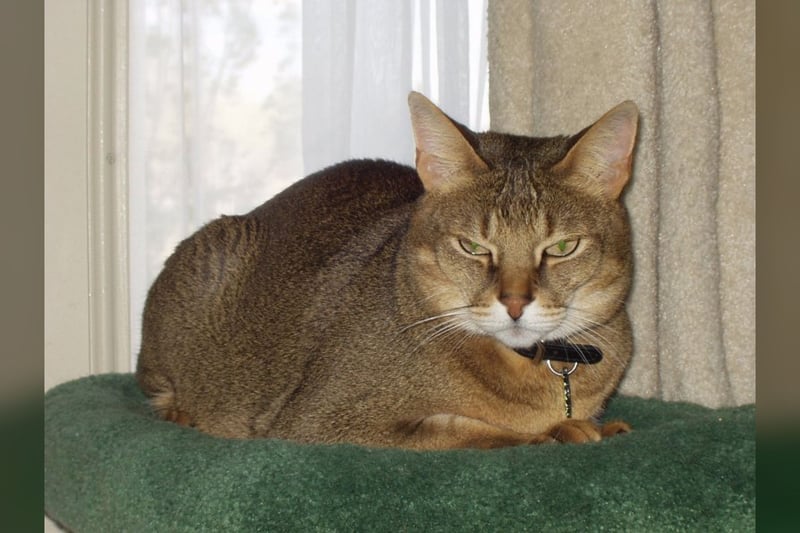
  8. 8 Chausie
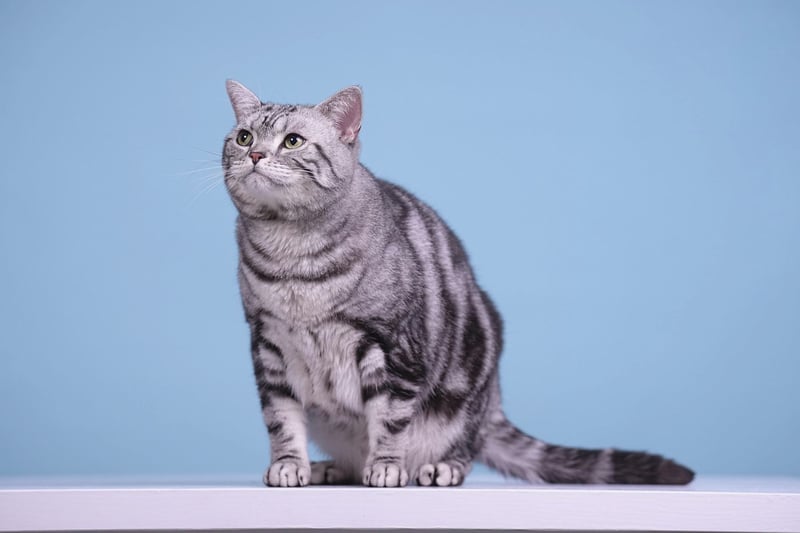
  9. 9 American Shorthair
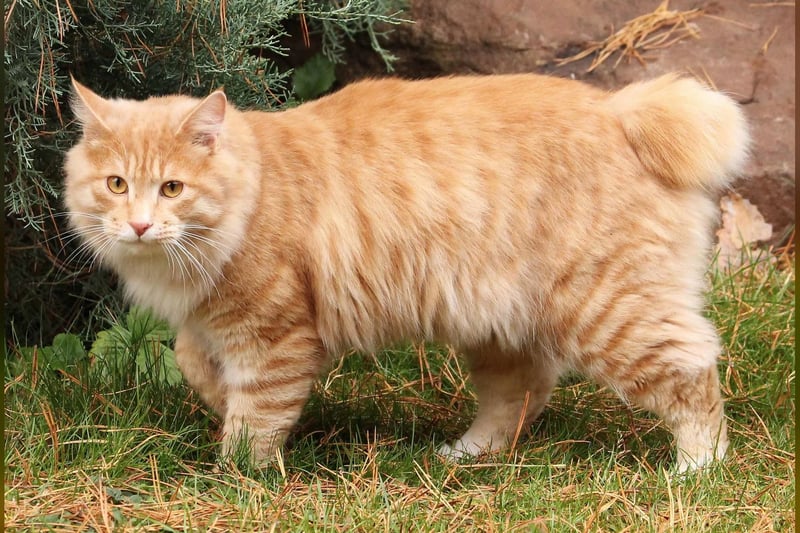
  10. 10 Kurilian Bobtail

An active, sporty person needs a cat that adapts to a dynamic schedule: early departures, late returns, intense but occasional play sessions. That rules out very velcro breeds (Ragdoll, Sphynx), which suffer from being left alone. Conversely, active hunter breeds (Bengal, Savannah, Egyptian Mau) need constant cognitive stimulation — their above-average intelligence means a monotonous household frustrates them. The best candidates are active breeds that keep a genuine sense of independence (Abyssinian, Sokoke, Arabian Mau, Kurilian Bobtail, Toyger): high energy, strong curiosity, and tolerance for occasional absences. Favor secure outdoor access (enclosed garden, protected balcony) for these breeds — strict confinement can trigger compensatory disorders.

10 recommended breeds

Every portrait opens the full profile: temperament, living conditions, health, budget and cited sources.

Abyssinian

1

Abyssinian

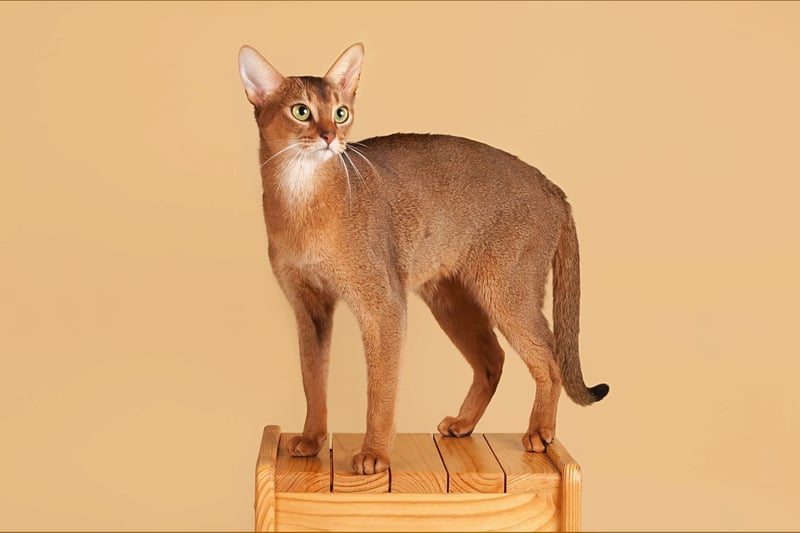
The Abyssinian is one of the oldest recognized cat breeds, with a slender silhouette and a ticked coat unique in the feline world — each hair carries two to three distinct color bands that give the whole a luminous effect comparable to the coat of wild hares. Uncommon in France but solidly established in LOOF registrations, the Abyssinian appeals to households looking for an athletic, intelligent, exploratory companion — the feline opposite of a couch potato.

2.5 to 5 kg 13 years
See the profile
Sokoke

2

Sokoke

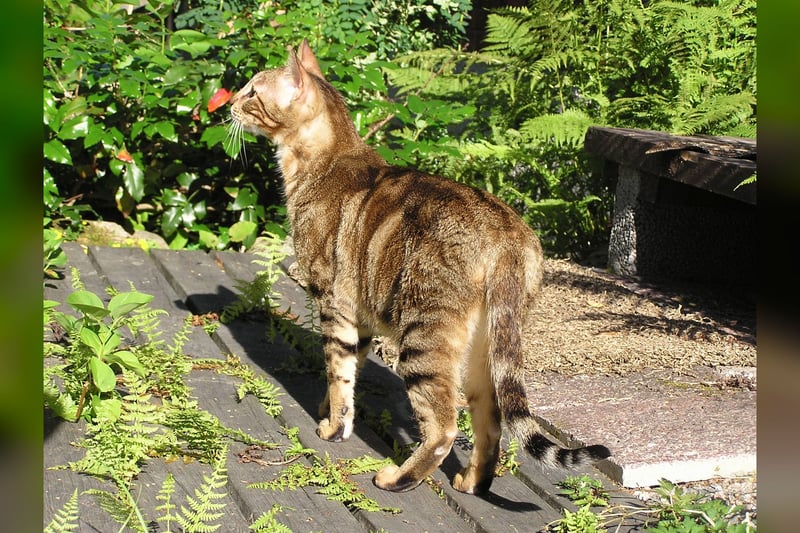
The Sokoke is the only domestic breed of African origin recognized by the major cat federations. Born in Kenya's Arabuko-Sokoke Forest, it carries an entirely singular type of tabby coat — the African Tabby — whose modified blotched pattern evokes the bark of tropical trees under raking light. A very elongated, light body, a gait balanced on the pads, a presence that is both feline and wild: the Sokoke is an ambassador of biodiversity as much as an exceptional companion for a household ready to respect its natural reserve. Extremely rare in France (0 FIFe kittens registered in 2024), it is aimed at seasoned enthusiasts, not an impulse adoption.

3 to 5 kg 14 years
See the profile
Egyptian Mau

3

Egyptian Mau

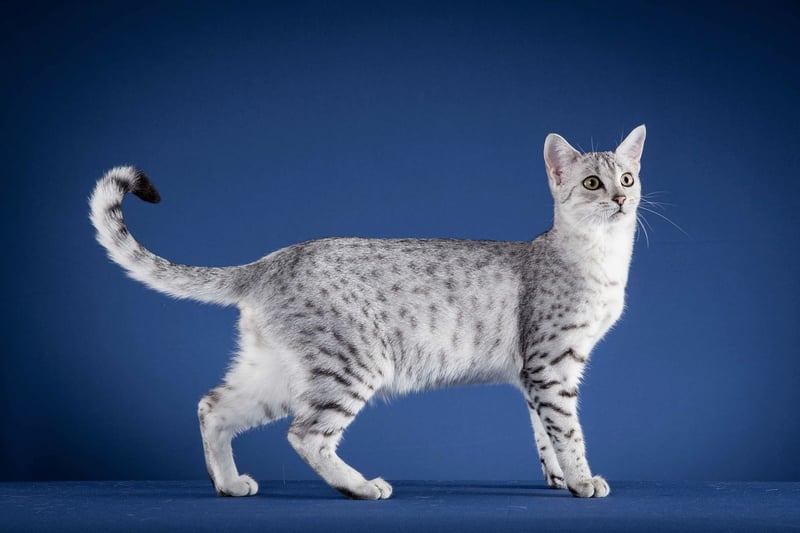
The Egyptian Mau is the only domestic cat breed whose spots are entirely natural — not the result of hybridization with a wild felid nor of cross-genetic selection, but arising randomly in a cat population probably descended from the sacred cats of ancient Egypt. An athletic medium-sized breed capable of reaching 48 km/h, it was founded in 1956 by Russian princess Natalie Troubetskoy from three cats imported from Egypt. Its temperament has two faces: absolutely loyal to its adoptive household, it remains wary of strangers and not very adaptable to changes in environment.

2.5 to 5 kg 13 years
See the profile
Toyger

4

Toyger

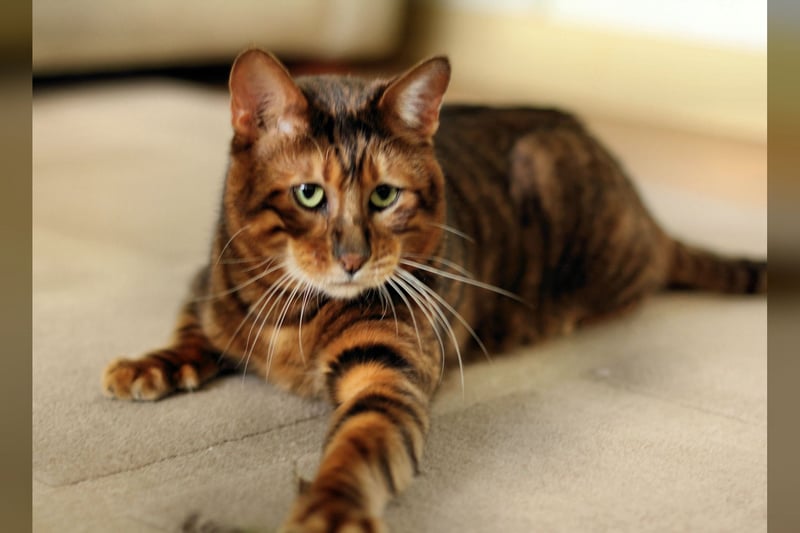
The Toyger is an American breed born in the 1980s at the initiative of Judy Sugden — daughter of Jean Mill, the creator of the Bengal — with the ambition of reproducing the Bengal tiger's vertical striped pattern in miniature. Recognized for championship status by TICA in 2007, it remains one of the rarest breeds in the world, with roughly thirty active breeders recorded. Its brown mackerel tabby coat, with intense vertical stripes on a bright orange background, sets it apart from every other domestic cat.

4 to 7 kg 12 years
See the profile
Arabian Mau

5

Arabian Mau

The Arabian Mau is a natural street cat of the Arabian Peninsula, naturally spotted like its Egyptian namesake but drawn from a distinct geographic pool — the deserts and cities of Qatar, the United Arab Emirates and Oman. Recognized by the WCF in 2014 at championship rank, it is almost unknown in France and remains rare in European breeding. Its body is long, fine-boned and extraordinarily agile, adapted to the extreme climate conditions of its homeland. It is a natural working breed: robust, low-maintenance in grooming, vocally discreet, capable of selective affection toward its own people without seeking to please every visitor.

3 to 5.5 kg 14 years
See the profile
Ceylon

6

Ceylon

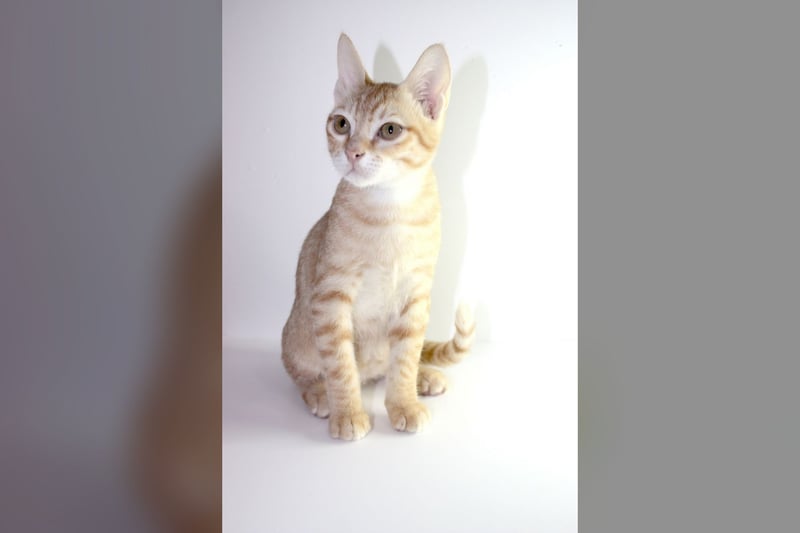
The Ceylon is one of the rarest pedigree cats in France and in the world: native to Sri Lanka (formerly Ceylon), it was discovered and standardized by Italian veterinarian Dr. Paolo Pellegatta during an expedition to the island in 1984, then recognized by the WCF in 1988. Its ticked agouti coat — similar to the Abyssinian's but marked with distinctive M-shaped markings on the forehead and lines on the legs — combined with a slender semi-foreign body and a lively, affectionate temperament, make it an exceptional companion. Fans of atypical, historically fascinating cats will actively seek it out.

3 to 5 kg 14 years
See the profile
Japanese Bobtail

7

Japanese Bobtail

The Japanese Bobtail is an ancient breed, present on the Japanese archipelago since at least the 6th century, symbolized by the Maneki-neko — the tricolor figurine with a raised paw that decorates shop windows across Asia. Its pom-pom tail, short and unique to each individual, results from a dominant genetic mutation distinct from the Manx's: no vertebral problems, no associated syndrome. A slender semi-foreign body, active, a hunter, social: this cat follows its owner around, plays with intensity and vocalizes melodiously without filling the room with noise.

2.5 to 4.5 kg 13 years
See the profile
Chausie

8

Chausie

The Chausie is a large hybrid resulting from crosses between the wild jungle cat (Felis chaus) and domestic cats, mainly Abyssinians and Orientals. Developed in the United States starting in the late 1960s and recognized at TICA championship level since 2013, it has an athletic, long-legged silhouette, a coat with characteristic ticking, and a metabolism inherited from its wild ancestor that requires a grain-free diet.

4 to 9 kg 14 years
See the profile
American Shorthair

9

American Shorthair

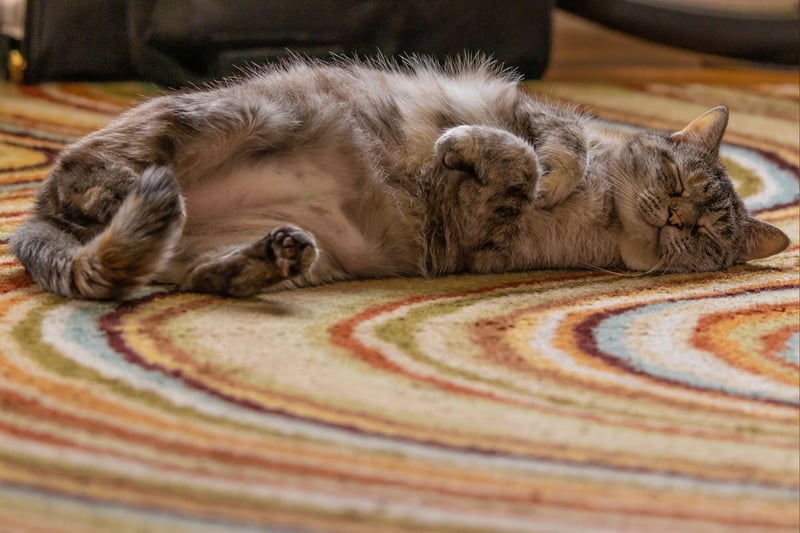
The American Shorthair is the pedigree version of the American colonial farm cat, a direct descendant of the cats carried aboard early settlers' ships to protect provisions from rodents. A muscular semi-cobby body, more than 80 recognized colors and patterns — including the classic silver tabby that has become the breed's emblem —, and a balanced, no-extremes temperament. One of the CFA's five founding breeds in 1906, it is uncommon in France but ranks in the top 10 in the United States.

3.5 to 7 kg 17 years
See the profile
Kurilian Bobtail

10

Kurilian Bobtail

The Kurilian Bobtail is a natural breed native to the Kuril Islands, a volcanic archipelago located between Russia's Kamchatka and the Japanese island of Hokkaidō. It stands out for its short, dense pompom tail measuring 3 to 12 cm, the result of an autosomal dominant mutation genetically distinct from the Manx's, the Japanese Bobtail's and the American Bobtail's. A heavily muscled semi-cobby build, a waterproof double arctic coat, and an independent hunter's temperament suited to the outdoors: a rare breed in France, sturdy and hardy, with a life expectancy of 14 to 19 years.

3 to 7 kg 16 years
See the profile

Practical advice

  • Aim for the pairing of energy 4-5/5 and independence ≥ 3/5: Abyssinian, Sokoke, Toyger, Arabian Mau, Kurilian Bobtail. The Egyptian Mau, very energetic but not very self-sufficient (2/5), suits an often-empty home less well.
  • Set up a demanding vertical course: 3 levels minimum, high platforms, wall shelves for jumping.
  • Schedule 2 active play sessions of 15-20 min a day (laser, wand toy, balls) — non-negotiable for these breeds.
  • Invest in smart toys (food puzzles, electronic trackballs) for cognitive stimulation while you're away.
  • Consider a compatible second cat: a pair of active hunters entertain each other while you're out.

Frequently asked questions

Isn't the Bengal the quintessential active cat?
It is — but it's also very emotionally demanding and doesn't cope well with strict confinement. For an active person who's often away, it's less suited than an Abyssinian or a Sokoke, both of which are energetic without requiring constant presence. See the Bengal breed profile for the expert profile with extended presence.
Do these breeds need secure outdoor access?
Highly recommended. Almost all the breeds in this selection score 4-5/5 for energy, with high exercise needs — the American Shorthair (3/5) is the only one that adapts easily to a strictly indoor life. For the others, confinement triggers compensatory disorders (overgrooming, redirected aggression). A secure balcony, a catio, or an enclosed garden are enough. Without one, plan on 60-90 minutes of active play daily.
Is the Sokoke suited to living in France?
Yes, but the breed remains rare: native to Kenya, it counts only a handful of breeders in France, which lengthens wait times and often means fetching the kitten abroad. A fascinating temperament for an athletic owner: energy 4/5, independence 4/5. On the other hand, tolerance of children 2/5 and of other pets 2/5 — it's a cat for a calm, adult household. Go through the LOOF to identify registered breeders.
How long can an active cat tolerate being alone?
8-10 hours of daytime solitude are acceptable for the breeds recommended here, provided the environment is enriched (perches, toys, secure outdoor access). Beyond that, plan on a second cat or a midday pet-sitter. A Bengal left alone 10 hours a day ends up anxious and destructive.
Will my active cat hunt and kill local wildlife?
A real risk with free outdoor access. Combinable solutions: a bell on the collar (which noticeably reduces catches without eliminating them), a bright-colored bib like Birdsbesafe that makes the cat visible to birds, access limited to certain hours, or an enclosed catio. Fall-prevention netting on the balcony, meanwhile, protects the cat itself.
How much does an active cat cost?
70-110 € a month: premium food suited to high activity (30-45 €), litter (10-15 €), routine vet care (15-30 €), replacement toys and catio equipment (15-20 € a month amortized). Rare breeds like the Sokoke cost noticeably more to adopt, and wait times are long.
Sources