CatMatch My selection FR

Which cat suits a small budget?

10 compact, low-appetite, easy-care cat breeds — for a tight monthly budget, around 50 €. A reasoned LOOF/FIFe selection.

  1. 1 European Shorthair
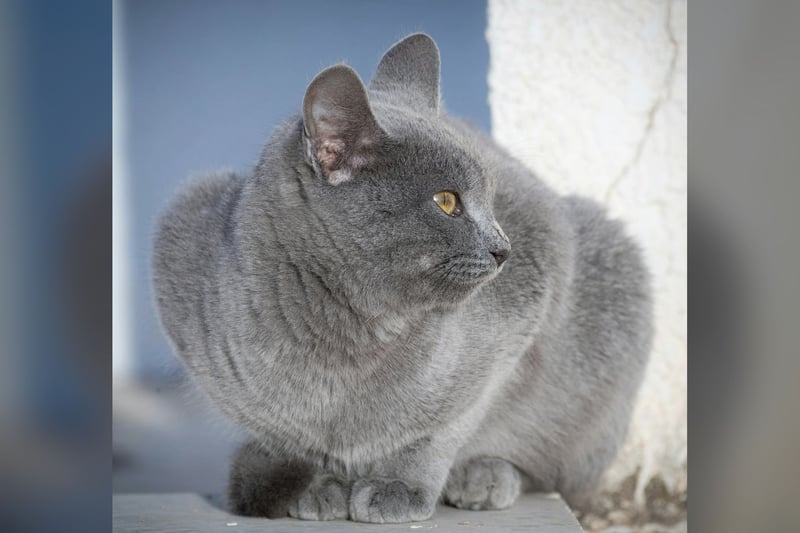
  2. 2 Russian Blue
  3. 3 Chartreux
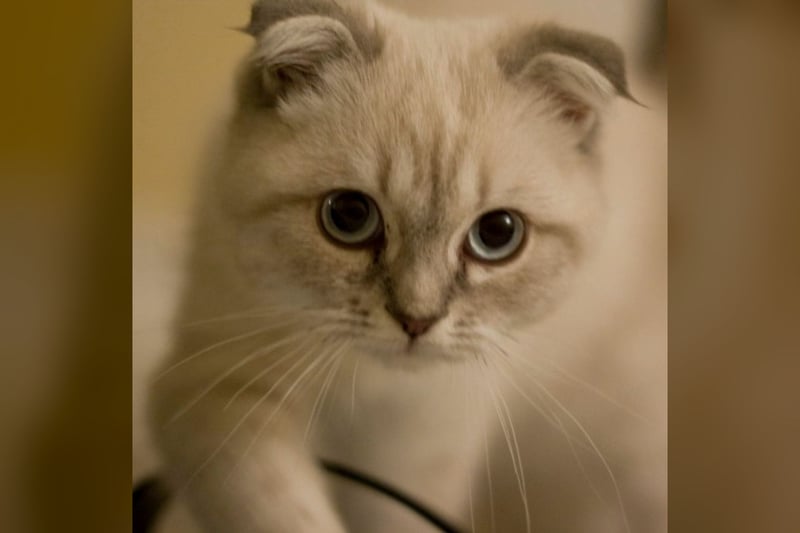
  4. 4 Scottish Fold
  5. 5 Scottish Straight
  6. 6 Highland Fold
  7. 7 Munchkin
  8. 8 Ojos Azules
  9. 9 Singapura
  10. 10 Korat

A tight monthly budget, on the order of 50 €, calls for realistic choices: a cat of moderate build (an 8 kg Maine Coon eats noticeably more than a 4 kg cat), with a short or semi-short coat to avoid professional grooming, and with no known predisposition to costly conditions. The CatMatch questionnaire automatically screens out large builds if you check 'tight budget' — out go the Maine Coon, Ragdoll, Norwegian Forest Cat, Siberian and Savannah. What's left: compact, calm breeds (Russian Blue, Scottish Fold, Chartreux), or a non-pedigreed cat adopted from a shelter, unbeatable on both purchase price and upkeep. One caveat on this selection: the Scottish Fold and the Highland Fold carry the mutation responsible for osteochondrodysplasia, whose follow-up can be costly — worth weighing against the budget goal.

10 recommended breeds

Every portrait opens the full profile: temperament, living conditions, health, budget and cited sources.

European Shorthair

1

European Shorthair

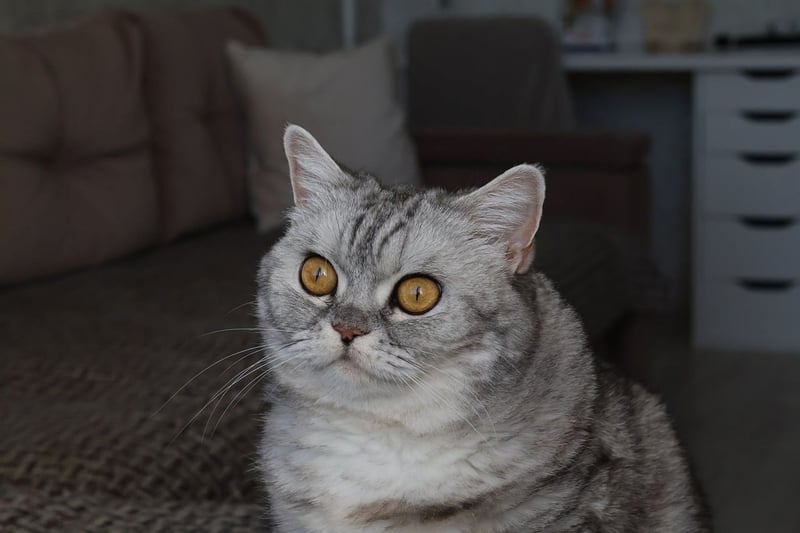
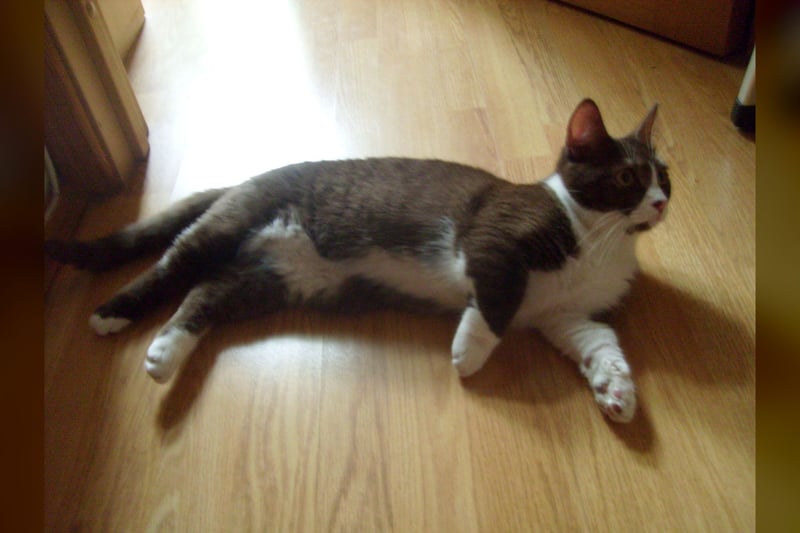
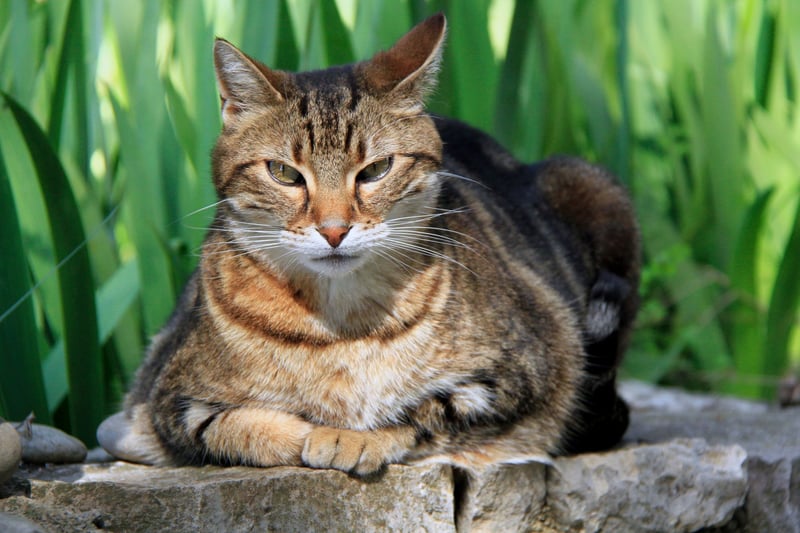
The European — officially "European Shorthair" in FIFe's registries — is the pedigree version of the domestic European cat: a precise morphological standard, a traceable pedigree and official recognition by the LOOF set this breed apart from an ordinary house cat with no pedigree, even though the two can look alike. A natural breed born of centuries of spontaneous selection across the continent, it has been recognized by the FIFe since 1983 and is registered with the LOOF under the name "European Shorthair." Medium to large in size, muscular and well balanced, it combines a genetic sturdiness unmatched among recognized breeds with an independent yet genuinely affectionate temperament.

3.5 to 7 kg 15 years
See the profile
Russian Blue

2

Russian Blue

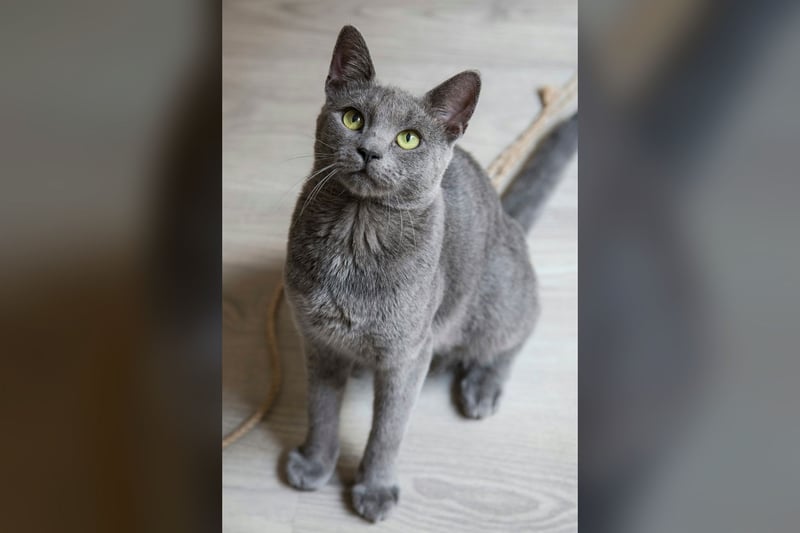
The Russian Blue is the historic and longest-recognized color variant of the Russian breed, native to the port of Arkhangelsk in northwestern Russia. First shown at the Crystal Palace in London in 1872 under the name "Archangel Blue," it is recognized today by every major cat federation worldwide — FIFe, TICA, CFA, GCCF and LOOF. Its silvery-blue coat with a pearly sheen, its intense green eyes and its short plush double coat are the immediately recognizable markers of a breed with a discreet, devoted, observant temperament.

3.5 to 7 kg 15 years
See the profile
Chartreux

3

Chartreux

The Chartreux is one of the few cat breeds native to France, developed in the 1930s and officially recognized in 1939. Recognizable by its solid blue coat — ranging from lavender-gray to deep slate — and its intense gold to copper eyes, it ranks among the top 10 most registered breeds at the LOOF, with around 2,000 pedigrees a year. Its legendary discretion, its watchful character and its expression suggesting a permanent "smile" have made it one of the emblematic representatives of French cat fancying.

4 to 7 kg 14 years
See the profile
Scottish Fold

4

Scottish Fold

The Scottish Fold was born in 1961 from a spontaneous mutation discovered in Scotland: a queen named Susie had ears that naturally folded forward, giving the breed its spherical silhouette and immediately recognizable owlish expression. Recognized by the LOOF, the CFA and TICA, but refused by the FIFe on ethical grounds, it crystallizes a major veterinary debate: the gene responsible for its folded ears causes an incurable bone and cartilage disease in every carrier.

3 to 6 kg 13 years
See the profile
Scottish Straight

5

Scottish Straight

The Scottish Straight is the Scottish Fold with straight ears: the same rounded cobby build, the same placid, discreet temperament, but without the characteristic ear fold. Recognized by TICA as a breed in its own right, it plays a central role in ethical Fold × Straight breeding programs that avoid the Fd/Fd homozygotes responsible for severe feline osteochondrodysplasia. Its longhaired version is called the Highland Straight.

3 to 6 kg 14 years
See the profile
Highland Fold

6

Highland Fold

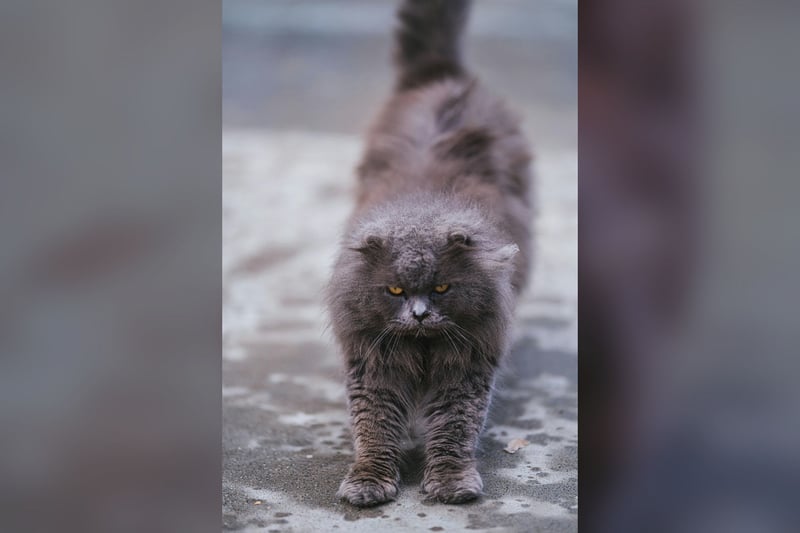
The Highland Fold is the semi-longhair variant of the Scottish Fold: the same cobby build, the same folded ears from the dominant Fd gene, the same placid temperament — but a dense, silky coat that needs regular brushing. It appeared as early as the first litters of Susie (1961), and is recognized by the LOOF, TICA (as the Scottish Fold Longhair from 1987-88) and the CFA (1993-94). Like its shorthair twin, it carries the same Fd gene and therefore the same incurable bone disease — feline osteochondrodysplasia — which makes it one of the most ethically debated breeds in the international veterinary community.

3 to 6 kg 13 years
See the profile
Munchkin

7

Munchkin

The Munchkin is an American breed born from a spontaneous mutation discovered in Louisiana in 1983, which shortens the long bones of the limbs without affecting the trunk or head. Recognized in championship by TICA since 2003 and by the LOOF under special oversight, refused by the FIFe, the GCCF and the CFA, it is at the center of a persistent veterinary debate: the gene responsible is lethal in the homozygous state, and the long-term skeletal risks remain insufficiently documented. Its temperament, by contrast, is lively and playful, at odds with its compact silhouette.

2 to 4.5 kg 13 years
See the profile
Ojos Azules

8

Ojos Azules

The Ojos Azules — Spanish for "blue eyes" — is an American breed born in New Mexico in 1984, unique in the world for its ability to express intensely blue eyes independently of coat color: a phenomenon genetically distinct from Siamese colorpoint and the dominant white gene. Registered in preliminary status with TICA since 1991, it remains among the rarest breeds in the world, almost absent from France. Its singular beauty is inseparable from a severe biological constraint: the gene responsible for the eye color is lethal in the homozygous state, which structurally limits its expansion.

3 to 6 kg 13 years
See the profile
Singapura

9

Singapura

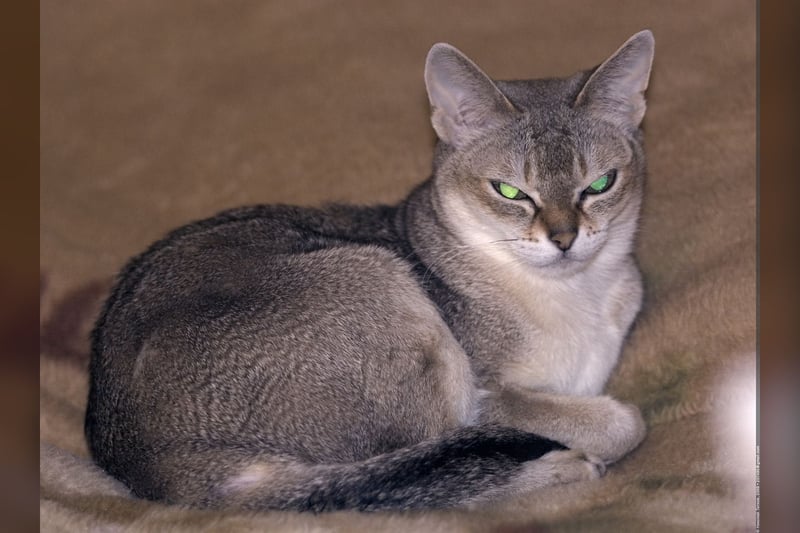
The Singapura is the smallest recognized pedigree cat breed in the world, with adult females weighing barely 1.8 to 2.3 kg. Native to the streets of Singapore — where it is called Kucinta, "the cat of love" — it carries a unique coat: sepia agouti ticked on an ivory background, offered in a single official color. Extremely rare in France (fewer than 30 annual LOOF registrations), it charms with its intense curiosity, its strong attachment to humans and its compact size, but demands serious health vigilance around pyruvate kinase deficiency.

1.8 to 3.2 kg 13 years
See the profile
Korat

10

Korat

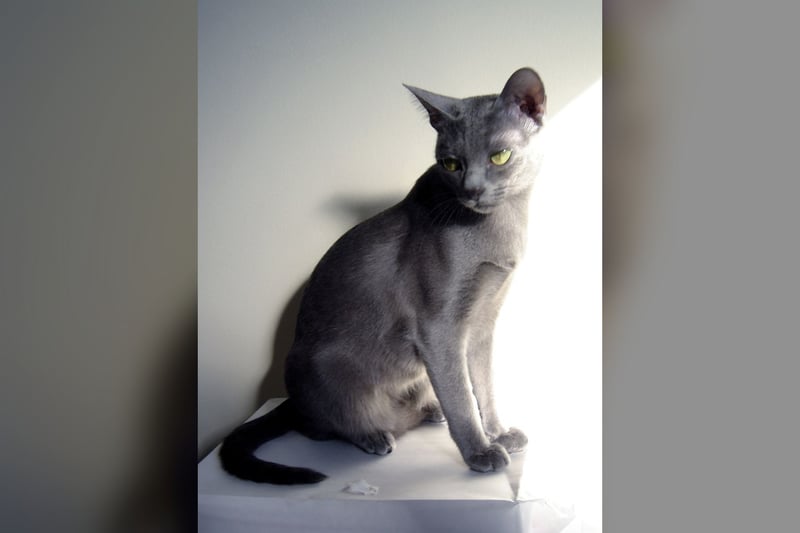
The Korat is one of the oldest documented cat breeds, originating from the Khorat Plateau in Nakhon Ratchasima province, Thailand. Mentioned in the Tamra Maew (an illustrated Thai manuscript from the 14th-18th centuries) as a symbol of luck and prosperity, it was traditionally given in pairs to newlyweds. Its silver-blue coat with silver-tipped hairs — unique and inimitable — and its intensely green adult eyes make it an instantly recognizable breed. Imported to the United States in 1959 by Jean Johnson, admitted to CFA championship in 1966 and recognized by FIFe in 1981, it remains rare and sought after, with a deeply devoted and territorial temperament. Major health point to watch: GM1/GM2 gangliosidosis, a hereditary neurological disease that is fatal in kittens — a DNA test on breeding cats is mandatory before any acquisition.

2.5 to 4.5 kg 15 years
See the profile

Practical advice

  • A non-pedigreed house cat adopted from a shelter is budget choice #1: 50-200 € in adoption fees (microchipping and neutering usually included), the lowest monthly upkeep in the catalog.
  • Buy premium kibble in large formats (5-10 kg bags): 20-30% savings vs. small bags.
  • Buy clumping litter at a supermarket rather than a specialty store: for equivalent quality, the price per kilo is often half as much.
  • Neutering: an 80-150 € investment that saves hundreds of euros long-term (health, behavior).
  • Take out basic health insurance (5-8 €/month): protection in case of emergency surgery, which can cost 1500-3000 €.

Frequently asked questions

What's the cheapest cat in France?
A non-pedigreed cat adopted from a shelter — 50-200 €, with microchipping and neutering most often included in that amount. Not to be confused with the European Shorthair, a breed recognized by the LOOF that sells for the price of a pedigreed cat. Sturdy temperament, life expectancy of around 15 years, the lowest monthly upkeep in the selection: it's the best value in the catalog.
Why avoid large builds on a small budget?
Weight directly affects food consumption. A 4 kg cat eats about 50 g of kibble a day (20 €/month for premium), an 8 kg cat about 80 g a day (35-40 €/month). Over a 15-year lifespan, the cumulative gap reaches 2 700 to 3 600 € — significant on a tight budget.
Should you get health insurance on a small budget?
Yes, paradoxically — basic insurance at 5-8 €/month (60-100 €/year) protects against unexpected costs of 1500-3000 € in case of emergency surgery. It's precisely for small budgets that insurance is crucial: it avoids the painful choice between treating and giving up the cat.
Are pedigreed breeds really more expensive to maintain?
It varies. A sturdy breed like the Chartreux or the Russian Blue costs much more to adopt (800-1200 € versus 50-200 € from a shelter) but its monthly upkeep is comparable to that of a non-pedigreed cat. It's the breeds with known predispositions that widen the gap: brachycephaly in the Persian, osteochondrodysplasia in the Scottish Fold and Highland Fold — more consultations, more treatments, sometimes lifelong.
What hidden costs should you plan for?
Four often-overlooked costs: 1) Microchipping (50-80 € if not included at adoption), 2) Quarterly deworming (15-20 €/year), 3) Annual vaccines (50-80 €), 4) Dental scaling every 2-3 years (80-150 €). Plus litter, toys, and renewable supplies = 5-15 €/month cumulative.
Can you have a cat as a student?
Possible, but demanding. Favor an adult shelter cat (3-5 years, stable behavior) over a kitten (chaos in the first months). Realistic all-in budget, including insurance and hidden costs: 50-70 €/month. Plan ahead for vacations and internships (pet-sitter or family). Check that pets are allowed in student housing.
Sources