


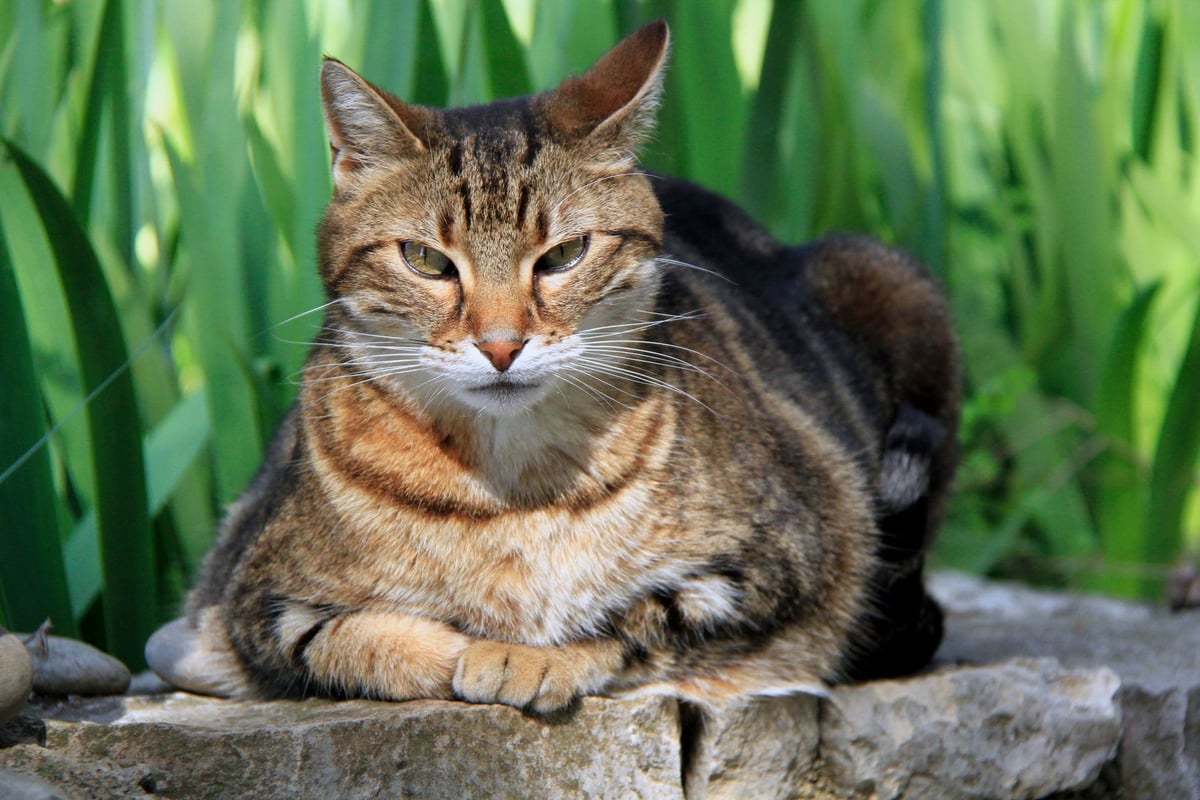
European Shorthair
The European — officially "European Shorthair" in FIFe's registries — is the pedigree version of the domestic European cat: a precise morphological standard, a traceable pedigree and official recognition by the LOOF set this breed apart from an ordinary house cat with no pedigree, even though the two can look alike. A natural breed born of centuries of spontaneous selection across the continent, it has been recognized by the FIFe since 1983 and is registered with the LOOF under the name "European Shorthair." Medium to large in size, muscular and well balanced, it combines a genetic sturdiness unmatched among recognized breeds with an independent yet genuinely affectionate temperament.
- Weight
- 3.5 to 7kg
- Height
- 28 to 38cm
- Life expectancy
- 15years
- Monthly cost
- 50 to 90€
Personality profile
Energy 3/5
Independence 4/5
Trainability 3/5
Good with children 4/5
Talkativeness 2/5
Space needed 3/5
Attachment to home 3/5
Good with strangers 3/5
Good with cats 4/5
Good with dogs 4/5
Coat care 2/5
Exercise needs 3/5
Scores given on measured axes, data confidence: high.
Living with a European Shorthair
Description
The build is semi-foreign: an elongated, muscular silhouette, with solid, strong bones, with no exaggerated trait. The body is well developed, with a broad chest and powerful muscle. The head is longer than it is wide, with well-developed cheeks and a slightly rounded forehead. The muzzle is strong, with no pinching, and the nose is straight — in profile, a slight inflection with no marked stop. The ears are medium-sized, as wide as they are tall at the base, slightly rounded at the tip and well spaced. The eyes are round to slightly slanted, orange to green in color; blue and heterochromia are accepted only in white or bicolor cats. The tail is medium length, slightly wider at the base than at the tip. The coat is short, glossy and dense, with no excessive undercoat. All traditional colors and patterns are accepted (mackerel tabby, spotted, marbled; solid, bicolor, smoke, silver), except chocolate, cinnamon, lilac and fawn, and the colorpoint, mink and sepia patterns — reserved for other breeds. Males reach 5 to 7 kg, females 3.5 to 5 kg. Life expectancy: 15 years and up.

Temperament
This is a fundamentally balanced cat — neither excessively clingy nor standoffish. It keeps its distance from strangers at first and takes time to assess situations before engaging, but with its owners it develops a genuine, non-dependent bond of affection. Its independence is structural: it does not seek interaction constantly, enjoys its moments of solitude and does not develop anxiety when left alone during the day. Its hunting instinct is intact and well developed — it actively hunts in a garden or invents prey to chase in an apartment. Intelligent and resourceful, it adapts to changes in routine with remarkable flexibility. Its vocalizing is rare and discreet, unlike breeds such as the Siamese or the Bengal. It cohabits without major friction with respectful children and with other pets introduced gradually.
Training
Intelligent and observant, it learns routines and answers to its name. It does not reach the receptiveness of the Bengal or the Maine Coon for intensive clicker training, but it can learn simple behaviors through positive reinforcement: going into its carrier, using a cat flap, tolerating brushing or claw care. Sessions should stay short (5 to 10 minutes), regular and free of physical restraint. Early socialization — from kittenhood — is decisive for its tolerance of handling, strangers and other animals. Well socialized, it is remarkably docile in vet visits and while traveling.

Feeding
No breed-specific nutritional needs. A standard quality diet — premium kibble or wet food high in animal protein — suits it perfectly. The ration should be matched to actual weight, activity level and age: a 5 kg adult with moderate activity needs roughly 230-270 kcal/day. Two split meals a day are preferable to free feeding for neutered cats, who can gain weight more easily. No heart or kidney predisposition justifies specific supplementation. Make sure water intake is adequate, ideally via a circulating water fountain, which many cats prefer.
Affiliate links, no extra cost to you. Legal notice

Living conditions
Few breeds are as versatile when it comes to living situations. It adapts to an apartment, a house with a garden or a rural setting, provided its mental-space needs are met. In an apartment, vertical structures, regular play and windows to watch the world from are enough for its balance. In a house, it will be an active hunter and a territory-patroller. It tolerates daytime solitude well, provided separation isn't a constant with no compensation (stimulating play, environmental enrichment). Its cold tolerance is good, in line with its northern and continental origins. It appreciates access to a secure outdoor space — catio or netted balcony — but does not treat it as an absolute necessity.

Grooming and coat care
The short, dense coat is among the easiest to maintain. Weekly brushing with a grooming glove or a fine metal comb is enough to remove dead hair and keep the coat's natural shine. During seasonal shedding — spring and fall — step up to two sessions a week for two to three weeks to reduce hair ingestion and shedding around the apartment. No regular bathing is needed. Check the ears periodically and clean with a suitable veterinary product if wax builds up. Claws should be watched and trimmed every three to four weeks if the cat lives exclusively indoors.

Health
The breed holds an exceptional genetic advantage among recognized breeds: its wide gene pool, a legacy of centuries of natural selection with no intensive inbreeding, shows no documented major hereditary predisposition. Unlike the Maine Coon (HCM, SMA, dysplasia), the Bengal (PRA-b, PKDef) or the British Shorthair (PKD, HCM3), no breed-specific DNA test is required on the breed's breeding cats. The FIFe and the LOOF do not list any breed-specific condition. This natural sturdiness translates into one of the highest life expectancies among pedigree cats, often 15 years and beyond. Routine care applies as for any domestic cat: annual vaccinations, parasite control, and regular veterinary check-ups. No breed-specific dietary contraindications.
Breed history
The European Shorthair is the direct descendant of the cats that have populated the European continent since antiquity, likely introduced from ancient Egypt via Roman trade routes, then naturally acclimatized over several centuries. For a long time, these "European-type" cats were judged at cat shows against the same standards as the British Shorthair, a British breed standardized earlier. The first attempt at a specific standard dates to 1925. It was in 1983 that the FIFe officially recognized the breed under the name "the European," definitively separating it from the British Shorthair. In 2007, the FIFe renamed the breed "European Shorthair" in its official registries; the World Cat Federation, for its part, keeps the name "Celtic Shorthair." The French LOOF registers it under the name "European Shorthair." A point often overlooked: it is genealogical traceability, not phenotype, that makes the breed — a house cat with a short tabby coat can resemble it feature for feature without being one.
Getting ready for your European Shorthair
Four essentials to line up before day one.
Affiliate links, no extra cost to you. Legal notice
FAQ: European Shorthair
Sources
- Wikipedia FR — European Shorthair (cat) · Natural breed recognized by the FIFé in 1983 under "the European," renamed "European Shorthair" in 2007. Standard: semi-foreign, head longer than wide, short dense coat, every traditional color except chocolate/cinnamon/lilac/fawn and colorpoint/mink/sepia. Longevity > 12 years.
- LOOF — Recognized cat breeds · The European Shorthair is on the official list of breeds recognized by the Livre Officiel des Origines Félines, shorthair cat category.
- FIFé — European Shorthair breed profile · FIFé standard: muscular semi-foreign body, head longer than wide, straight nose with no stop, excluded colors chocolate/cinnamon/lilac/fawn and colorpoint/mink/sepia. Disqualifying fault: resemblance to another established breed.
- Wikipedia FR — European Shorthair (cat) — detailed morphology · Weight 3.5-7 kg depending on sex, marked sexual dimorphism. Short, glossy coat with no excessive undercoat. Genetic sturdiness: no documented hereditary predisposition, life expectancy > 15 years.
Breeds similar to a European Shorthair

