


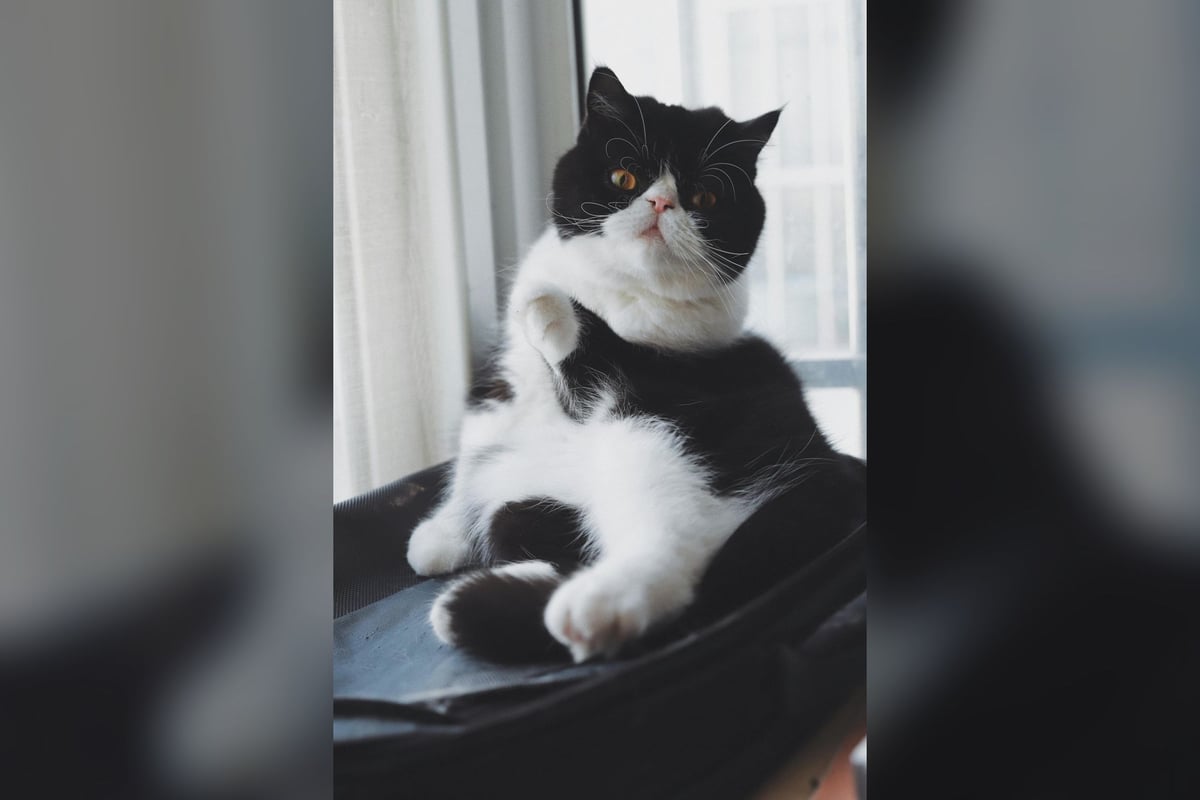
Exotic Shorthair
The Exotic Shorthair is the shorthaired version of the Persian: the same cobby, brachycephalic build, the same calm, affectionate character, but a short, dense coat that needs only weekly brushing. Born in the United States in the 1950s from a Persian × American Shorthair cross, it offers most of the Persian temperament without the demands of intensive daily brushing — at the cost of the same health concerns (PKD1, HCM, brachycephaly) that a serious breeder must have documented through DNA tests.
- Weight
- 3.5 to 7kg
- Height
- 25 to 38cm
- Life expectancy
- 13years
- Monthly cost
- 65 to 120€
Personality profile
Energy 2/5
Independence 3/5
Trainability 2/5
Good with children 4/5
Talkativeness 2/5
Space needed 3/5
Attachment to home 5/5
Good with strangers 3/5
Good with cats 3/5
Good with dogs 3/5
Coat care 3/5
Exercise needs 2/5
Scores given on measured axes, data confidence: high.
Living with an Exotic Shorthair
Description
The body is short, compact and massive, cobby in type, with a solid bone structure, a broad chest, short legs and a tail carried low. Its most distinctive trait is its head: round, with a domed skull, full cheeks, a deep stop and a very short nose — a brachycephalic profile nearly identical to the ultra-typed Persian. The eyes are large, round and expressive, most often copper-orange or blue in colorpoints. The coat is short to medium-short, dense, thick and standing up slightly — neither flat nor semi-long: a plush-like texture that often earns it the nickname "teddy bear Persian." Every coat variety accepted in the Persian is also accepted in the Exotic: solid, bicolor, tabby, colorpoint, chinchilla. Males generally weigh 4.5 to 7 kg, females 3.5 to 5 kg. Life expectancy: 12 to 15 years.

Temperament
It inherits the Persian's peaceful, affectionate temperament while showing slightly more liveliness. Calm and composed day to day, it enjoys long cuddle sessions and follows its owners from room to room without insistently demanding attention. Its vocalizing is soft and rare — it prefers a look to a meow. Slightly more playful than the Persian, it happily responds to a wand toy or a ball for a few minutes a day, without needing intense stimulation. Its relationship with calm, respectful children is excellent; its natural patience makes it compatible with stable households that include other well-introduced pets. The low-key nature of its needs and the steadiness of its affection make it a cat particularly suited to people looking for a soothing presence without exuberance.
Training
This is not a breed geared toward structured learning. Its calm temperament and low appetite for outside stimulation make complex training of little relevance. Its slight edge in liveliness over the Persian lets it take a brief interest in interactive play — a wand, a toy mouse — but without the consistency needed for intensive clicker training. The core of its education is getting it used early on to daily handling: eye cleaning, brushing, vet exams. Early socialization to visitors, household noise and other animals prevents excessive shyness in adulthood. Positive reinforcement through treats or a gentle voice is the only method suited to its sensitivity.

Feeding
Activity level is low to moderate: its caloric ration must be carefully adjusted to avoid obesity, a common risk in neutered indoor individuals. Favor a premium diet high in animal protein and low in carbohydrates. Some ranges offer kibble specifically shaped for brachycephalic breeds, adapted to their flattened jaw (flat or round kibble that's easier to pick up). A partial wet-food ration — ideally every other meal — supports hydration, which is crucial for preventing kidney disease (PKD1). Avoid free feeding; split into two meals a day to better control intake. For kittens, a breed-specific kitten diet for moderate growth is recommended up to 12 months.
Affiliate links, no extra cost to you. Legal notice

Living conditions
It thrives in an apartment: not very athletic and not inclined to intensive exploring, it is content with a modest space furnished with comfortable surfaces and quiet spots to watch from. A 40 to 60 m² home is amply sufficient. Its brachycephalic build makes it very sensitive to heat: in summer, an air-conditioned or well-ventilated room is essential, and any prolonged exposure to direct sun or stuffy air should be avoided. An exclusively indoor life is strongly recommended — its trusting nature and moderate hunting instinct leave it vulnerable to outdoor dangers. Fit balconies with safety netting. The anesthesia risks tied to brachycephaly mean choosing a vet familiar with brachycephalic breeds for any surgical procedure.

Grooming and coat care
Unlike the Persian it comes from, it does not need intensive daily brushing. Its short, dense coat is satisfied with a soft brush or fine comb pass once or twice a week to limit dead hair and hairballs. During seasonal shedding (spring, fall), increase the frequency to three times a week. Daily eye cleaning, on the other hand, is essential and non-negotiable: the chronic tearing linked to brachycephaly stains the facial coat and can cause skin irritation and dermatitis. Use a slightly damp sterile pad or suitable ophthalmic wipes. Also clean the facial folds regularly to prevent moisture buildup. Plan on a weekly ear check and monthly claw trimming.

Health
The breed shares the full set of health predispositions of the Persian it directly comes from. Autosomal dominant polycystic kidney disease (PKD1) is the most critical condition: caused by a mutation of the PKD1 gene, it causes the progressive formation of kidney cysts that can lead to kidney failure. The PKD1 DNA test is MANDATORY on both breeding parents — require the results before any purchase. Hypertrophic cardiomyopathy (HCM) is also documented in the breed; annual echocardiograms are recommended for breeding cats and advised for companion cats from age 5. Brachycephaly generates brachycephalic airway obstruction syndrome (BAOS): snoring, exertional breathing difficulty, heat intolerance and increased anesthesia risk. On the ophthalmologic side, chronic tear overflow from blocked tear ducts (epiphora) is nearly universal, and can cause facial dermatitis from moisture and, in severe cases, corneal ulcers. An annual eye check-up is advisable. Females show a high rate of dystocia, often requiring a C-section.
Breed history
The Exotic Shorthair was born in the United States in the 1950s-1960s, from a pragmatic selection effort: American breeders crossed Persians with American Shorthairs, then with other shorthaired breeds (Burmese, Russian Blue), aiming to improve the American Shorthair's coat and build. The unexpected result was a cat with a compact, cobby body, a flattened face, a short, dense coat — a synthesis of the Persian's build and the ease of care of a shorthaired cat. The CFA officially recognized it as a breed in its own right in 1967. Only the Persian was later kept as an allowed outcross, to consolidate the brachycephalic type and stabilize the temperament. In France, the LOOF recognizes it in the shorthair cat category. Its popularity has been growing sharply since the 2010s: widely shared on social media for its endearing, expressive features, it draws a crowd looking for the Persian's look without the burden of its coat.
Getting ready for your Exotic Shorthair
Four essentials to line up before day one.
Affiliate links, no extra cost to you. Legal notice
FAQ: Exotic Shorthair
Sources
- Wikipedia FR — Exotic Shorthair · Breed born in the 1950s-1960s in the USA from a Persian × American Shorthair cross. Recognized by the CFA in 1967. Brachycephalic morphology identical to the Persian's. PKD1, HCM, epiphora, BAOS predispositions documented.
- LOOF — Recognized cat breeds · The Exotic Shorthair is among the breeds officially recognized by the Livre Officiel des Origines Félines, shorthair cat category.
- Royal Canin FR — Exotic Shorthair profile · Weekly coat care. Daily eye cleaning essential due to brachycephaly. Diet suited to the flattened build (specifically shaped kibble). Weight management for the sedentary neutered cat.
- CFA — Exotic Breed Profile · Official CFA recognition 1967. Standard: cobby body, round head, deep stop, short dense standing coat. Only allowed outcross: Persian. PKD1 and HCM tests recommended by the CFA for breeding cats.

