CatMatch My selection FR

Which cat is best for cocooning and couch time?

10 cuddly, long-haired, velcro cat breeds. For cocooning on the sofa: Ragdoll, Persian, Birman. A reasoned LOOF/FIFe selection.

  1. 1 Ragdoll
  2. 2 Persian
  3. 3 Birman
  4. 4 RagaMuffin
  5. 5 Himalayan
  6. 6 Tiffanie
  7. 7 Selkirk Rex
  8. 8 Highland Fold
  9. 9 Chantilly-Tiffany
  10. 10 Exotic Shorthair

Feline cocooning is a concept in its own right: a cat that settles on your lap for 2-3 hours straight, accepts the ritual brushing, and purrs through a Netflix binge. That takes a very specific temperament — affection 5/5 (the cat actively seeks prolonged physical contact), low independence (the cat doesn't vanish after 10 minutes), and often a medium or long coat that makes the tactile experience unmatched. Three families dominate this profile: Birman / Ragdoll / RagaMuffin (descended from lines selected for cocooning), Persian / Himalayan (long coat and a placid temperament), and the semi-longhair variants of calm breeds (Highland Fold, Selkirk Rex, Chantilly-Tiffany). Norwegian Forest Cats, despite their impressive long coat, are less suited to this — their independence doesn't tolerate hours on the couch.

10 recommended breeds

Every portrait opens the full profile: temperament, living conditions, health, budget and cited sources.

Ragdoll

1

Ragdoll

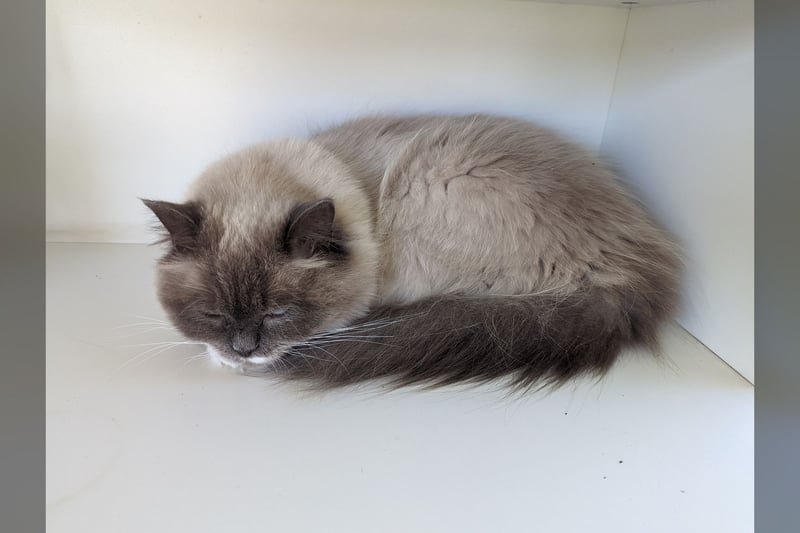
The Ragdoll is a large semi-longhaired colorpoint cat, developed in the 1960s in California by breeder Ann Baker. Its name — literally "rag doll" — comes from its behavioral quirk: it tends to go completely limp in its owners' arms, becoming as floppy as a plush toy. A popular breed in France with a regular place in the LOOF top 10, it has become one of the default choices for households looking for a calm, gentle, demonstrative cat.

4 to 9 kg 14 years
See the profile
Persian

2

Persian

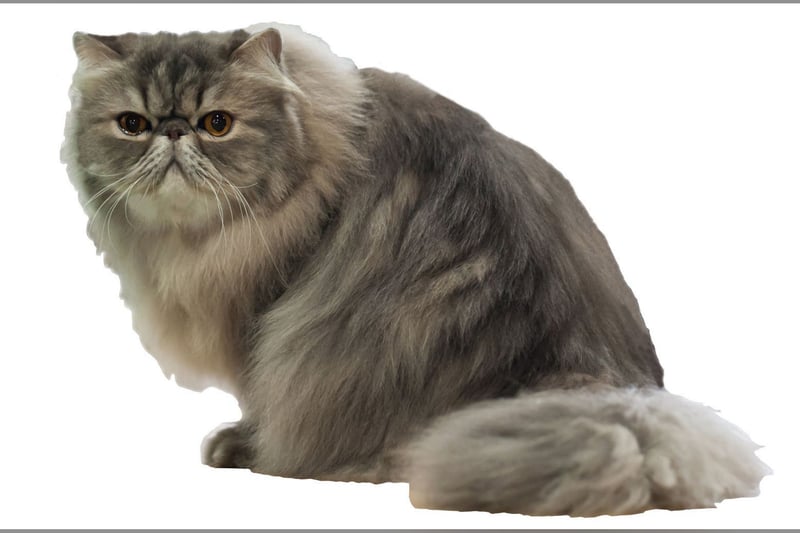
The Persian is one of the oldest and most recognizable cat breeds in the world, with its long, dense coat, its expressive flat face and its remarkably serene character. An emblematic longhaired breed, it is particularly well suited to apartment life and suits families looking for a calm, affectionate companion — provided they accept daily coat maintenance and heightened health vigilance linked to its brachycephalic build.

3 to 5.5 kg 14 years
See the profile
Birman

3

Birman

The Birman, also known as the Sacred Cat of Burma, is a semi-longhaired colorpoint cat recognizable by its four pure white gloves and its deep sapphire eyes. A French breed officially recognized as early as 1925, it holds a steady place near the top of the LOOF's most-registered breeds in France.

3 to 7 kg 14 years
See the profile
RagaMuffin

4

RagaMuffin

The RagaMuffin is a large semi-longhaired cat that emerged in the early 1990s in the United States, born of a deliberate split by breeders who broke away from the Ragdoll circle. Recognized in championship status by the CFA in 2011, it stands apart from its ancestor with an unrestricted color palette — every coat is admitted except colorpoints, reserved for breeding programs — and a slightly larger build (males up to 9 kg). Its central character trait is a complete muscular go-limp in the arms, extreme docility and a strong emotional dependence on its people. Still a little-known breed in France compared with the Ragdoll, it is steadily climbing the rankings of interest for households looking for a large cuddly cat.

4 to 9 kg 14 years
See the profile
Himalayan

5

Himalayan

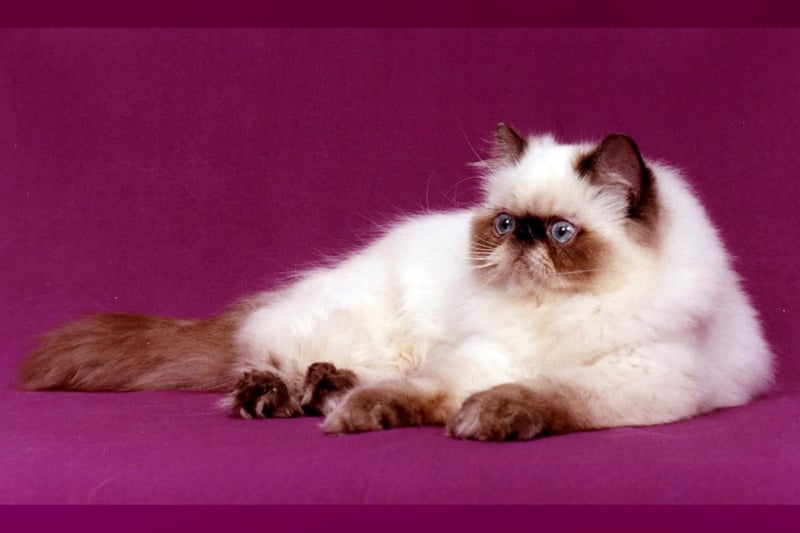
The Himalayan is a colorpoint Persian: the same brachycephalic cobby build, the same extra-long cottony coat, the same calm, placid temperament — plus the colorpoint pattern inherited from the Siamese (light body, dark mask, ears, legs and tail) and mandatory blue eyes. An apartment breed par excellence, it requires rigorous daily coat care and the same health vigilance as the Persian: an essential PKD1 DNA test, HCM and brachycephaly monitoring.

3 to 5.5 kg 13 years
See the profile
Tiffanie

6

Tiffanie

The Tiffanie is the semi-longhair variant of the British Asian Group — in simple terms, a longhaired Burmilla. Born from the same breeding programs as its shorthaired cousins, it shares their muscular semi-foreign body, their large green eyes rimmed with a natural black outline, and their range of silver or golden colors, but is set apart by a silky semi-long coat, a pronounced ruff and a bushy tail. An extremely rare breed in France, it is more established in the United Kingdom, where the GCCF recognizes it within the Asian Group. Not to be confused with the American Chantilly-Tiffany, a distinct breed with no genetic relationship.

3 to 6 kg 15 years
See the profile
Selkirk Rex

7

Selkirk Rex

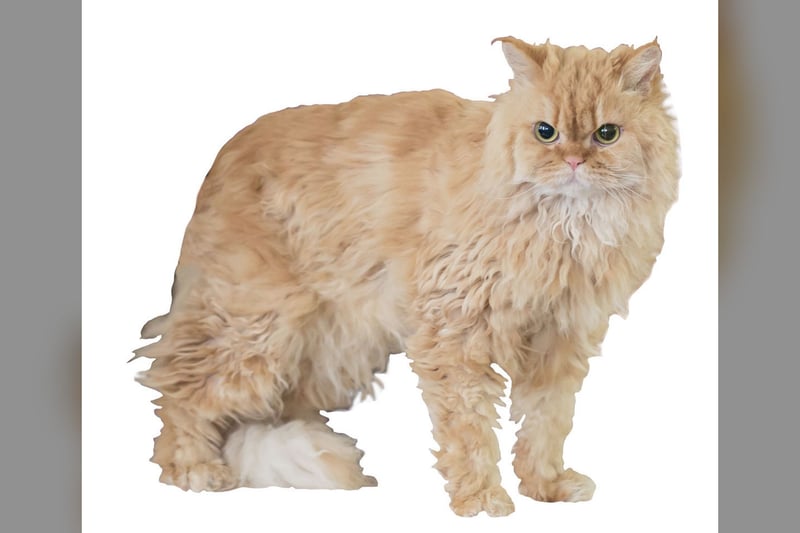
The Selkirk Rex was born in 1987 in Montana from a spontaneous, autosomal dominant mutation, the only one in the rex world to produce a cat with a cobby, massive build. Its dense, spiral-curled coat — available in shorthair and longhair versions — is not the result of crossing rex breeds: the Selkirk's curls form distinct ringlets across all three layers of the coat, unlike the flat waves of the Cornish or Devon Rex. A calm, patient, sociable breed, it suits families as well as multi-pet households, provided you plan for regular curl maintenance and rigorous genetic screening linked to its Persian and British Shorthair ancestry.

4 to 7 kg 14 years
See the profile
Highland Fold

8

Highland Fold

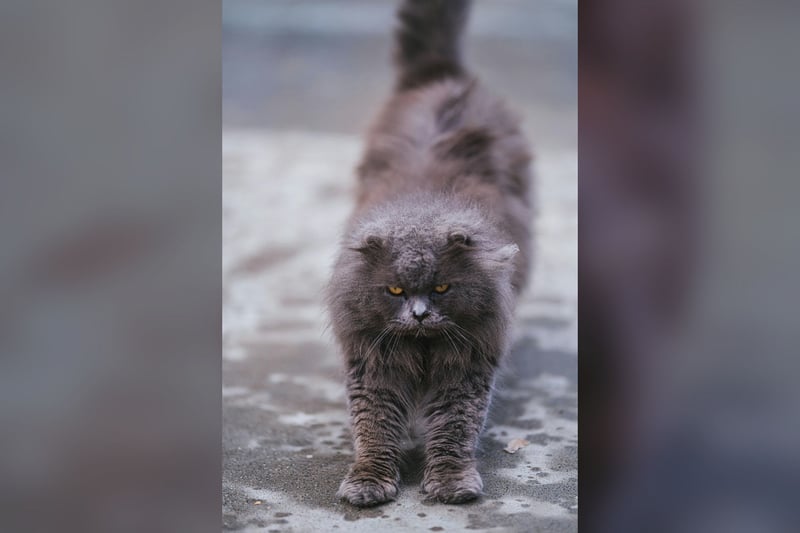
The Highland Fold is the semi-longhair variant of the Scottish Fold: the same cobby build, the same folded ears from the dominant Fd gene, the same placid temperament — but a dense, silky coat that needs regular brushing. It appeared as early as the first litters of Susie (1961), and is recognized by the LOOF, TICA (as the Scottish Fold Longhair from 1987-88) and the CFA (1993-94). Like its shorthair twin, it carries the same Fd gene and therefore the same incurable bone disease — feline osteochondrodysplasia — which makes it one of the most ethically debated breeds in the international veterinary community.

3 to 6 kg 13 years
See the profile
Chantilly-Tiffany

9

Chantilly-Tiffany

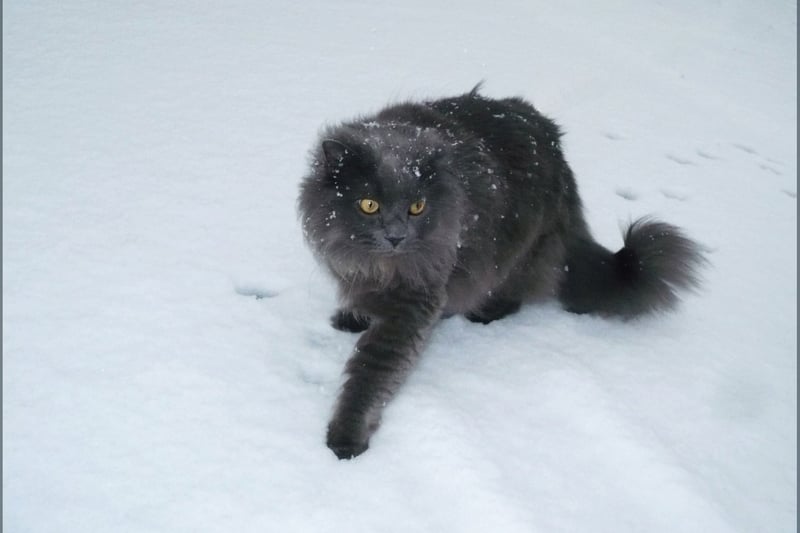
An American longhaired breed born in New York in the 1960s, the Chantilly-Tiffany stands out for its silky chocolate coat — later joined by other recognized colors — and its gentle character, deeply attached to its people. Distinct from the British Tiffanie of the Asian group, it remains one of the rarest breeds in the world, with a very limited breeding population.

3.5 to 6.5 kg 14 years
See the profile
Exotic Shorthair

10

Exotic Shorthair

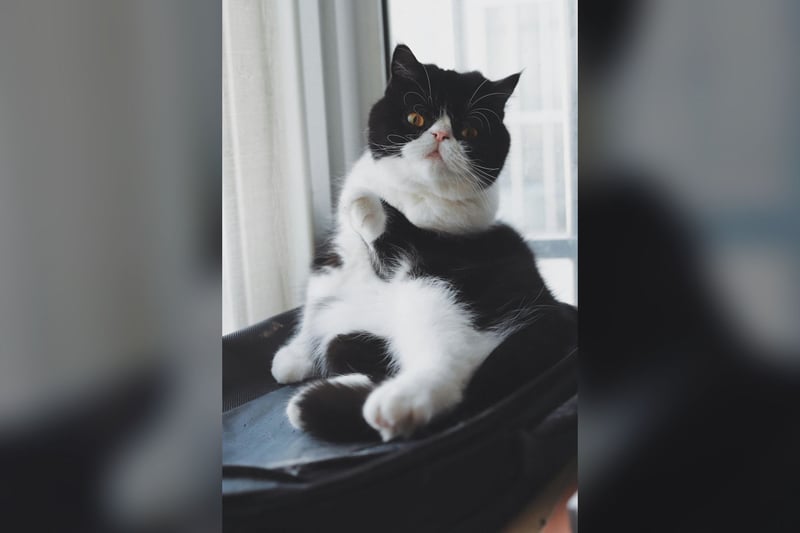
The Exotic Shorthair is the shorthaired version of the Persian: the same cobby, brachycephalic build, the same calm, affectionate character, but a short, dense coat that needs only weekly brushing. Born in the United States in the 1950s from a Persian × American Shorthair cross, it offers most of the Persian temperament without the demands of intensive daily brushing — at the cost of the same health concerns (PKD1, HCM, brachycephaly) that a serious breeder must have documented through DNA tests.

3.5 to 7 kg 13 years
See the profile

Practical advice

  • Favor breeds with affection 5/5 (Ragdoll, RagaMuffin, Birman, Persian, Himalayan, Exotic Shorthair): it's the #1 criterion for true cocooning.
  • Test brushing tolerance at the breeder's — a cat that won't tolerate brushing makes long-coat cocooning impossible.
  • Plan on 10-15 minutes of daily brushing for long-haired breeds (Persian, Himalayan) — non-negotiable to prevent mats.
  • Put a velvet or jersey throw on the couch: it protects the cushions and adds warmth that the recommended breeds appreciate.
  • Adopt in winter if possible: the peak cocooning phase sets in during the cold season and anchors the cat's habits.

Frequently asked questions

What is THE quintessential cocooning cat?
The Ragdoll, without hesitation. Affection 5/5, independence 1/5 (the characteristic 'flop': it goes limp like a ragdoll when picked up), a temperament built for long couch sessions. The breed was created in the 1960s around this trait of total relaxation. The RagaMuffin (affection 5/5, independence 2/5) comes in just behind.
Is the Persian really a cocooning cat, or too demanding?
True cocooning, but demanding in upkeep. The Persian temperament is very placid (energy 2/5, vocal level 1/5), ideal for hours on the couch. The catch: coat maintenance rated 5/5 — 10-15 minutes of daily brushing to prevent mats. If you don't enjoy that ritual, choose a Ragdoll instead (3/5).
Do you need a long coat for cocooning?
Preferable but not required. The tactile experience is more enveloping with a long or medium coat (Ragdoll, Birman). A RagaMuffin (medium coat) offers an excellent compromise: pleasant petting, moderate brushing. For those who hate fur on the couch, the Sphynx (hairless, warm skin) is an unconventional alternative.
My cat won't stay on my lap — how do I train him to?
It's more about genetic temperament than training. The breeds recommended here actively seek contact; a European Shorthair or a Bengal will never become a lap cat no matter how hard you try. If you already have a cat that isn't cuddly, don't push it: let him come to you at his own pace, and reward him with treats without forcing contact.
How long does a cat really stay on your lap?
It varies by individual, but for the recommended breeds: 30-90 minutes per session, several sessions a day if you're available. An adult Ragdoll can stay put for 3-4 hours straight in winter. Cats prefer laps in the cold season (warmth) — in summer, they tend to seek out cool surfaces instead.
How much does a cocooning cat cost?
70-120 € a month for the recommended breeds: premium food for long coats (25-45 €), litter (10-15 €), routine vet care (20-40 €), brushes and grooming supplies (15-20 €). The very long-haired breeds (Persian, Himalayan) add 2-3 professional grooming sessions a year if you're not comfortable doing it yourself.
Sources