


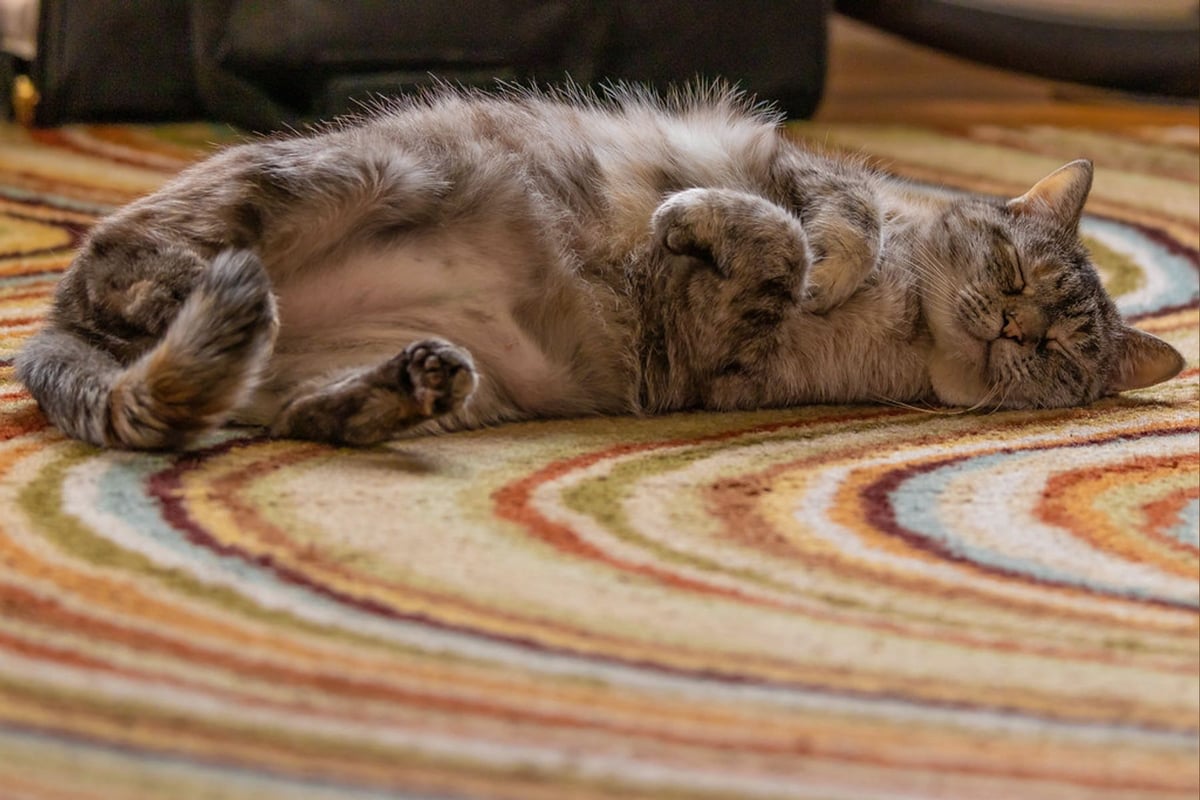
Ceylon
The Ceylon is one of the rarest pedigree cats in France and in the world: native to Sri Lanka (formerly Ceylon), it was discovered and standardized by Italian veterinarian Dr. Paolo Pellegatta during an expedition to the island in 1984, then recognized by the WCF in 1988. Its ticked agouti coat — similar to the Abyssinian's but marked with distinctive M-shaped markings on the forehead and lines on the legs — combined with a slender semi-foreign body and a lively, affectionate temperament, make it an exceptional companion. Fans of atypical, historically fascinating cats will actively seek it out.
- Weight
- 3 to 5kg
- Height
- 23 to 28cm
- Life expectancy
- 14years
- Monthly cost
- 50 to 85€
Personality profile
Energy 4/5
Independence 3/5
Trainability 4/5
Good with children 4/5
Talkativeness 3/5
Space needed 3/5
Attachment to home 4/5
Good with strangers 3/5
Good with cats 4/5
Good with dogs 3/5
Coat care 1/5
Exercise needs 4/5
Scores given on measured axes, data confidence: medium.
Living with a Ceylon
Description
The build is semi-foreign, slender and muscular, never tending toward the extreme oriental type. The body is harmonious and well-proportioned, with a light but solid bone structure — comparable to the Abyssinian's but slightly more compact. The head is a moderate wedge shape, with slightly prominent cheekbones, a well-defined muzzle and a firm chin. The eyes are large, almond-shaped, most often green, hazel or amber. The ears are medium to large, wide at the base, tilted slightly forward, giving a characteristic alert look. The tail is medium length, slightly tapered. The coat is the breed's absolute signature: short, fine, silky, lying close to the body, with an agouti ticking where each hair carries two to three alternating color bands on a warm background. The head markings — a clearly drawn frontal M, two lines running down toward the cheeks, a line connecting the corners of the eyes — immediately distinguish the Ceylon from the Abyssinian, which it resembles in coat but not in facial standard. The legs and tail show light rings. The colors recognized by the WCF standard are: gold (warm brown coat with golden ticking), sand (pale beige), gray, black, as well as cream variants. Males 4-5 kg, females 3-4 kg.

Temperament
The breed combines the energy and liveliness of a cat of tropical origin with remarkable sociability, inherited from its past as a semi-feral cat living among Sri Lanka's populated villages. It is curious, alert and involved in household life — it follows its owners, watches everything, gets involved in every activity. Its vocalizing is moderate and nuanced: it expresses itself through trills and soft meows rather than booming vocalizations. It is affectionate without being clingy — it seeks physical closeness but readily accepts moments of independence. With children, it is playful and patient, tolerating active interactions as long as they stay respectful. Early socialization strongly shapes how it relates to strangers: a well-socialized individual adapts quickly to new people, whereas a kitten with little exposure stays cautious. Cohabitation with other cats is generally good, especially with breeds of similar energy (Abyssinian, Somali, Sokoke). Its hunting instinct is pronounced — unprotected birds and small rodents are at risk.
Training
Intelligent and attentive, it is receptive to positive reinforcement and clicker training. Its origins as a semi-feral cat socialized in contact with humans give it a natural disposition for interaction and guided learning. It can learn to respond to its name, use complex food puzzles and accept a leash with progressive training starting at a young age. Sessions should be short (5-10 minutes), regular and based exclusively on reward — treats or play — never on coercion. Its liveliness makes it particularly suited to indoor agility games. A well mentally-stimulated individual stays balanced; cognitive understimulation results in excessive exploratory behavior or minor destructiveness. Its need for activity is high: plan at least two long sessions of intense active play a day (15-20 minutes each) to channel its energy.

Feeding
Active and with a moderately high metabolism, it needs a balanced diet high in animal protein (≥ 38%) without excess carbohydrates. For a 4 kg adult with normal activity, plan on 200-250 kcal/day — slightly more than for a sedentary breed of equivalent weight. Premium kibble or a mixed diet (kibble + wet food) suited to age and activity level. Split into two meals a day; avoid free feeding for neutered individuals to prevent weight gain. Constant access to fresh water is essential — a circulating fountain is ideal. The breed has no special documented nutritional needs beyond standard feline requirements.
Affiliate links, no extra cost to you. Legal notice

Living conditions
It adapts to apartment life provided the environment offers opportunities to climb, observe and play. An apartment of at least 50 m² with vertical structures — a cat tree, wall shelves, high perches — suits it. Access to secure outdoor space (catio, netted garden) is a valuable asset given its active exploratory instinct. Native to a humid tropical climate, it copes less well with cold than northern breeds: avoid unheated rooms in winter and protect kittens on cool nights. Its heat tolerance, on the other hand, is excellent. Daytime solitude is manageable for well-balanced adults, provided independent-play toys are on offer and, ideally, a feline companion. A present, active household is its ideal.

Grooming and coat care
The short, fine, silky coat is among the easiest to maintain. A weekly brushing of 5 to 10 minutes with a grooming glove or a fine comb is enough to remove dead hair and preserve the sheen of the ticking. Shedding is very discreet and does not generate significant deposits in the home. No regular bathing is needed except for exceptional soiling. Check the ears monthly (wax), trim the claws every three to four weeks for indoor cats. The breed generally accepts grooming handling well if used to it from kittenhood — a weekly brushing ritual quickly becomes an appreciated bonding moment.

Health
The breed benefits from a broad natural genetic base drawn from a relatively isolated island population, which gives it a constitutional robustness comparable to other natural breeds (Abyssinian, Sokoke). No major hereditary genetic disease specific to the breed is documented in the veterinary literature — the small numbers and the absence of intensive selection having preserved allelic diversity. Standard veterinary follow-up applies: primary vaccination at 8 weeks, annual boosters, parasite control suited to lifestyle. Intestinal parasites can be more present in individuals with outdoor access or coming from direct imports from Sri Lanka — a parasitology exam is recommended at acquisition. Monitor the teeth and carry out preventive tartar removal. Estimated life expectancy is 13 to 16 years according to specialized Italian club sources.
Breed history
The Ceylon takes its name from the former colonial name of the island of Sri Lanka. Its discovery as a distinct feline type is attributed to Dr. Paolo Pellegatta, an Italian veterinarian and passionate cat fancier who, during an expedition to the island in 1984, observed populations of semi-feral cats showing a remarkably consistent morphology and coat — a slender body, ticked agouti coat, distinctive facial markings — not found in the recognized breeds of the time. Pellegatta brought several representative specimens back to Italy and undertook a rigorous standardization program in partnership with Italian breeders and the Club del Gatto di Ceylon, founded specifically to develop the breed. The selection work aimed to fix the morphological traits observed in Colombo and in the island's rural regions — agouti ticking on a warm background, M markings on the forehead, semi-foreign body — without drifting toward other types. The WCF (World Cat Federation) officially recognized the breed in 1988, just four years after Pellegatta's first expedition — a remarkably short timeframe for a breed standardization, testifying to the type's natural consistency. The LOOF recognized it later in its official list of breeds. The breed remains extremely rare today outside Italy, which remains the main pool of specialized breeders. In France, Ceylon kittens number in the dozens per year, making it one of the least represented recognized breeds in LOOF numbers. Communities of enthusiasts also exist in Germany, Belgium and Japan.
Getting ready for your Ceylon
Four essentials to line up before day one.
Affiliate links, no extra cost to you. Legal notice
FAQ: Ceylon
Sources
- Wikipedia FR — Ceylon (cat) · Natural breed native to Sri Lanka, discovered by Dr. Paolo Pellegatta during an expedition in 1984. Ticked agouti coat, characteristic frontal M markings. Recognized by the WCF in 1988. Very rare outside Italy.
- LOOF — Recognized cat breeds · The Ceylon is on the official list of breeds recognized by the Livre Officiel des Origines Félines, shorthair category.
- WCF — Ceylon Breed Standard · WCF standard: semi-foreign body, short ticked coat with agouti pattern, distinctive M marking on forehead, eye lines. Recognized 1988. Colors: gold, sand, grey, black and cream variants.

