


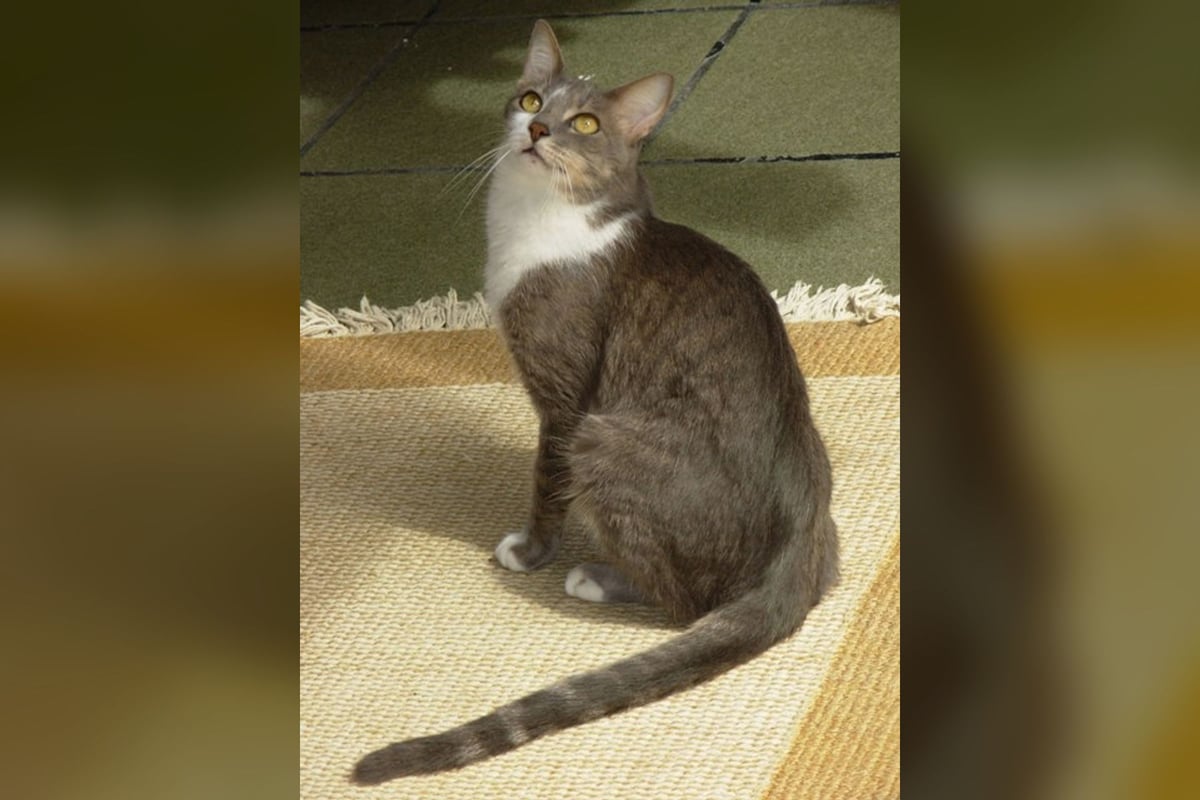
Brazilian Shorthair
The Brazilian Shorthair — in Portuguese "Pelo Curto Brasileiro" — is the first and only cat breed native to South America recognized by the FIFe and the WCF. A direct descendant of the cats brought to Brazil by Portuguese navigators as early as the 15th century to protect cargo on board, it evolved freely for five centuries in Brazil's tropical climate before being standardized in the 1990s by researcher Paulo Samuel Ruschi. A natural breed with an exceptional gene pool, a supple, slender semi-foreign body, a short silky coat, and a sociable, adaptable temperament: a working breed turned family companion, almost absent in France but deeply rooted in Brazilian cat culture.
- Weight
- 3 to 6.5kg
- Height
- 26 to 36cm
- Life expectancy
- 16years
- Monthly cost
- 45 to 85€
Personality profile
Energy 4/5
Independence 3/5
Trainability 3/5
Good with children 5/5
Talkativeness 3/5
Space needed 3/5
Attachment to home 4/5
Good with strangers 4/5
Good with cats 4/5
Good with dogs 4/5
Coat care 1/5
Exercise needs 3/5
Scores given on measured axes, data confidence: medium.
Living with a Brazilian Shorthair
Description
The build is semi-foreign, balanced: an elongated, muscular body, medium bone structure, neither cobby nor extremely oriental. The silhouette is supple and elegant, revealing a constitution built for agility rather than mass. The head is medium-sized, slightly longer than wide, with a slightly convex profile — distinct from the pronounced stop of the Persian and the perfectly straight profile of the European Shorthair. The cheeks are well developed without being excessive. The muzzle is moderately pointed, the chin firm and well aligned. The eyes are large, slightly almond-shaped and expressive; all eye colors are accepted, including heterochromia in white individuals. The ears are medium to large, wide at the base and slightly rounded at the tip, well spaced on the skull. The tail is medium to long, tapering toward the tip. The coat is short, silky and glossy, lying close to the body with a minimal undercoat — a trait of tropical climate adaptation. Its texture sets it clearly apart from the denser, coarser coat of the American Shorthair or British Shorthair: it is fine, smooth and soft to the touch. All colors and patterns are recognized without restriction: solid, bicolor, tabby (mackerel, classic, spotted, ticked), colorpoint, silver, golden, smoke. Unlike the European Shorthair, no color is excluded from the standard. Males reach 4 to 6.5 kg, females 3 to 5 kg.

Temperament
Few natural breeds are considered as sociable and outgoing. Where the European Shorthair takes its time before warming up to strangers, this cat readily welcomes visitors and settles quickly into new situations. Its affection is sincere and active: it seeks contact, follows its owners around the house and willingly joins in household activities without tipping into excessive dependence. Its energy level is slightly above the average for European natural breeds — it plays enthusiastically, climbs, explores and stays noticeably alert. Intelligent and curious, it learns routines quickly and remembers behaviors that get a positive response. Its tolerance of children is remarkable: it interacts calmly and good-naturedly in lively environments, and withdraws gracefully rather than lashing out under sensory overload. Its sociability toward other species is real — it generally gets along well with other cats and even with dogs introduced gradually. Its vocalizing is moderate: it communicates regularly but without the insistence of the Siamese or the silence of the European Shorthair.
Training
An intelligent, curious cat receptive to interaction, it is easy to train through positive reinforcement. It learns routines quickly, responds to its name and can pick up simple behaviors: using a cat flap, tolerating travel, accepting claw and ear care. Its motivation for active learning is above the average for European natural breeds, though below breeds with a strong working instinct such as the Bengal or the Maine Coon. Short 5-10 minute sessions, regular and based on food rewards or interactive play, give the best results. Early socialization — from the first weeks — is decisive for its tolerance of veterinary handling and unfamiliar situations.

Feeding
No nutritional need is specific to this breed. A quality diet high in animal protein — premium kibble or wet food — fully covers its needs. The ration should be matched to actual weight, activity level and age: a moderately active 4.5 kg adult needs about 210-250 kcal/day. Two split meals a day are preferable to free feeding, particularly for neutered individuals, who are more prone to weight gain. No cardiac or kidney predisposition justifies specific supplementation. Constant access to fresh water is recommended, ideally via a circulating fountain — like most cats, it prefers moving water.
Affiliate links, no extra cost to you. Legal notice

Living conditions
Adapting to a wide range of environments is one of its strengths, confirming its heritage as a Brazilian city cat used to dense human surroundings. An apartment suits it perfectly provided it gets enough stimulation: vertical structures, rotating toys, environmental enrichment and regular interactive sessions. In a house with a secure garden, it will be an active explorer, curious about its territory. Its heat tolerance is excellent — an evolutionary legacy of five centuries of acclimation to Brazil's tropical climate. Its cold tolerance, however, is moderate: a short coat with a minimal undercoat gives it little thermal insulation for harsh winters. In French homes where winters are cool, outdoor access should be adjusted accordingly. It handles daytime absences without particular anxiety thanks to its balanced temperament, provided the environment is stimulating enough. The breed suits families with children, multi-pet households and active people looking for an engaged companion.

Grooming and coat care
The short, silky coat with a minimal undercoat is one of the easiest to maintain among all recognized breeds. A simple weekly pass with a grooming glove or a fine comb is enough to remove dead hair and keep the coat's natural shine. During the seasonal molt — more discreet than in breeds with a denser coat — one or two extra passes over two to three weeks are enough. No regular bathing is needed: the fine coat cleans and dries quickly. Periodic ear checks, cleaning with a suitable veterinary product if wax builds up. Claws should be watched and trimmed every three to four weeks in exclusively indoor individuals.

Health
The genetic advantage here is decisive: the gene pool is one of the widest among recognized breeds, the result of five centuries of free evolution with no intentional inbreeding within Brazil's diverse feline population. The recent standardization — begun in the 1990s and formalized by the WCF in 1998 and the FIFe in 2014 — did not introduce significant genetic bottlenecks, preserving this constitutional diversity. No major hereditary predisposition is documented in the veterinary literature for this breed. No breed-specific hypertrophic cardiomyopathy (HCM), no polycystic kidney disease (PKD), no progressive retinal atrophy and no structural musculoskeletal defect. Routine care applies as for any cat: vaccinations, parasite control and regular veterinary check-ups. Weight monitoring remains relevant in neutered, low-activity individuals. Life expectancy: 14 to 20 years.
Breed history
The breed is the product of five centuries of colonial history and natural evolution. Its ancestors arrived in Brazil as early as the 15th century aboard Portuguese ships: navigators of the Age of Discovery routinely brought cats along to protect food stores and rigging from rodents during long Atlantic crossings. After reaching land, these cats spread through Brazilian ports, towns and countryside, freely mixing their genes with local cat populations and gradually acclimating to the country's tropical climate. For centuries, these "pelo curto brasileiro" cats — literally "Brazilian shorthair" — populated Brazilian homes and streets without ever being the subject of a formal breeding program. It was geneticist and cat fancier Paulo Samuel Ruschi, in the 1980s in Rio de Janeiro, who undertook the first work of documentation and scientific standardization of these natural Brazilian cats. Observing the morphological and behavioral consistency of these populations descended from colonial Portuguese cats, Ruschi set out to define a precise standard that would distinguish the Brazilian Shorthair as a breed in its own right rather than simply a tropical domestic cat. After more than a decade of work, the World Cat Federation (WCF) officially recognized the breed in 1998 — the first international recognition of a South American breed. The Fédération Internationale Féline (FIFe) followed suit in 2014, cementing the Brazilian Shorthair's international status. Today, the breed is popular in Brazil and recognized by the major world federations, but almost absent in Europe and France, where specialized breeders remain extremely rare.
Getting ready for your Brazilian Shorthair
Four essentials to line up before day one.
Affiliate links, no extra cost to you. Legal notice
FAQ: Brazilian Shorthair
Sources
- FIFé — Brazilian Shorthair breed standard · Official FIFé standard (recognized 2014): slender, muscular semi-foreign body, short silky coat with minimal undercoat, head slightly longer than wide with a slightly convex profile. All colors and patterns recognized without restriction. First South American breed recognized by the FIFé.
- WCF — Brazilian Shorthair (Pelo Curto Brasileiro) · WCF standard (recognized 1998): natural Brazilian breed descended from colonial Portuguese cats. First formal standard established by Paulo Samuel Ruschi in the 1990s in Rio de Janeiro. First South American breed to gain international recognition. Semi-foreign body, fine, glossy short coat.
- Wikipedia EN — Brazilian Shorthair · Natural Brazilian breed. Ancestors: 15th-century colonial Portuguese cats. Standardized by Paulo Samuel Ruschi (1990s, Rio de Janeiro). Former name "Pelo Curto Brasileiro." Recognition: WCF 1998, FIFé 2014. First South American domestic breed to gain international recognition. All colors admitted.

