


Bombay
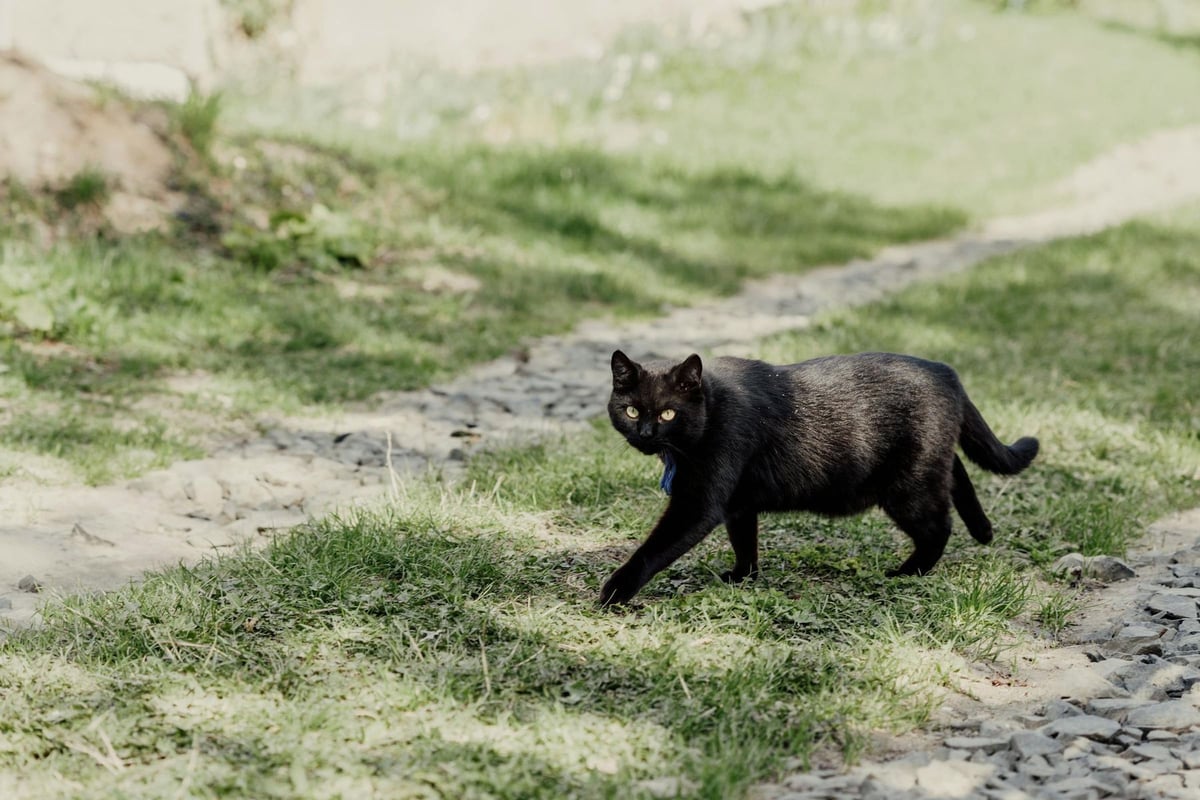
The Bombay is a shorthaired cat of American origin, born from a cross between a sable Burmese and a black American Shorthair, conceived in the 1950s by breeder Nikki Horner to recreate the look of a black panther in domestic form. Its coat is uniformly black, with absolutely no hint of red or brown, so satiny it appears lacquered. The eyes, a vivid copper to intense gold, create a spectacular contrast with the coat. An uncommon breed in France, it is better established in the United States.
- Weight
- 2.7 to 4.5kg
- Height
- 22 to 28cm
- Life expectancy
- 14years
- Monthly cost
- 55 to 95€
Personality profile
Energy 3/5
Independence 2/5
Trainability 4/5
Good with children 5/5
Talkativeness 3/5
Space needed 3/5
Attachment to home 5/5
Good with strangers 4/5
Good with cats 4/5
Good with dogs 4/5
Coat care 1/5
Exercise needs 3/5
Scores given on measured axes, data confidence: high.
Living with a Bombay
Description
The build is medium-sized, semi-cobby and muscular, denser to the hand than it appears to the eye. The head is round with a moderate but clear stop, a well-developed muzzle and slightly full cheeks — an American Burmese legacy. The ears are medium-sized, tilted slightly forward and well spaced. The eyes are large, round and widely set, in a shade ranging from bright copper to deep gold — this color is a strict standard criterion and contrasts strikingly with the dark coat. The coat is short, extremely fine, satiny, lying close to the body with an almost lacquered sheen comparable to patent leather — the CFA describes this look as a "patent-leather sheen." What sets it apart from any other black cat: the monochrome is absolute. The coat is black, the paw pads are black, the muzzle is black — no light patches, no locket, no white hair tolerated by the standard. Males weigh 3.6 to 4.5 kg, females 2.7 to 3.7 kg. Life expectancy: 12 to 16 years.

Temperament
A deeply social breed, attached to its home and its people with an intensity reminiscent of the Burmese it descends from. It follows its owner from room to room, settles on laps or against a shoulder, and develops an almost dog-like attachment. This "dog-like" behavior is one of its most often-cited traits — it can learn to come when called, walk on a leash and play fetch with light toys. Its vocalizing is moderate: quieter than the Siamese or the Burmese, but real — it comments on daily life in a soft voice without being intrusive. Curious and playful well into adulthood, it readily engages in interactive play sessions. Its tolerance of children is remarkable: patient and non-aggressive, it handles being handled with composure. It gets along well with other cats and generally adapts to properly introduced dogs. Prolonged solitude is its weak point: an individual left alone regularly for several hours develops behavioral discomfort. Adopting in pairs is recommended for households with long absences.
Training
Receptiveness to clicker training is excellent. Its sharp intelligence, strong motivation for human interaction and playful temperament combine well for structured learning. It can learn to answer to its name, come on command, accept a harness for supervised outings, and perform simple routines (sit, offer a paw, jump through a hoop). Short 5-10 minute sessions with positive reinforcement through treats and contact give the best results. Training also serves as a useful mental stimulation tool for a breed that needs intellectual activity. No physical restraint: this cat responds to engagement, not coercion.

Feeding
A medium-framed breed with moderate activity, it does not have high caloric needs. A premium diet rich in animal protein (minimum 35-38%) and moderate in carbohydrates is suitable. Given the HCM risk inherited from the Burmese, taurine should rank prominently in the formula — it supports heart function, and its deficiency is a cofactor in feline cardiomyopathy. For a 3.5-4 kg adult, plan on 180-220 kcal/day depending on activity. Two split meals a day are preferable to free feeding. Monitor weight regularly after neutering.
Affiliate links, no extra cost to you. Legal notice

Living conditions
Apartment life goes well, even in modest square footage, provided stimulation is on offer. Its moderate energy level and compact frame do not require large volumes of space. A sturdy scratching post, a few perches and daily play sessions are enough for its physical balance. Its cold tolerance is low — a Burmese legacy, a breed with a very short coat and no substantial undercoat: unheated environments in winter are not advisable. It copes well with moderate heat. An exclusively indoor life is recommended: its trusting temperament and lack of natural wariness make it vulnerable to outdoor dangers. Regular human presence is stabilizing — a cat of this breed in a frequently empty household quickly loses its behavioral balance.

Grooming and coat care
The coat is one of the easiest to maintain in the entire feline registry. Short, satiny, with no thick undercoat, it does not mat and sheds little day to day. A weekly brushing with a rubber grooming glove or a damp chamois is enough to remove dead hair and revive the coat's characteristic sheen — this simple care routine accentuates the lacquered look that makes the coat distinctive. Outside of the light spring shedding periods, routine upkeep is minimal. Bathing is rarely necessary, except for shows or the occasional mishap. Clean the eyes with a damp cotton pad if discharge appears — more common on individuals with the shortest muzzles. Check the ears monthly and trim the claws every two to three weeks.

Health
The health profile is directly inherited from the two founding breeds, the American Burmese and the American Shorthair. Hypertrophic cardiomyopathy (HCM) is the most serious predisposition to watch: it is documented in the breed, with an origin directly linked to American Burmese lines where HCM is well established. Serious breeders have their breeding cats undergo regular echocardiograms — require this follow-up before acquisition. The frequency and the precise gene involved are not as well documented as in the Maine Coon or the Ragdoll, but caution is warranted given the Burmese ancestry. Craniosynostosis (premature fusion of the skull sutures) is a malformation reported in certain heavily typed American lines, where selection for a round, domed skull drives the same mechanisms as in the most extreme American Burmese — affected kittens show severe craniofacial deformities; sound selective breeding avoids this risk. Hereditary hypokalemia (a muscular potassium deficiency), known in American Burmese lines, is a residual risk to factor in: a DNA test is available for breeding cats and its result should be provided by any serious breeder. On a day-to-day level, individuals with the shortest muzzles may show mild tear staining that needs regular cleaning. An annual veterinary check-up including cardiac auscultation is advised from age 5.
Breed history
The breed was born from a deliberate breeding program launched in 1958 by Nikki Horner, a breeder from Louisville, Kentucky. Her stated goal: to recreate the appearance of a black panther in domestic form, referencing the black panthers she associated with the city of Bombay (present-day Mumbai) — hence the breed's name, a symbolic and evocative choice, not a geographic one. The program involved crossing black American Shorthairs with sable Burmese to obtain the dense black coat, the intense golden eyes and the compact, muscular build together. Development took a long time: between 1966 and 1972, after twenty-seven litters totaling more than a hundred kittens, Horner finally obtained individuals meeting every criterion of the standard she had defined. The CFA granted registration in 1970, then championship recognition in 1976. TICA recognized the breed when it was founded in 1979. In Europe, a parallel program was developed in Great Britain from crosses between British Burmese and black British Shorthairs or black American Shorthairs — giving rise to what some European registries distinguish as the British type of the Bombay, morphologically close to the American type but descended from more moderate semi-foreign-type European Burmese lines. The LOOF recognizes the Bombay under an entry grouped with the American Burmese. The breed remains rare in France and continental Europe, with modest LOOF numbers; it is more established in the United States, where it nonetheless sits near the bottom of the ranking of breeds registered with the CFA (35th out of 43 in 2014). The name "Bombay" is sometimes a source of confusion with the city — it is purely a poetic reference to the Indian jungle and its panther, not an indication of actual geographic origin.
Getting ready for your Bombay
Four essentials to line up before day one.
Affiliate links, no extra cost to you. Legal notice
FAQ: Bombay
Sources
- Wikipedia FR — Bombay (cat) · Nikki Horner, Louisville, Kentucky, 1958, cross of black American Shorthair × sable Burmese. 27 litters 1966-1972. CFA 1976, TICA 1979. Name references Bombay/Mumbai and the black panther. Cobby build, copper/gold eyes, absolute black coat.
- CFA — Bombay Breed Standard · Standard: round head, compact muscular body, jet-black coat with patent-leather sheen, copper to gold eyes. Approved outcrosses: Black American Shorthair and Sable Burmese. HCM documented, testing recommended before breeding. CFA registration 1970, championship 1976.
- LOOF — Recognized cat breeds · Bombay recognized under the grouped entry "Bombay and American Burmese." Shorthair breed officially registered with the LOOF.

