


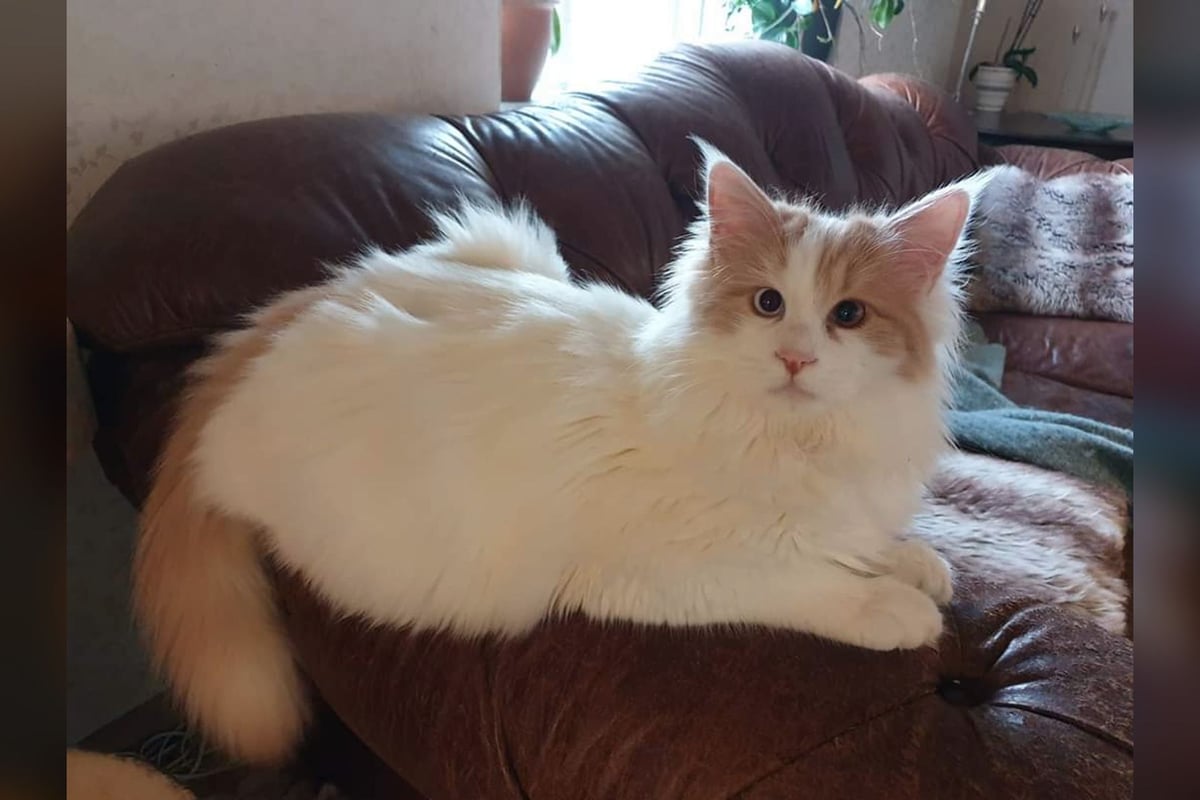
Turkish Van
The Turkish Van — "Van kedisi" in Turkish — is an ancient natural breed native to the shores of Lake Van in eastern Anatolia. Larger and heavier-built than its cousin the Turkish Angora (males can reach 9 kg), it's recognizable by its semi-long coat with a pure white base and colored markings strictly limited to the head and tail — the "Van pattern." A faunal curiosity: it's one of the only domestic breeds to actively seek out water and swim voluntarily. Robust, affectionate and powerful, it's a cat with real presence, suited to active families with space to offer.
- Weight
- 3 to 9kg
- Height
- 25 to 40cm
- Life expectancy
- 14years
- Monthly cost
- 60 to 100€
Personality profile
Energy 4/5
Independence 3/5
Trainability 3/5
Good with children 4/5
Talkativeness 3/5
Space needed 4/5
Attachment to home 3/5
Good with strangers 3/5
Good with cats 3/5
Good with dogs 3/5
Coat care 3/5
Exercise needs 4/5
Scores given on measured axes, data confidence: high.
Living with a Turkish Van
Description
The build is semi-slender and robust, noticeably more imposing than the Turkish Angora's. The body is long, muscular and broad, with a deep chest, a solid frame and developed musculature: males commonly reach 7 to 9 kg, females 3 to 5 kg. The head is broad and moderately rounded, with a slightly Roman profile and a firm chin. The eyes are large, almond-shaped, expressive; in white individuals, every color is admitted — amber, blue or odd. The ears are medium-sized, wide at the base, well spaced. The tail is long, bushy, carried upright, with a characteristic pigmentation often ringed in auburn or cream on a white background. The coat is semi-long, soft and silky, with no oiliness; it develops a dense winter undercoat that sheds heavily in spring, giving the coat a fuller look in winter. The breed's defining trait is the "Van pattern": a pure white base, with colored markings — generally auburn, cream or tabby — strictly limited to two zones: the crown of the head (around the ears) and the tail. Any extension of the markings onto the body (beyond a few small spots allowed by certain standards) is considered a deviation. Physical maturation is slow: the breed reaches full size between ages 3 and 5.

Temperament
An energetic, confident cat, it shows a robustness of temperament that matches its build. Less outgoing than the Turkish Angora, it's no less active and curious: it explores its territory methodically, carries an assertive presence and picks its moments of affection without being permanently demonstrative. It forms strong bonds with family members, sometimes singling out a favorite person it will follow faithfully, while staying comfortable with the whole household. Its activity level stays high until age 4-5; the breed then gradually settles into a certain serenity without losing its taste for play. A universally documented distinctive trait: the Turkish Van loves water. Unlike the vast majority of domestic cats, which avoid it, these cats happily dip their paws into water bowls, join their owner in the shower or actively swim in shallow pools. This behavior, attributed to their original lake environment and to the non-oily texture of their coat, which dries quickly, is a signature of the breed. Vocally, it stays moderate: it communicates, but without the insistence of an Oriental or a Siamese.
Training
It's intelligent and capable of learning, but less compulsively oriented toward human interaction than the Turkish Angora. It responds positively to positive reinforcement — clicker training, rewarded play sessions — and can learn simple behaviors (answering to its name, coming when called, accepting a harness) with consistency and patience. Short, frequent sessions (5 to 10 minutes) are more effective than long ones. Its independent nature means it will engage with learning on its own terms: an unsolicited session often ends in quick disengagement. Early socialization is decisive: kittens exposed to varied sounds, regular handling and contact with other animals between 3 and 12 weeks develop markedly better adult stability. For deaf white individuals, gestural communication and floor vibrations play a compensatory role — it's possible to condition a deaf cat with consistent visual signals. The breed's physical robustness calls for play suited to its size and strength. Its need for intense exercise is high: plan at least two long active play sessions a day (20 minutes each) to channel its athletic hunter's energy.

Feeding
A large-framed breed with an active metabolism, it needs a diet proportioned to its muscle mass and slow maturation. For a very active 7-8 kg adult male, plan on 280 to 350 kcal/day depending on age and actual activity level. Favor a wet or mixed diet (premium kibble + wet food) high in animal protein (>38%) to support muscle mass; omega-3 and omega-6 fatty acids nourish the silky texture of the coat. Its slow growth (3 to 5 years to reach full size) calls for a quality kitten diet extended to 18 months, then a gradual switch to an adult formula with an adapted energy density. After neutering, watch the weight closely: the breed can become sedentary and carry an overweight risk if the ration isn't adjusted downward (typically -15%). Two to three split meals a day rather than free feeding for better control of caloric intake. Taurine intake should be assured for cardiac support.
Affiliate links, no extra cost to you. Legal notice

Living conditions
This is a large cat that needs space. A standard apartment isn't advisable: the breed isn't suited to compact homes without access to long play sessions. A spacious apartment is only workable if it's well equipped vertically (sturdy cat trees able to support its weight, quality wall shelves) and enriched with regular interactive play. Its athletic nature and love of exploration make a house with a secure garden the ideal environment. If apartment living is chosen, plan at least two twenty-minute play sessions a day to channel its energy. Its size calls for stable, appropriately sized scratching posts — lightweight models for small cats won't suit it. Because of its attraction to water, open aquariums and pools should be covered or made inaccessible unless you're willing to share the water with it. It generally gets along well with children who respect its limits, but its physical strength calls for supervision with very young children. Cohabitation with other cats is possible with a gradual introduction; its size can intimidate cats of lighter breeds.

Grooming and coat care
The semi-long coat is relatively simple to maintain despite its volume. The silky texture and the absence of an oily undercoat reduce the risk of mats and felting compared with breeds like the Persian or the Ragdoll. Under normal conditions, two to three brushings a week with a wide-toothed comb or a soft brush are enough to remove dead hair and keep the coat's shine. The dense winter undercoat requires stepping up to four to five weekly sessions during the spring seasonal molt, a period during which shedding becomes substantial. Watch friction zones (armpits, britches, behind the ears), where mats can form more easily in heavily coated individuals. An occasional bath is not only tolerated but often enjoyed by individuals that like water — a practical advantage unique to this breed. The ears should be checked monthly. Claws should be trimmed regularly given the animal's size.

Health
The best-documented predisposition in the breed is congenital deafness linked to the W gene (white dominant), the same mechanism described in other white-coated breeds. This autosomal dominant gene, responsible for the white coat and blue eye color, causes degeneration of the organ of Corti in the inner ear during embryonic development. The prevalences reported in the scientific literature for blue-eyed whites vary widely by study and population, up to 65-85% of affected individuals (unilateral or bilateral deafness combined); odd-eyed individuals show an intermediate risk, with deafness on the blue-eye side in roughly 30 to 40% of cases; individuals with amber or green eyes are markedly less affected. The BAER test (Brainstem Auditory Evoked Response) is the reference method for screening deafness in kittens before any transfer or breeding use — it should be systematically required for white litters. A deaf individual can lead a normal life indoors in a secure environment, compensating through its tactile and visual senses, but should not be bred. Outside of this predisposition, the breed is considered robust and relatively little affected by breed-specific conditions. Isolated cases of hypertrophic cardiomyopathy (HCM) have been reported in adults, as in many cat breeds; an echocardiogram screening for breeding cats from age 2 is a recommended precaution. Usual longevity runs between 12 and 17 years.
Breed history
The Turkish Van is a natural breed whose origins go back several centuries in the Lake Van region, in southeastern Anatolia (present-day eastern Turkey), at the crossroads of Armenian, Kurdish and Ottoman cultural areas. These cats, adapted to the harsh winters and high altitudes of the Anatolian plateau, had developed a dense coat and remarkable aquatic abilities in their lakeside environment. They were locally known as "Van kedisi" — "cat of Van" — and enjoyed a reputation as a lucky cat in Turkish popular culture. The breed was introduced to the United Kingdom in 1955 by two British photographers, Laura Lushington and Sonia Halliday, who brought back two kittens from Turkey during a press trip. Struck by the cats' spontaneous love of bathing in fountains and streams, they began a selective breeding program in England, presenting the breed under the name "Turkish Cat." The GCCF (Governing Council of the Cat Fancy) recognized the breed in 1969 under the name "Turkish Van." International recognition gradually widened: the FIFe admitted it in turn, and the CFA granted it Champion status in 1994. In France, the LOOF includes it among its recognized breeds. Today, the breed remains relatively rare in European catteries compared with its Angora cousin, but enjoys a community of passionate breeders attentive to preserving the authentic Van pattern and the line's aquatic abilities.
Getting ready for your Turkish Van
Four essentials to line up before day one.
Affiliate links, no extra cost to you. Legal notice
FAQ: Turkish Van
Sources
- LOOF — Turkish Van breed profile · LOOF standard: long, broad and muscular body, mandatory Van pattern (white base, markings limited to head and tail), silky semi-long coat with winter undercoat. Recognized breed. Admitted coats: every color on a white base in the Van pattern.
- Wikipedia FR — Turkish Van · Natural breed native to Lake Van, eastern Anatolia. Introduced to Europe by Laura Lushington and Sonia Halliday in 1955. GCCF recognition 1969, CFA Championship 1994. Liking for water documented. W gene and deafness in blue-eyed whites.
- Wikipedia EN — Turkish Van · Robust semi-slender build, males up to 9 kg. Van pattern: white base, head and tail markings. Coat with no natural oil, dries quickly — a trait linked to the aquatic behavior. Deafness linked to the W gene documented. Slow maturation: 3-5 years.
- Strain G.M. — Hereditary deafness in cats and dogs (2011) · Autosomal dominant W gene (white dominant) causing degeneration of the organ of Corti. Deafness prevalence in blue-eyed whites: 65-85% across all breeds combined (unilateral + bilateral). BAER test is the reference method. Asymmetric unilateral deafness common in odd-eyed cats (~30-40% on the blue-eye side).

