


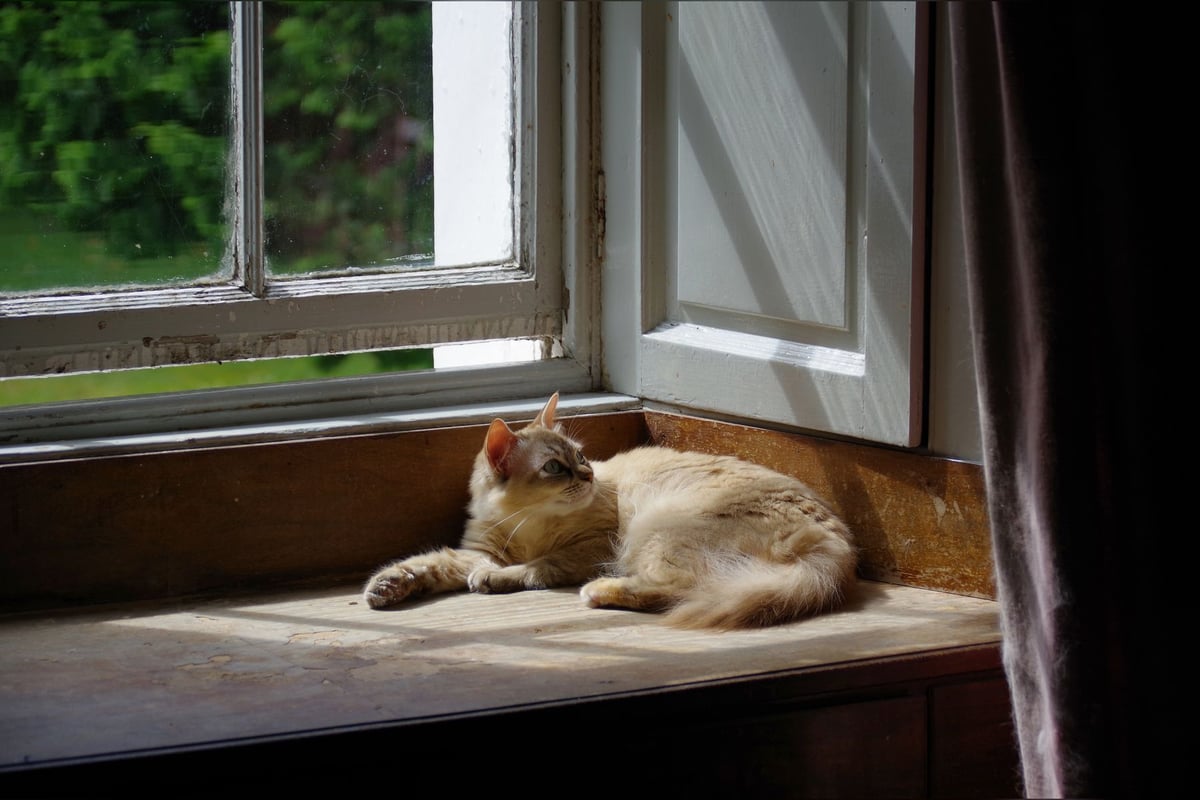
Tiffanie
The Tiffanie is the semi-longhair variant of the British Asian Group — in simple terms, a longhaired Burmilla. Born from the same breeding programs as its shorthaired cousins, it shares their muscular semi-foreign body, their large green eyes rimmed with a natural black outline, and their range of silver or golden colors, but is set apart by a silky semi-long coat, a pronounced ruff and a bushy tail. An extremely rare breed in France, it is more established in the United Kingdom, where the GCCF recognizes it within the Asian Group. Not to be confused with the American Chantilly-Tiffany, a distinct breed with no genetic relationship.
- Weight
- 3 to 6kg
- Height
- 22 to 30cm
- Life expectancy
- 15years
- Monthly cost
- 65 to 120€
Personality profile
Energy 3/5
Independence 2/5
Trainability 3/5
Good with children 4/5
Talkativeness 3/5
Space needed 3/5
Attachment to home 4/5
Good with strangers 3/5
Good with cats 4/5
Good with dogs 3/5
Coat care 3/5
Exercise needs 3/5
Scores given on measured axes, data confidence: medium.
Living with a Tiffanie
Description
The body architecture is that of the Burmilla: a medium, semi-foreign build, more elongated and slender than the cobby American Burmese, less angular than the Siamese. The musculature is firm and dense, and the cat feels heavier than its silhouette suggests. The head is moderately rounded, with a slightly domed forehead, high cheekbones and a short muzzle with a subtle stop. The ears are medium to large, tilted slightly forward, sometimes fringed with small tufts. The eyes are large, slightly oblique almond shapes, an intense green that deepens with maturity, rimmed with the black outline characteristic of the Asian Group — this natural "eyeliner" also runs around the nose and lips. It's the coat that fundamentally sets it apart within the group. The coat is semi-long, silky, not prone to matting, with a light undercoat that gives it volume without heaviness. The ruff around the neck is well developed, and the tail is bushy and spreads into a plume. The coat can be tipped, shaded or shell — the same patterns as the Burmilla — in every color admitted by the Asian Group: black, blue, brown, chocolate, lilac, plus the tortoiseshell variants. The shimmering silver or golden effect of the tipped pattern, combined with the coat length, gives it particularly striking elegance. Males typically weigh 4 to 6 kg, females 3 to 5 kg. Life expectancy: 14 to 17 years.

Temperament
The temperament stays true to the Burmese heritage that shapes the Asian Group: sociable, attached to its owners, curious and moderately active, without the overflowing energy or excessive dependence that characterize some Oriental breeds. It seeks human closeness, follows the household's movements and enjoys physical contact sessions, but without the level of vocal demand of the purebred Burmese. Its Chinchilla Persian side — inherited through the Burmilla — tempers its extroversion slightly: it can enjoy moments of calm and contemplation that its shorthaired cousin seeks less. Vocalizing stays moderate, in a soft, musical register. With children, its tolerant, patient temperament makes it a companion suited to families, provided interactions stay respectful. It cohabits well with other cats, particularly breeds of a similar profile. Prolonged daily solitude doesn't suit it: a household with regular human presence, or a second companion cat, is recommended.
Training
Curious and attentive, it inherits the motivation for human interaction characteristic of the Burmese line. Its Chinchilla component gives it a certain patience and a calm disposition that make gradual learning easier. It responds well to clicker training in short sessions (5-8 minutes) with positive reinforcement through treats and contact. Responding to its name, accepting a harness for supervised outings, using a designated scratching post — these skills are attainable with consistency and gentleness. Leash walking is possible if harness socialization starts from a young age. It doesn't chase performance the way some Oriental breeds do, but it genuinely enjoys mental stimulation.

Feeding
Medium build, moderate activity: needs are nothing out of the ordinary. A premium diet rich in animal protein (minimum 35%) works well, with no need for a specific formula. Two split meals a day are preferable to free feeding. Neutering reduces energy needs without reducing appetite: adjust rations to age and actual activity level. For a 4-5 kg adult, plan on roughly 200-240 kcal/day. A partial wet-food ration supports hydration — particularly important as prevention against kidney conditions linked to the PKD1 risk. Taurine should rank high in the formula for cardiac support. Watch the weight from age 2 onward.
Affiliate links, no extra cost to you. Legal notice

Living conditions
It lives well in an apartment, including modest spaces, provided the environment is enriched with perches, scratching posts and interactive toys. Its moderately active nature calls for regular play sessions — about ten minutes morning and evening maintain its physical and mental balance. Access to a secure outdoor space — an enclosed garden, a netted balcony — is appreciated but not essential. Its semi-long coat doesn't provide enough thermal protection against damp cold: a heated indoor space in winter is required. Indoor breed recommended, especially in urban settings, given its trusting temperament, which makes it not very wary of outdoor risks. Feline cohabitation is generally positive — its membership in the Asian Group, known for getting along well with other cats, makes well-conducted introductions easier.

Grooming and coat care
The silky semi-long coat needs more maintenance than its shorthaired Burmilla cousin, but stays manageable compared with dense-undercoat breeds like the Maine Coon or the Persian. Two to three weekly brushings with a soft-bristle brush or a wide-toothed comb are enough outside of molting periods — its light undercoat makes it less prone to matting than other semi-longhairs, provided you don't let several weeks go by without grooming. The ruff and the area behind the ears are the priority zones to watch. During the spring molt, switching to daily brushing for two to three weeks limits shedding onto fabrics and ingested hairballs. The tipped or shaded coat has a delicate texture: avoid overly harsh brushes that would flatten the relief of the colored tips. Check the ears twice a month, the eyes regularly (discharge in the inner corners). Weekly dental care recommended. Claws to trim every two to three weeks.

Health
The breed inherits the same genetic predispositions as the Burmilla, coming from its two founding breeds, and any buyer must be fully informed of these before acquisition. Autosomal dominant polycystic kidney disease (PKD1) is the most critical risk. This mutation of the PKD1 gene, passed down through the Chinchilla Persian line, causes the progressive formation of kidney cysts that can develop into chronic kidney failure. Transmission is autosomal dominant: a single carrier parent is enough to put 50% of the kittens at risk. The PKD1 DNA test is MANDATORY on both breeding parents — demand the written results before any purchase. A breeder unable to produce these documents should be avoided without hesitation. Hypertrophic cardiomyopathy (HCM), inherited from the Burmese line, is the other documented risk: thickening of the heart muscle can stay asymptomatic for years before causing heart failure or a clot. An annual echocardiogram screening of breeding cats, and one every two years for adult companion cats from age 4, is recommended. The breed is numerically rare, especially outside the United Kingdom, which means a narrow gene pool. This reality demands rigorous selection protocols from serious breeders to avoid the buildup of recessive abnormalities. Outside these hereditary predispositions, the constitution is generally robust. An annual veterinary checkup including a cardiac auscultation is recommended from age 4. Life expectancy: 14 to 17 years.
Breed history
The Tiffanie was born as a direct extension of the Burmilla breeding program launched in 1981 in the United Kingdom by Baroness Miranda von Kirchberg. When breeders working on the Asian Group crossed the first Burmillas with one another, the recessive longhair gene — inherited from the founding Chinchilla Persian — resurfaced in certain litters as semi-longhaired kittens. Rather than eliminating these individuals, breeders decided to fold them into the program under a distinct name: the Tiffanie, a name chosen to evoke the elegance of Tiffany jewelry with no genealogical link to the American Chantilly-Tiffany, a breed developed independently in the United States in the 1960s from entirely different genetic stock. It is thus formally the semi-longhair version of the entire Asian Group — it can be produced from crosses between Burmilla, Asian Self, Asian Tabby or Asian Smoke cats carrying the longhair gene. The GCCF has recognized it within the Asian Group since the 1990s. The LOOF registers it under the name Asian and Burmilla, alongside the group's other members. The breed remains extremely rare in France, with very few active breeders; it is more represented in the United Kingdom, its country of origin, and in certain Northern European countries.
Getting ready for your Tiffanie
Four essentials to line up before day one.
Affiliate links, no extra cost to you. Legal notice
FAQ: Tiffanie
Sources
- Wikipedia EN — Tiffanie (cat) · Tiffanie = semi-longhair variant of the Asian Group (UK), distinct from Chantilly-Tiffany (US). Originated from the same Burmilla breeding program, UK 1981. Recognized by GCCF within the Asian Group. Recessive longhair gene from Chinchilla Persian ancestry.
- Wikipedia FR — Burmilla · UK Asian Group: Burmilla, Asian Self, Asian Tabby, Asian Smoke, Tiffanie (semi-longhair variant). Origin 1981, UK. PKD1 risk (Chinchilla line) and HCM risk (Burmese line). LOOF recognition under the name Asian and Burmilla.
- LOOF — Recognized cat breeds · The Tiffanie is registered with the LOOF under the name 'Asian and Burmilla' among the officially recognized breeds.
- GCCF — Asian Group Standard · Asian Group includes: Burmilla, Asian Self, Asian Tabby, Asian Smoke, Tiffanie (semi-longhair). GCCF standard. Championship recognition in the 1990s.

