


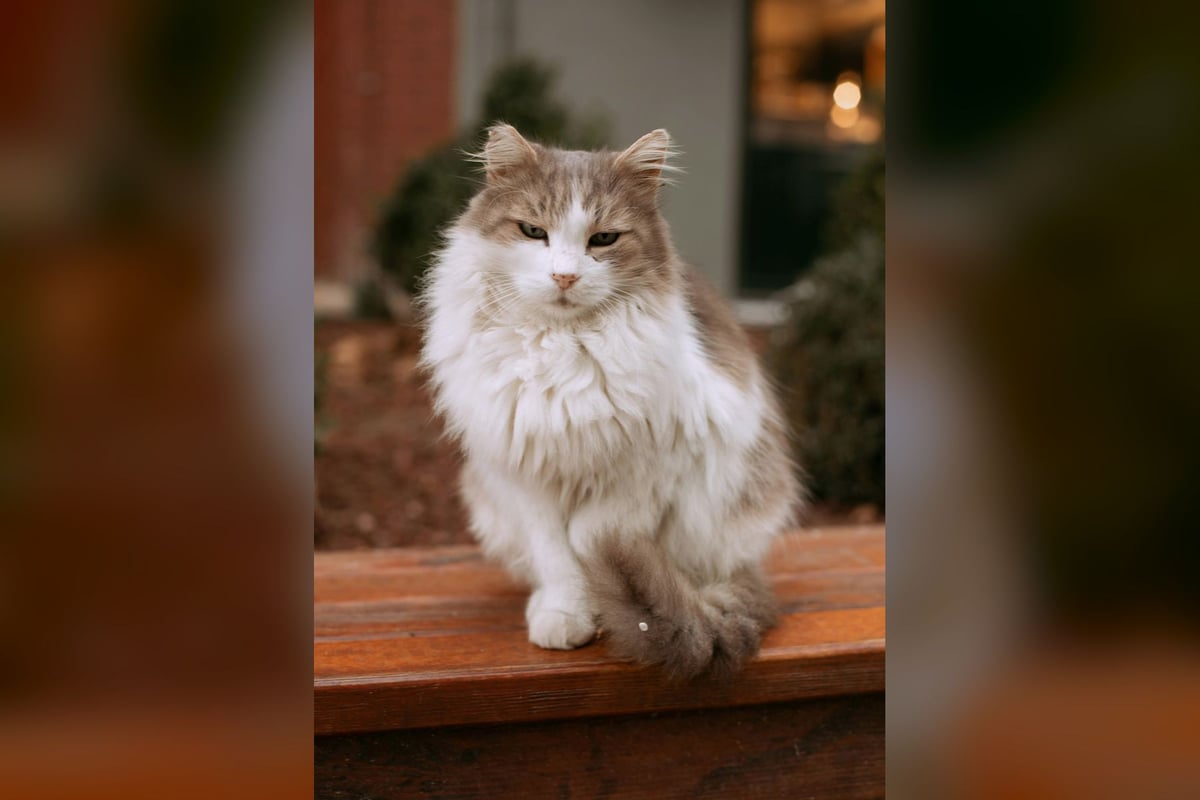
RagaMuffin
The RagaMuffin is a large semi-longhaired cat that emerged in the early 1990s in the United States, born of a deliberate split by breeders who broke away from the Ragdoll circle. Recognized in championship status by the CFA in 2011, it stands apart from its ancestor with an unrestricted color palette — every coat is admitted except colorpoints, reserved for breeding programs — and a slightly larger build (males up to 9 kg). Its central character trait is a complete muscular go-limp in the arms, extreme docility and a strong emotional dependence on its people. Still a little-known breed in France compared with the Ragdoll, it is steadily climbing the rankings of interest for households looking for a large cuddly cat.
- Weight
- 4 to 9kg
- Height
- 28 to 43cm
- Life expectancy
- 14years
- Monthly cost
- 70 to 110€
Personality profile
Energy 2/5
Independence 2/5
Trainability 3/5
Good with children 5/5
Talkativeness 2/5
Space needed 2/5
Attachment to home 5/5
Good with strangers 4/5
Good with cats 4/5
Good with dogs 4/5
Coat care 3/5
Exercise needs 2/5
Scores given on measured axes, data confidence: high.
Living with a RagaMuffin
Description
The body is rectangular, broad and muscular, with a deep chest, broad shoulders and a characteristic fatty pad on the lower belly — a distinctive trait validated by the CFA standard. The head is a broad, modified wedge with rounded contours, full, rounded cheeks, a short muzzle with a pronounced stop, and large, walnut-shaped eyes expressing a permanent gentleness. Eye color is variable, with no restriction tied to coat color — a point of difference from the Ragdoll, whose eyes must always be blue. The ears are medium-sized, tilted slightly forward. The coat is medium to semi-long, dense, silky, and of a texture often compared to rabbit fur; it is slightly longer around the head, the neck (ruff) and the belly. Every color and pattern is admitted — solid, tabby, bicolor, calico, smoke, sepia, mink — except pure colorpoints (seal point, blue point, etc.), which remain reserved for breeding programs. Males reach 7 to 9 kg, females 4 to 6 kg. Full physical maturity is only reached at around 4 years old.

Temperament
No cat is as universally described as "floppy" — quite literally — once picked up. Like its Ragdoll ancestor, it shows near-total muscular relaxation as soon as it's carried, giving the impression of an animal with no muscle tone, as accommodating as a living plush toy. This "floppy cat" follows its people from room to room, prefers a lap to any cat tree, and accepts children's handling without protest. Its curiosity is gentle and contemplative rather than hyper: it observes before exploring and never rushes anything. Its vocalizing is discreet — a few low meows and lots of purring. One point to watch: its level of emotional dependence is high. Left alone for more than 8 hours a day on a regular basis, it develops measurable behavioral melancholy, similar to the Ragdoll's. This trait isn't a flaw — it's exactly what its owners are looking for — but it does call for regular human presence or a compatible feline companion.
Training
Cooperative without being particularly demanding of intellectual stimulation, it is described as more docile than "intelligent" in the operational sense of the term. It responds well to clicker training based on positive reinforcement and treats, and can learn to come when called, accept a harness or fetch a toy. Short repeated sessions (5-10 minutes) are more effective than long ones. Its accommodating nature means it handles training manipulations well without visible stress — an advantage for desensitizing it to brushing, veterinary care or carrier transport. Physical coercion is absolutely to be avoided: the breed remembers negative experiences and loses trust for a long time.

Feeding
Sizeable build and a calm metabolism: weight gain needs close watching, all the more so since the belly pad blurs visual assessment. For a moderately active 7 kg adult, plan on 260-320 kcal a day, adjusted downward after neutering. Favor premium large-breed kibble high in animal protein (≥38%) and taurine to support heart function, given the real, if non-mutation-linked, HCM risk. Two split meals a day; avoid free feeding. For kittens, specific large-breed kibble up to 18 months to support the slow growth. The switch to a senior diet can begin as early as age 7 to anticipate the metabolic slowdown.
Affiliate links, no extra cost to you. Legal notice

Living conditions
Everything here is built for indoor life. Its lack of survival instinct, its unlimited trust in strangers and its elaborate coat make it unsuited to unsecured outdoor freedom. A 50 m² apartment with a few elevated surfaces is enough for it to thrive — its moderate energy doesn't call for large volumes. The limiting factor is never space but the absence of human presence: in a household where daily absences exceed 8 hours, cohabiting with a second, compatible cat is strongly recommended. The breed tolerates children and other animals well when introduced gradually, making it a good candidate for blended households. A medium cat tree, a few stimulation toys and accessible windows cover most of its environmental needs.

Grooming and coat care
The coat's texture — dense, silky, comparable to rabbit fur — has a notable practical advantage: it naturally resists matting and tangling, which makes upkeep simpler than for other longhaired breeds like the Maine Coon. Brushing with a long-toothed comb two to three times a week is enough under normal conditions. During the spring and fall shedding seasons, step up to four or five sessions a week for two to three weeks. No regular bathing is required — the coat stays clean and aired out without frequent washing, an annual or twice-yearly bath being enough. The areas to watch are the ruff, the britches and behind the ears, where the first tangles appear. Introducing the comb from kittenhood speeds up lasting acceptance of the routine.

Health
No breed-specific pathogenic mutation has been identified — unlike the Ragdoll, whose MyBPC3 R820W mutation is testable. That does not mean the breed is free of risk: hypertrophic cardiomyopathy (HCM) and polycystic kidney disease (PKD) are both reported in the breed, inherited from the genetic base it shares with the Ragdoll, the Persian and the domestic longhaired cats used when the breed was established. In the absence of a breed-specific DNA test, monitoring relies on annual echocardiographic screening of breeding cats (from age 2) and on PKD1 tests (available and recommended) for both parents. Requiring these results at purchase is a marker of a serious breeding operation. The breed also shows a tendency toward obesity after neutering — the natural belly fat pad can mask real weight gain, which makes regular weight monitoring essential throughout life.
Breed history
The RagaMuffin was born in the early 1990s out of an internal split in the Ragdoll world. Four breeders, dissatisfied with the controlling practices of Ann Baker — the Ragdoll's founder, who demanded licenses, royalties and proprietary breeding conditions — broke away to develop an independent breed. They kept the Ragdoll's floppy, docile temperament but deliberately broadened the genetic base: Persians, Himalayans and domestic longhaired cats were incorporated, which on one hand produced the extended color palette (every coat except pure colorpoint) and on the other slightly increased the average build. The name "RagaMuffin" — evoking street or stray cats — was chosen to clearly distinguish it from the trademarked Ragdoll. The breed achieved CFA registration status in 2003 and full championship status in 2011. It is also recognized by the WCF since January 2009. The LOOF (Livre Officiel des Origines Félines) does not officially recognize it to date — a hurdle to its popularity in France compared with the Ragdoll, which is nonetheless its direct ancestor. The breed remains little known in France but is gaining recognition among fans of large cuddly cats.
Getting ready for your RagaMuffin
Four essentials to line up before day one.
Affiliate links, no extra cost to you. Legal notice
FAQ: RagaMuffin
Sources
- Wikipedia FR — RagaMuffin · Breed born in 1994 in the United States from a split by Ragdoll breeders. Recognized by the WCF since 2009. Every color admitted except pure colorpoints. Male weight up to 9 kg.
- LOOF — Recognized cat breeds · The RagaMuffin does not appear among the breeds officially recognized by the LOOF to date — status verified May 2026.
- Royal Canin FR — RagaMuffin profile · Large breed, medium-length coat, affectionate and calm temperament, well suited to indoor life, moderate grooming.
- CFA — RagaMuffin Breed Profile · Registration status 2003, championship eligibility 2011. Males up to 20 lbs (~9 kg). Maturity at 4 years. Rabbit-textured coat resistant to tangling. Every color admitted except colorpoints.

