


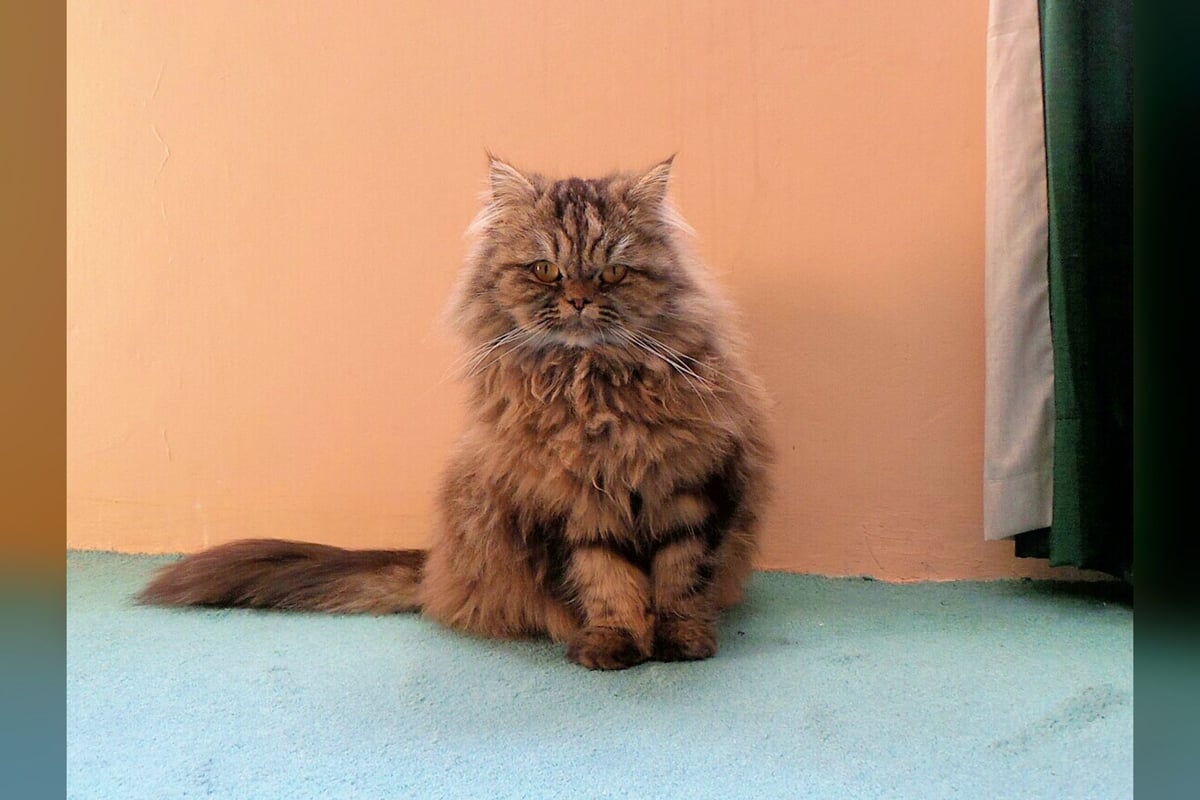
British Longhair
The British Longhair is the semi-longhaired variant of the British Shorthair, born from the reappearance of the recessive long-hair gene introduced through crosses with the Persian after the World Wars. Recognized separately by the LOOF in 2000, then by TICA and the WCF in 2009, it shares the same cobby build and the same placid temperament as its shorthaired cousin, with the bonus of a dense, silky coat that gives it a quietly elegant bearing.
- Weight
- 3 to 8kg
- Height
- 30 to 38cm
- Life expectancy
- 13years
- Monthly cost
- 70 to 120€
Personality profile
Energy 2/5
Independence 4/5
Trainability 3/5
Good with children 4/5
Talkativeness 2/5
Space needed 2/5
Attachment to home 3/5
Good with strangers 3/5
Good with cats 3/5
Good with dogs 3/5
Coat care 3/5
Exercise needs 2/5
Scores given on measured axes, data confidence: high.
Living with a British Longhair
Description
The build is semi-cobby, compact and muscular, identical to that of the British Shorthair: a robust bone structure, a broad chest, short strong legs, and a tail that is thick along two-thirds of the body's length. Its head is perfectly round, adorned with full, chubby cheeks — even more pronounced in adult males — with a short muzzle, a firm chin and large round eyes. The core difference from the British Shorthair lies in the coat: semi-long, silky and slightly wavy on the surface, with a dense undercoat that gives it a characteristic plush volume. The coat is recognized in every color and pattern admitted for the British Shorthair: solid (including the emblematic blue), tabby, bicolor, tortie, colorpoint, silver shaded, golden. Males reach 5 to 8 kg, with marked dimorphism compared with females (3 to 5 kg). Maturity is slow, as in the British Shorthair: the breed only reaches full development between 3 and 5 years old. Life expectancy: 13 years.

Temperament
The temperament is that of the British Shorthair: composed, calm, with a natural serenity that makes it one of the least demanding companions in the registry. It is affectionate in its own way — it enjoys its owners' presence, follows them discreetly without ever demanding attention — and generally prefers to keep all four paws on the ground rather than be carried. Its voice is soft and rarely heard: it vocalizes little, and only when it means it. Past age 2, its playful side fades in favor of a contemplative, serene life. It tolerates daytime solitude well, which makes it a top choice for households where the owners work away from home. Its docility is remarkable: it almost never scratches or bites. It cohabits without difficulty with children and other properly introduced animals. Its independence is not coldness — it is a form of quiet dignity.
Training
Enthusiasm for learning is not this breed's hallmark, but its calm intelligence and quiet attachment to its owners make it receptive to exercises based on positive reinforcement. It can learn to answer to its name, accept being carried in a crate, and submit to weekly brushing without resistance — this last point matters particularly given its semi-long coat. Sessions should be short (5 minutes maximum), regular and never coercive: this cat shuts down under any physical restraint. Food rewards are effective but should be factored into the daily ration to avoid encouraging weight gain.

Feeding
As with the British Shorthair, this breed has a naturally hearty appetite, a slow metabolism and a sedentary lifestyle: obesity prevention is the central nutritional concern for the breed. Free feeding must absolutely be avoided; prefer two to three split meals a day with strictly measured amounts. Favor a diet rich in animal protein and moderate in carbohydrates to preserve muscle mass without encouraging fat storage. After neutering, reduce the ration by about 20% to offset the metabolic slowdown. Taurine should be present in adequate amounts to support the heart, particularly relevant given the HCM risk. After 7-8 years, a low-phosphorus formula helps spare kidney function — relevant given the PKD risk, which it does not prevent, however.
Affiliate links, no extra cost to you. Legal notice

Living conditions
Apartment life suits it remarkably well: its low energy level and composed temperament make it an excellent indoor cat, even in a modestly sized space. It does not need large floor areas or complex climbing structures. A sturdy scratching post, a lookout spot (window sill, elevated corner) and a few interactive play sessions a week are enough for its balance. Its cold tolerance is good — a legacy of the British climate and its dense coat — but it copes less well with intense summer heat. Its natural tendency toward sedentary habits and overeating calls for weight monitoring, particularly in neutered indoor cats.

Grooming and coat care
The semi-long coat is more demanding than that of the shorthaired British Shorthair, but remains reasonable to maintain compared with the large longhaired breeds. A weekly brushing with a medium-toothed metal comb is enough outside shedding periods to remove dead hair, prevent matting and keep the coat's characteristic silky texture. During the spring or fall molt, step up to 2 to 3 times a week for 2 to 3 weeks to limit hair ingestion and the buildup of mats. Pay particular attention to friction areas (armpits, behind the ears, groin fold) where mats form first. No regular bathing is needed. Clean the eyes with a damp cotton pad if discharge appears, and check the ears regularly.

Health
The genetic predispositions are those of the British Shorthair, and the DNA tests to require are identical. Hypertrophic cardiomyopathy (HCM) is the priority: the HCM3 mutation specific to the British group affects about 20% of males according to a Danish study of 329 individuals; the corresponding DNA test should be required negative on both breeding parents. Polycystic kidney disease (PKD1), inherited from historical crosses with the Persian, causes the formation of kidney cysts leading to progressive kidney failure — the PKD1 DNA test should also be provided for both parents. Hemophilia B (factor IX coagulation deficiency) is a third DNA-testable predisposition. One point worth noting: blood type B is more common in British cats than in most breeds, which exposes kittens to a risk of neonatal isoerythrolysis if the mother is type B and the kittens are type A. Blood-typing the breeding cats is recommended. On the metabolic side, the strong tendency toward sedentary habits calls for strict dietary monitoring to prevent obesity.
Breed history
The breed's history is inseparable from that of the British Shorthair until the early 20th century. After the two world conflicts that decimated British cat numbers, crosses were carried out to revive the breed, notably with Persians. These crosses accidentally introduced the recessive long-hair gene (the l allele) into the British Shorthair population. Semi-longhaired kittens then appeared sporadically in litters, but they were systematically excluded from breeding programs for decades — regarded as "accidents" of no standard interest. It was only from the 1980s-1990s that a handful of European breeders, mainly German and Swiss, began deliberately selecting these longhaired individuals, working to fix the British cobby type while developing coat length. Official recognition followed progressively: the LOOF admitted the variety in 2000, TICA and the WCF in 2009, then the FIFe. The breed remains uncommon compared with the British Shorthair, whose every litter can produce kittens carrying the l/l gene depending on the parents' genotype.
Getting ready for your British Longhair
Four essentials to line up before day one.
Affiliate links, no extra cost to you. Legal notice
FAQ: British Longhair
Sources
- Wikipedia FR — British Longhair · Direct descendant of the British Shorthair. Long-hair gene introduced via post-WWI Persian crosses. Recognition: LOOF 2000, TICA and WCF 2009. Weight 3-7 kg. Neonatal isoerythrolysis risk (blood type B common).
- Wikipedia EN — British Longhair · Males 4-8 kg, females 3-5 kg. HCM: 20.4% of males (Danish study, 329 individuals). PKD1 elevated risk, legacy of Persian crosses. Median survival in Sweden >12.5 years (54% reach that age).
- Royal Canin FR — British Longhair profile · Calm, balanced and peaceful temperament. Strong tendency toward sedentary habits and weight gain. Sustained grooming required. Sociable with children and other animals.
- LOOF — Recognized cat breeds · The British Longhair has been recognized by the Livre Officiel des Origines Félines since 2000, semi-longhair category.

